
Dead Raccoon on Your Property What to Do and When to Call
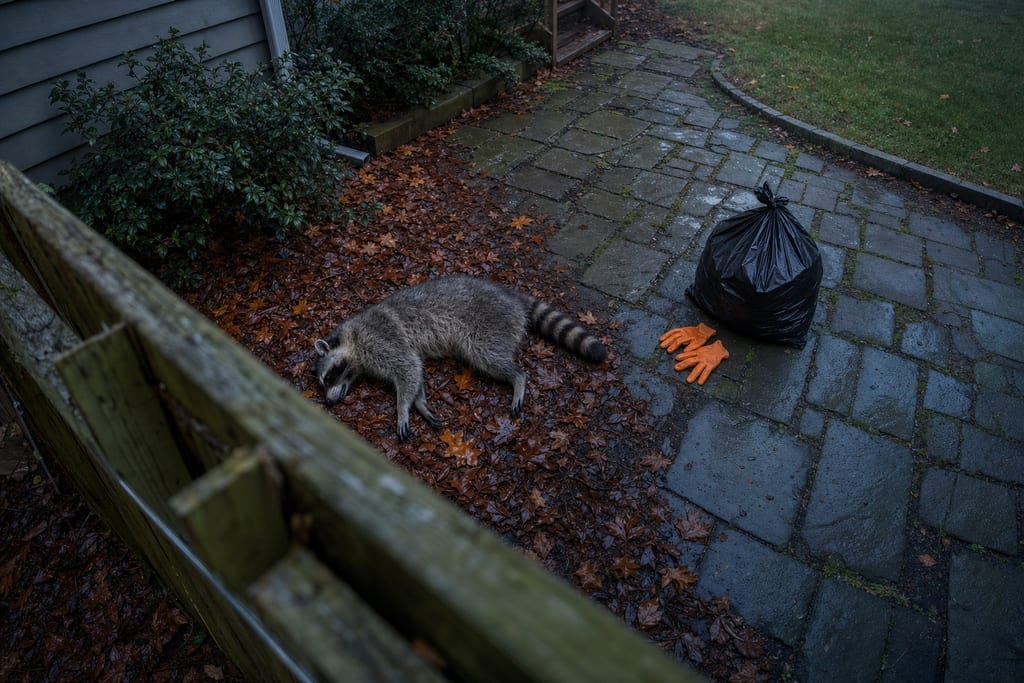
If you found a dead raccoon in your yard, the first thing to do is leave it alone and figure out where and how it died before you do anything else. A dead raccoon can still carry rabies, roundworm, and other diseases, and those risks don't end when the animal does. Never touch it with bare hands, even if it looks like it's been gone for a while. Some of these pathogens live in the fur, the waste, or the ground around the body long after the raccoon stops moving.
Before you grab a shovel or a trash bag, take a minute to look at the scene. A raccoon that died quietly under a tree is a different situation than one that dragged itself into your attic or crawl space before it went. Where it is, how it got there, and how long it's been dead all change what you should do next, from the gloves and gear you need to whether this is a job for safe disposal on your own or a call to someone trained to handle it.
Table of Contents
Why a Dead Raccoon Is Riskier Than It Looks
A dead raccoon isn't just an eyesore. Rabies virus can survive in nerve tissue for hours after death, raccoon roundworm eggs stay infectious in droppings for months, and leptospirosis bacteria linger in any fluid the body leaves behind. Fleas don't die with their host either. They leave a cooling body fast and look for the next warm meal, which can be a pet or a person standing too close.
Decomposition moves quicker than most people expect. Flies can find a body within an hour outdoors, and maggots show up within a day. That activity draws in other scavengers, turning one dead raccoon into a reason more wildlife shows up on your property.
Where the raccoon ended up changes the level of risk. One in open yard exposes pets and kids walking by, while one stuck inside a wall or attic means the smell, fluids, and parasites spread into insulation, drywall, and the air you breathe indoors. A body trapped in a tight space also decomposes slower in some conditions and faster in others, so the timeline for cleanup isn't something you can guess from the outside.
Raccoons that act sick before dying are often fighting something worse than old age, so it helps to know the warning signs while the animal is still alive.
Checking the Scene Before You Touch Anything
Before you move a single thing, keep kids and pets out of the area. A raccoon's body can still carry rabies and parasites that spread fast if a curious dog or child gets close.
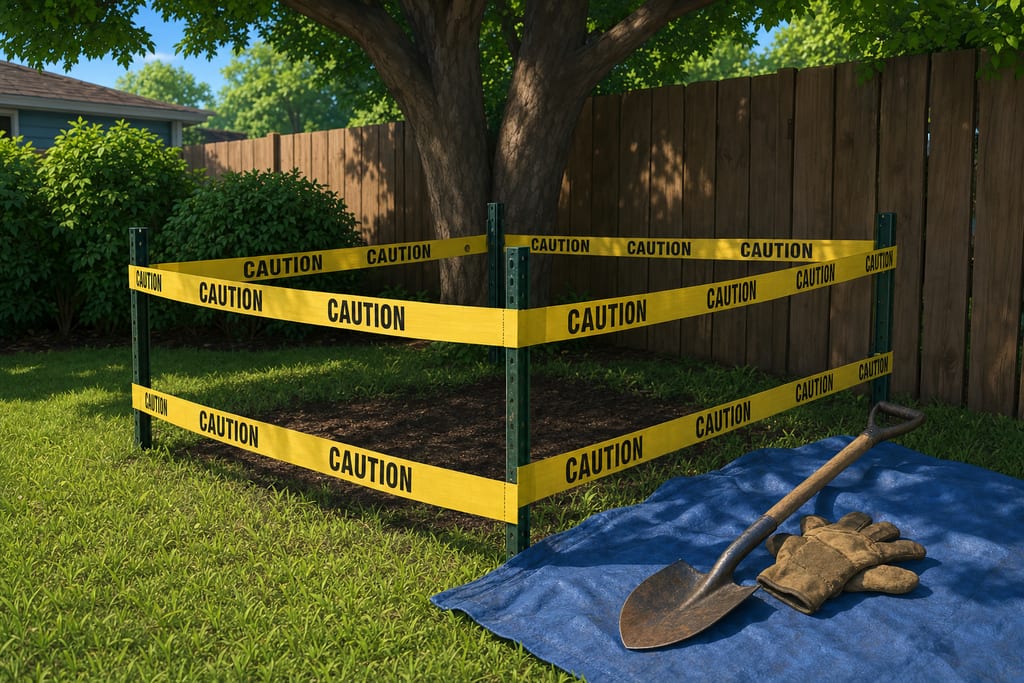
Look at how it died before you decide what to do next. Bite marks, missing fur, or stumbling and circling before death can point to disease or a fight with another animal, and that's worth knowing before you start cleanup.
Write down exactly where it is. A raccoon in the open yard is handled differently than one stuck in a wall cavity or attic joist, since location changes the tools and the risk level.
Steps to assess a dead raccoon before handling it:
- Clear the area of children and pets right away
- Check for signs of trauma, illness, or odd behavior beforehand
- Mark the exact spot, indoors or outdoors
- Put on thick gloves before getting any closer
- Have a shovel or sealed bag ready if you plan to move it
Never pick it up with bare hands, not even with a paper towel or plastic bag wrapped around your fingers. Gloves and a tool like a shovel are the minimum barrier between you and whatever that raccoon was carrying.
Safe Disposal Steps for Yards and Open Areas
A raccoon that died out in the open is the easier case, but it still needs careful handling. Double-bag the body using a shovel to lift it, never your hands, even with gloves on underneath.
Local rules decide how you can get rid of it, so check what Fort Worth, Denton, or Granbury allow for animal remains before you put it in the trash or bury it on your property. Some areas require bagged animal waste to go out on a specific collection day, and burial depth matters too.
Once the body is gone, the ground underneath still needs attention. Disinfect the spot with a bleach solution, about one part bleach to ten parts water, and let it sit before rinsing.
Disposal and cleanup steps for a raccoon found outdoors:
- Double-bag the carcass using a shovel, not your hands
- Confirm local disposal rules before bagging or burying
- Disinfect the ground with a bleach solution afterward
- Wash hands, clothing, and tools even if gloves were worn
Skipping the handwashing step is the most common mistake, since gloves can have pinholes or get contaminated when you pull them off.
What Changes When It Dies in a Wall or Attic
A raccoon that dies inside your house creates a different problem than one in the yard. The smell often takes several days to peak, and by the time it's strong enough to notice from inside the house, the contamination has already spread.
Finding the body usually means cutting into drywall or pulling back insulation, since raccoons tend to die in spots that are hard to reach by design. That's part of why they got in there in the first place.
Insulation, wood framing, and ductwork near the body often soak up fluids and odor that cleaning alone won't fix. Replacement, not just cleaning, is usually the only way to fully clear the smell and the contamination.
What usually needs replacing versus what can be cleaned:
- Insulation touching the body or fluids, replace it
- Drywall with visible staining or odor soaked in, replace it
- Wood framing nearby, clean and seal if no soaking occurred
- Ductwork near the carcass, inspect and often replace sections
Trying to pull a body out of a wall or attic yourself also means crawling into tight, dark spaces where fleas, mites, and bacteria are concentrated. That kind of exposure is hard to control without the right gear.
When It Makes Sense to Call for Help
Some situations are too far gone for a shovel and a bag of bleach. If the carcass is hidden inside a wall, attic, chimney, or crawl space, you're looking at a job that usually needs more than a weekend of cleaning.
A smell that keeps coming back after you've wiped down every surface you can reach is a sign the real source is still hidden somewhere you can't see. That's often fluid-soaked insulation or wood that needs to come out, not just wiped off.
Signs it's time to call a professional instead of handling it alone:
- Carcass is inside a wall, attic, chimney, or crawl space
- Odor persists days after cleaning visible surfaces
- More than one raccoon has died in the same spot
- You can see an entry point but can't seal it yourself
Multiple deaths in the same area usually point to an open entry point that's letting raccoons in and out, and sealing that gap matters as much as the cleanup. Wildlife X Team handles attic cleanup, disinfecting, and sealing those entry points for homes and businesses across Fort Worth, Denton, Granbury, and the surrounding area, so the same problem doesn't show up again next season.
Weighing Cleanup Yourself Against Bringing in Help
A raccoon that died out in the open is usually a job you can finish yourself in an afternoon, as long as you have gloves, a shovel, and bleach on hand. The cost is mostly your own time and a stomach for the task, not money. That math changes fast once the body is somewhere you can't reach without cutting into a wall or pulling up insulation.
A failed attempt inside an attic or wall often costs more than calling someone from the start. Once drywall is cut open or insulation is pulled and the smell still won't quit, you're paying for materials twice, plus whatever time you spent trying the first round yourself.
There's also a question a shovel and bleach can't answer. A raccoon that got into a tight hidden space got in through a gap somewhere, and that gap stays open for the next animal unless someone seals it.
That's the real split. Open-yard cases are a DIY decision. Hidden deaths call for someone who can remove the body, disinfect what it touched, and close the entry point in the same visit, so you're not back here again next season.
Picking Your Next Move Based on Where the Raccoon Is
Look at where the raccoon is and be honest about what you're willing to do. A carcass in open yard with gloves, a shovel, and bleach on hand is a task most people can finish themselves. One stuck behind drywall, in a chimney, or deep in an attic isn't, no matter how handy you are with a utility knife. Gear and disinfecting aren't optional in either case, since fleas and bacteria don't care how confident you feel. If the body is hidden or raccoons keep dying in the same spot, call Wildlife X Team at (817) 799-8686. They'll pull the carcass, clean what it touched, and close the gap that let it in.
Dead Raccoon Questions People Still Ask
How long does it take for a dead raccoon smell to go away on its own?
Outdoors, the smell usually fades within a week or two once the body is removed and the ground is disinfected. Indoors, it can linger for weeks if any fluid soaked into insulation, drywall, or wood, since those materials hold odor until they're replaced. A smell that doesn't fade after cleaning means something is still soaked through.
Can a dead raccoon make my dog sick if they sniffed or licked it?
Yes. A dog that licks or mouths a dead raccoon can pick up roundworm eggs, leptospirosis bacteria, or fleas carrying other parasites. Call your vet the same day, even if your dog seems fine, since some of these infections take days to show symptoms. Keep the dog away from the area until it's cleaned and disinfected.
What if I can hear a raccoon dying inside my wall right now but can't reach it?
Don't cut into the wall yourself trying to reach it. Note the location as closely as you can by sound, then call Wildlife X Team at (817) 799-8686. They can find the body once it's gone quiet, remove it, and seal the gap it used to get in, instead of you guessing where to start cutting.
Is it normal for a raccoon to die suddenly in my yard with no visible injury?
It happens more than people expect. Disease, poisoning from rodenticide eaten elsewhere, or old age can kill a raccoon with no outward sign of trauma. Treat it the same as any other carcass, with gloves and a shovel, and watch for more dead wildlife nearby, which can point to a poison source on or near your property.