
Critter Control Explained for Attics, Walls, and Crawl Spaces
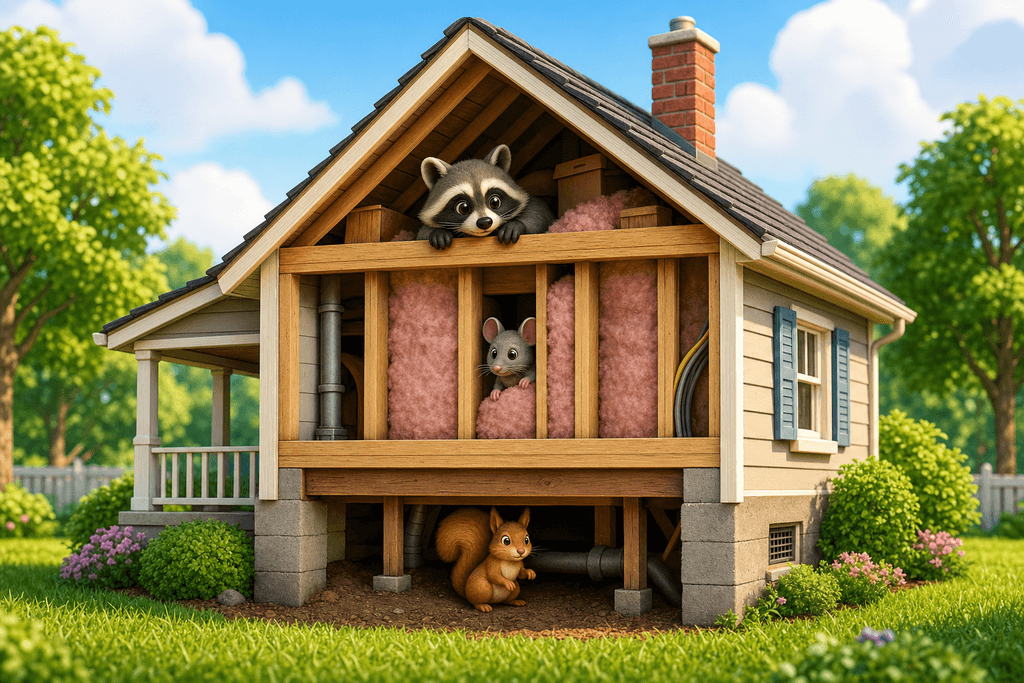
That scratching sound in your ceiling at 2 AM isn't your imagination, and those mysterious droppings in the corner of your attic mean you've got uninvited guests. Raccoons, squirrels, and other wildlife see your attic, walls, and crawl spaces as perfect shelter from Texas weather, and they're not picky about moving in without permission. The longer these critters stay, the more damage they cause to insulation, wiring, and structural components, which is why critter control needs to happen fast before a small problem turns into thousands of dollars in repairs.
Table of Contents
Why Texas Homes Attract Unwanted Wildlife
North Texas homeowners deal with more wildlife problems than almost anywhere else in the country, and it's not just bad luck. The Dallas-Fort Worth area sits right in the sweet spot where urban sprawl meets natural habitat, creating a perfect storm for critter invasions. As neighborhoods expand into former woodland areas around Keller, Denton, and Granbury, animals that once had plenty of space are now looking at your attic as prime real estate. The mild winters and hot summers in Texas also mean that wildlife stays active year-round, unlike northern states where animals hibernate for months at a time.
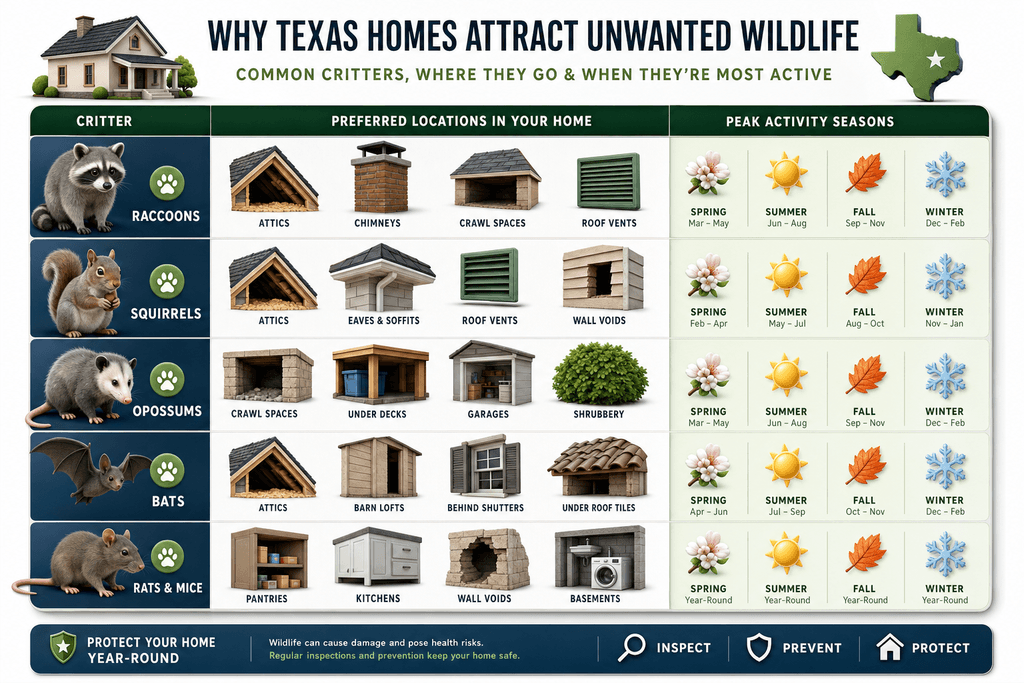
The Usual Suspects in North Texas Homes
Four main critters cause most of the headaches for homeowners in the Fort Worth area. Each one has its own favorite hiding spot and causes different types of damage.
- Raccoons are the heavyweight champions of attic invasions, often tearing through roof vents and shingles to get inside
- Squirrels prefer upper levels and can chew through almost anything, including electrical wiring that can start fires
- Opossums usually stick to crawl spaces and lower areas, leaving behind droppings and unpleasant odors
- Rats and mice can squeeze through holes the size of a quarter, making them the hardest to keep out
Wildlife X Team handles all these critters regularly across the DFW metroplex. The damage they cause isn't just annoying - it can get expensive fast when insulation gets destroyed or wiring gets chewed up.
When Critters Come Calling
Wildlife doesn't invade homes randomly throughout the year. There are specific times when your phone might ring off the hook if you're in the critter control business. Spring brings baby season, when mother animals desperately search for safe nesting spots. Fall sees animals preparing for winter by seeking warm shelter and food storage areas.
Understanding how different pests behave can help you spot problems early. Here's what professional wildlife removal experts see most often in North Texas homes:
The Perfect Storm for Wildlife Encounters
Texas weather creates year-round problems that states with harsh winters don't face. Animals stay active during our mild winters, and the scorching summer heat drives them to seek cool shelter in your walls and attic spaces. Suburban expansion keeps pushing into natural areas, which means less food and shelter for wildlife in their traditional habitats.
- New construction destroys natural den sites, forcing animals to adapt to human structures
- Trash cans and pet food provide easy meals that attract wildlife to residential areas
- Older homes in established neighborhoods often have small gaps and holes that animals exploit
- Trees planted close to rooflines create highways for squirrels and raccoons to access your roof
The numbers tell a concerning story. Property damage from wildlife costs Texas homeowners millions each year, with attic restoration alone running between $2,000 and $8,000 per home. Health risks add another layer of worry since animal droppings can carry diseases like leptospirosis and histoplasmosis.
Common North Texas Critters
Critter behavior patterns vary significantly based on species and season. Here's what you need to know:
Raccoons: Prefer attics and chimneys | Most active in spring (March-May) for nesting | Cause structural damage and contamination
Squirrels: Target attics and wall voids | Peak activity in fall (September-November) and spring | Chew wiring and insulation
Opossums: Favor crawl spaces and under decks | Active year-round with slight summer increase | Create odor problems and minor damage
Rats/Mice: Found in all areas of homes | Year-round activity with fall spikes | Spread disease and contaminate food areas
Companies like Critter Control and Terminix handle these issues, but many homeowners find that specialized local services understand regional wildlife patterns better. The key is catching problems early before a small gap becomes a full-blown infestation.
Attic Critter Control That Actually Works
Your attic is basically a five-star hotel for wildlife. It's warm, dry, filled with soft insulation for nesting, and far away from predators. That's why attics are the number one entry point for unwanted critters in homes across Fort Worth, Denton, and surrounding areas. Once animals discover your attic, they rarely leave on their own. The real question isn't whether you have a problem, but how bad it's gotten before you notice.
Different animals make different sounds, and knowing what you're hearing helps identify the intruder. Squirrels are active during the day and sound like they're rolling bowling balls around up there. Raccoons move at night and are heavy enough that you'll hear distinct footsteps. Rats and mice create constant scratching sounds, especially after dark.
Common signs of attic invaders include:- Chewed electrical wiring that creates fire hazards
- Destroyed or compressed insulation reducing energy efficiency
- Droppings and urine contamination throughout the space
- Torn ductwork and damaged stored belongings
- Strong odors from waste and nesting materials
The damage adds up fast. Contaminated insulation loses its effectiveness, which means higher energy bills even before you factor in repair costs. Chewed wires are a serious fire risk that most homeowners don't discover until an inspection. At Wildlife X Team, we've seen attics where animals caused thousands in damage within just a few months.
Professional inspection reveals problems you'd never spot on your own. Our Wildlife Inspection Report looks at your entire attic space, identifying not just the obvious entry point but all the vulnerabilities. Most people find one hole and think they've solved it, but animals rarely use just one entrance.
The inspection process covers:- All potential entry points including roof vents and soffit gaps
- Evidence of current and past animal activity
- Structural damage to wood, insulation, and wiring
- Contamination levels and health risks
- Recommended exclusion and prevention strategies
Humane removal means getting animals out safely without harming them or your property. We use one-way doors that let critters exit but prevent re-entry, and we make sure no babies are left behind. Once they're out, sealing every entry point is what keeps them from coming back. This includes installing chimney caps, repairing damaged soffits, and adding vent guards that animals can't chew through.
Getting Critters Out of Your Walls
Animals end up in walls through surprisingly small openings. A gap where pipes enter your home, a crack in the foundation, or a damaged exterior vent can all provide access. Once inside, wall cavities offer protection and warmth, making them ideal hiding spots. The problem is that walls are much harder to access than attics, and the longer animals stay, the more damage they cause.
You'll usually hear them before you see any evidence. Scratching inside walls at night typically means mice or rats. Louder thumping during early morning or evening points to squirrels. The timing matters because different animals have different activity patterns.
Why DIY wall removal is risky:- Cutting into walls without knowing exact animal location wastes time and money
- You might trap animals inside, leading to death and terrible odors
- Improper repairs leave entry points open for future invasions
- Contamination exposure without proper protective equipment
Professional techniques minimize damage while ensuring complete removal. We use inspection cameras to locate animals precisely before making any cuts. One-way exclusion devices work great for wall situations because they let animals leave naturally without requiring us to tear apart your home. These devices install over the exit point and funnel animals out while blocking re-entry.
Jesse Bernard from our service area had squirrels that found multiple entry points into his walls and attic. He considered sealing the obvious hole himself, but our inspection revealed several other access points he never would have found. Months later, he's still squirrel-free because we addressed every vulnerability, not just the visible ones.
Repairing wall entry points requires more than just stuffing holes with steel wool. We use materials animals can't chew through and seal everything properly so your walls look normal when we're done. Sometimes wall removal does require additional construction work, especially if animals damaged electrical or plumbing, but proper repairs prevent repeat problems that cost more in the long run.
Crawl Space Critter Control Strategies
Crawl spaces attract specific types of wildlife for reasons most homeowners don't consider. The darkness provides cover, moisture creates comfortable conditions, and foundation vents offer easy access. Possums, raccoons, and skunks particularly love crawl spaces because they can dig and nest without disturbance. The confined space also makes them feel protected from larger predators.
Health hazards in contaminated crawl spaces go beyond just animal waste. Mold grows in the moisture, bacteria spreads through droppings, and parasites like fleas and ticks multiply rapidly. These problems don't stay contained under your house. Air from crawl spaces circulates into your living areas, bringing contaminants with it.
Foundation vulnerabilities are easier to fix than most people think. Gaps around pipes, damaged vent screens, and cracks in concrete all provide entry points. Our inspection identifies these weak spots even in tight crawl spaces where most homeowners never look. We've found everything from basketball-sized holes to tiny gaps that mice squeeze through.
Comprehensive crawl space protection checklist:- Complete inspection of foundation perimeter and all vents
- Humane removal of current animal occupants
- Installation of heavy-duty vent guards that resist chewing
- Foundation crack repair and gap sealing
- Removal of contaminated insulation and debris
- Disinfection of entire crawl space area
- Installation of vapor barriers if needed
- Regular monitoring to catch new issues early
Removal methods for crawl space critters depend on what's living there. We use live traps for larger animals and exclusion techniques for smaller ones. The key is making sure we get every animal out before sealing entry points. Exclusion work in crawl spaces often includes foundation repair that improves your home's overall structure, not just wildlife protection.
Cleanup and restoration makes your crawl space safe again. We remove all contaminated materials, treat the area with professional-grade disinfectants, and replace damaged insulation. Our Renewable Lifetime Warranty covers this work because we know proper exclusion and cleanup prevents future problems. Long-term monitoring catches any new vulnerabilities before they become full-blown infestations, which is why properties throughout Keller, Southlake, and Grapevine stay protected year after year.
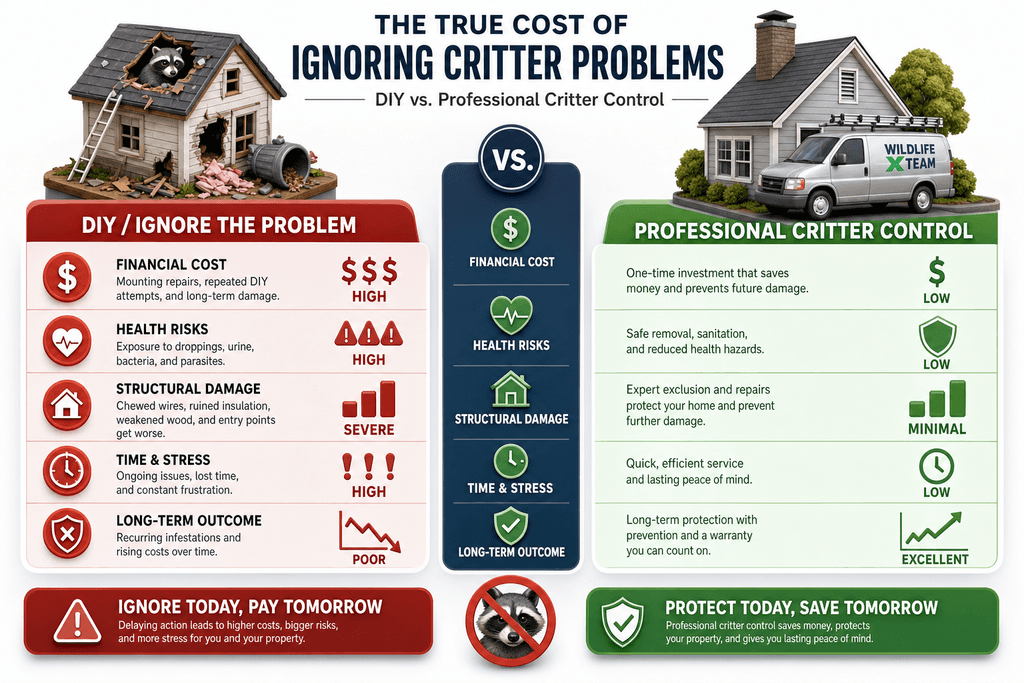
The True Cost of Ignoring Critter Problems
Most homeowners who discover wildlife in their attic think they can wait a few weeks to deal with it. That delay typically costs them an extra $2,000 to $5,000 in repairs. The problem with critter control isn't just the animals themselves, but what happens while they're living rent-free in your home. Every day those raccoons, squirrels, or possums stay in your attic, they're chewing through wires, tearing up insulation, and leaving behind waste that creates serious health hazards.
How Damage Compounds Over Time
Wildlife doesn't just move in and sit quietly. They're actively destroying your property from the moment they arrive. The financial impact grows exponentially the longer you wait.
- Chewed electrical wiring creates fire hazards and can cost $1,500 to $3,000 to repair
- Contaminated insulation loses R-value, increasing energy bills by 20-30% monthly
- Structural wood damage from urine and nesting can require $3,000+ in repairs
- HVAC duct damage spreads contaminated air throughout your home
Health Risks That Multiply Daily
The waste left behind by wildlife carries diseases that become more dangerous as it accumulates. Histoplasmosis from bat or bird droppings can cause serious respiratory infections, while raccoon feces may contain roundworm eggs that remain infectious for years.
- Airborne pathogens from dried feces enter your living spaces through vents
- Parasites like fleas, ticks, and mites spread throughout your home
- Allergens from urine and dander trigger asthma and allergic reactions
Why DIY Approaches Backfire
Sealing one obvious hole seems simple enough. But animals that already live in your attic will either chew through your repairs or find the three other entry points you didn't know existed. Most DIY attempts fail within two weeks, and now you've spent money on materials plus still need professional help.
- Store-bought repellents rarely work and cost $50-150 in wasted product
- Improper sealing can trap animals inside, creating worse damage
- Missing secondary entry points means animals return immediately
- No warranty or guarantee means paying twice for the same problem
The Insurance Coverage Gap
Here's something most people learn too late. Standard homeowners insurance typically doesn't cover wildlife damage or the cleanup required afterward. Some policies cover sudden damage like a raccoon breaking through a roof, but ongoing infestation damage gets denied.
Early Intervention Saves Thousands
A professional Wildlife Inspection Report identifies every vulnerability in your property before minor issues become major expenses. Wildlife X Team's comprehensive approach includes removal, exclusion, and cleanup with a renewable lifetime warranty. That means you're protected long-term instead of just fixing today's problem. The difference between calling immediately versus waiting three months often means saving half your total repair costs.
Taking Control of Your Critter Problem
Dealing with critters in your attic, walls, or crawl spaces isn't something you can just ignore and hope it goes away. These spaces need different approaches because animals behave differently depending on where they've set up camp. A raccoon in your attic requires a totally different strategy than squirrels running through your walls. The longer you wait, the more damage they cause and the harder it becomes to fix everything properly.
Quick fixes might seem tempting, but they rarely work for long. Sealing one hole while missing three others just means the animals find new ways in. That's why comprehensive critter control matters so much more than just chasing animals out and calling it done.
Working with experienced wildlife control professionals means you get someone who knows where to look for entry points you'd never spot on your own. Wildlife X Team handles both the removal and the prevention side of things, which is what actually keeps critters from coming back next month. We inspect your property thoroughly, remove the animals humanely, clean up the mess they left behind, and seal everything up so it doesn't happen again.
If you're in Keller, Fort Worth, Denton, or anywhere in the surrounding areas, you don't have to live with scratching sounds in your walls or worry about what's happening in your attic at night. Give us a call at (817) 799-8686 or stop by our location at 11833 Katy Rd in Keller to get a proper inspection done.
You probably still have questions about how the whole process works, what to expect, and how to know if you really need professional help. Let's answer some of the most common questions people ask about critter control.
Common Questions About Critter Control
Most homeowners have similar concerns when dealing with unwanted wildlife in their homes. The questions below cover everything from safety to costs, helping you understand what professional critter control actually involves. Getting the right information upfront can save you time, money, and a lot of stress down the road.
How quickly can critters be removed from my home?
The timeline depends on what type of animal you're dealing with and how many entry points exist. Most companies, including Wildlife X Team, can start the removal process the same day or within 24 hours of your call. Complete removal typically takes anywhere from a few days to a couple weeks, especially if babies are involved since humane removal means waiting until they're old enough to relocate safely.
Is critter control safe for my family and pets?
Professional critter control uses humane methods that don't involve harmful chemicals or dangerous traps. The techniques focus on exclusion and relocation rather than poison or lethal methods, which means your kids and pets stay safe throughout the entire process. You might need to keep pets away from certain areas during active trapping, but that's usually just a temporary precaution.
What happens to the animals after removal?
Reputable wildlife removal services relocate animals to appropriate habitats away from residential areas. The animals are released in locations where they can survive without causing problems for other homeowners. Some companies work with local wildlife rehabilitators for injured or orphaned animals to ensure they get proper care before release.
How do you prevent critters from coming back?
Prevention involves sealing every possible entry point and making your property less attractive to wildlife. This includes installing vent guards, repairing foundation cracks, securing chimney caps, and trimming tree branches away from your roof. Wildlife X Team offers a comprehensive Wildlife Inspection Report® that identifies all vulnerabilities, then follows up with animal proofing services to close those gaps permanently.
Does homeowners insurance cover wildlife damage?
Coverage varies widely depending on your policy and how the damage occurred. Most standard homeowners policies don't cover damage from rodents, birds, or insects, but they might cover sudden damage from larger animals like raccoons if it's considered a one-time event. Your best bet is to call your insurance company directly and ask about your specific situation before assuming anything.
When should I call a professional instead of handling it myself?
Call a professional if you hear animals in your walls or attic, notice multiple entry points, or see signs of a large infestation. DIY methods rarely address the root problem and can actually make things worse if you seal animals inside your home. Wildlife carries diseases and can become aggressive when cornered, so attempting removal yourself puts you at unnecessary risk.