
Copperhead Snake Facts for Quick ID and Safety
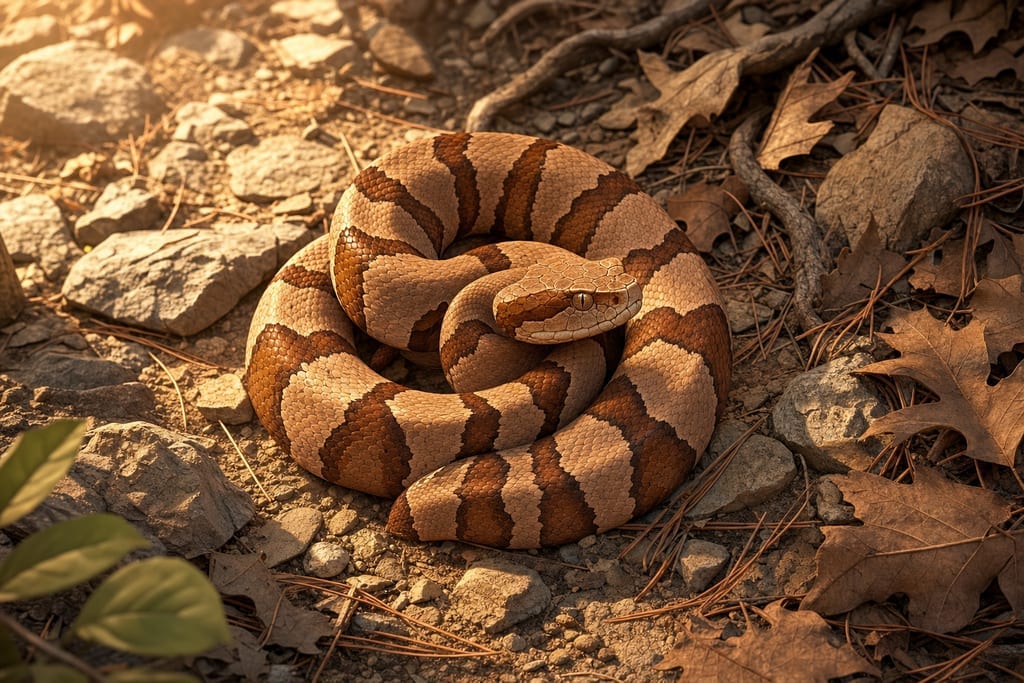
If you get bitten by a venomous snake in Texas, odds are good it was a copperhead snake, since they cause more bites than any other venomous species in the country. They are venomous, but a healthy adult is very unlikely to die from a bite. Most people who get treated end up with swelling, pain, and a story to tell, not a trip to the morgue. The bigger worry is usually kids, pets, or someone with other health problems.
Quick ID comes down to two things: color pattern and head shape. Copperheads have a tan or copper body with darker, hourglass shaped bands that pinch in the middle, like a bowtie seen from above. Their head is wide and triangular, noticeably bigger than the neck behind it, which is a trait shared by most venomous snakes in the US. Learn those two markers and you can rule out a lot of harmless lookalikes before you ever get close enough to need to.
Table of Contents
Meet the Copperhead Snake
The copperhead's scientific name is Agkistrodon contortrix. It belongs to the pit viper family, which also includes cottonmouths and rattlesnakes, all of which share those heat sensing pits on the face used to track warm blooded prey in the dark.
Copperheads live only in North America, mostly in the eastern and central United States. Texas sits near the western edge of their range, and the broadhead copperhead found here tends to show a bit more contrast in its banding than populations further east.
A few basic stats help with context when you're trying to judge what you're looking at:
- Average adult length: 2 to 3 feet
- Average lifespan in the wild: 18 years
- Average weight: around half a pound to a pound
Here's a closer look at how a copperhead actually moves and behaves in the wild.
Unlike rattlesnakes, copperheads have no rattle and give no warning sound before striking. They rely on camouflage first and often freeze rather than flee, which is part of why people step too close without realizing it.
How to Spot a Copperhead Snake by Sight
A copperhead's body does most of the talking. Look for a copper or tan head paired with darker crossbands shaped like an hourglass, pinched tighter in the middle than on the sides. That pattern is the single clearest marker you can use from a safe distance.
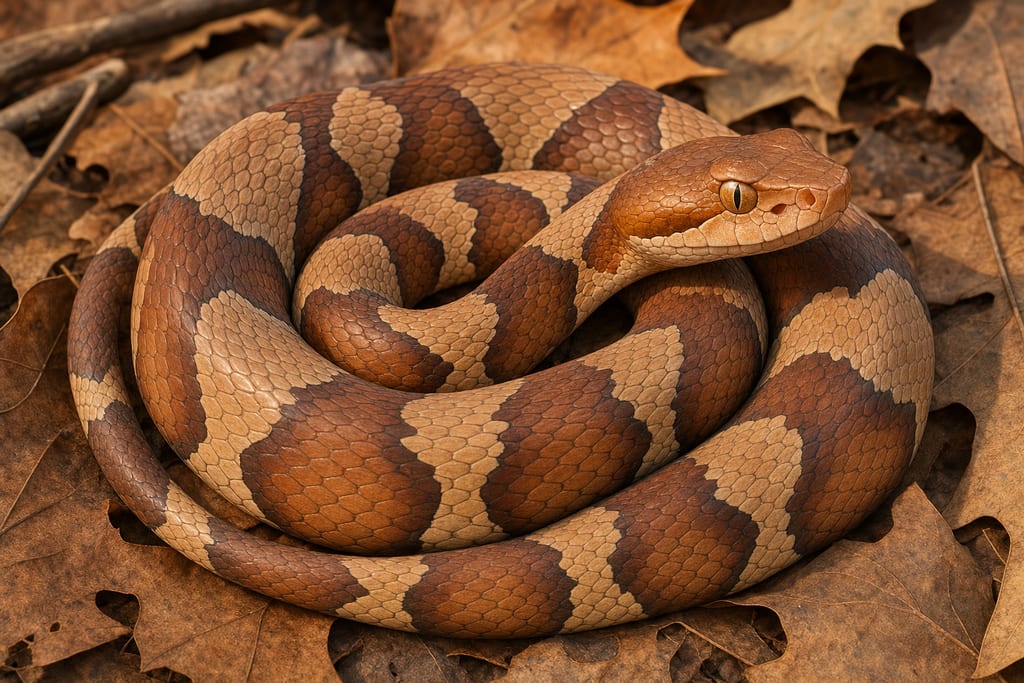
Juveniles add one more clue adults lose: a bright yellow or greenish tail tip they wiggle to lure frogs and lizards within striking range. That yellow tail fades as the snake matures, usually by age three or four, so it only works for spotting young ones. The head shape also helps rule out confusion with harmless snakes in the yard.
- Head: wide, triangular, clearly broader than the neck
- Pupils: vertical slits, like a cat's eye
- Body: thick for the length, not slender
- Tail: solid color in adults, yellow-tipped in juveniles
- Length: 2 to 3 feet on a typical adult
Want to see these traits in motion instead of a still photo? This short video walks through the same three markers.
Where Copperheads Live and Hide
Copperheads range far beyond Texas. Their territory stretches from Texas and Florida north through the Midwest and into New England, making them one of the more widely spread venomous snakes in the country. Within that range, they favor wooded hillsides, rocky slopes, and the edges of streams where cover and prey are both close by.
Around homes, they tuck into spots that stay cool, damp, and hidden from view. Properties backing up to wooded lots in the Fort Worth and Denton area tend to report more sightings, simply because that habitat sits right at the property line.
- Leaf piles left against the house or fence
- Woodpiles stacked directly on the ground
- Loose rock walls or decorative stone borders
- Construction debris or stored lumber
- Thick ground cover like ivy or pampas grass
Clearing these spots back from the foundation removes the cover a copperhead needs to feel safe close to a house.
Copperhead Behavior and Feeding Habits
Copperheads are mostly active at dusk and after dark during the warmer months, which is when they hunt. During the day, especially in heat, they stay tucked in cover and move less.
Their diet runs through mice, insects, frogs, and the occasional small bird, which puts them on the same hunting ground as backyard rodent problems. Because a mouse infestation draws snakes looking for an easy meal, cutting off rodent activity around a home also cuts down snake encounters. Behavior also plays a role in how bites happen.
- They freeze and rely on camouflage rather than fleeing
- They strike fast when stepped on or grabbed
- They hunt mice and insects near woodpiles and brush
- They move less during daytime heat
That freeze response is the reason most bites happen by accident, a hand or foot lands too close before the person even sees the snake.
Is a Copperhead Snake Bite Dangerous?
Yes, copperhead venom is hemotoxic, meaning it damages tissue and blood cells rather than attacking the nervous system. A bite causes swelling, sharp pain, and discoloration around the wound, usually within minutes of the strike.
Copperheads cause more bites each year than any other venomous snake in the US, with thousands reported annually, yet fatalities in healthy adults remain rare. That combination of high bite count and low death rate is why doctors treat most cases as serious but manageable with prompt care. Watching for these signs helps someone decide how fast to act.
- Throbbing pain spreading from the bite site
- Swelling and skin discoloration within the first 30 minutes
- Nausea or lightheadedness
- Two puncture marks rather than a full row of teeth
Any bite still needs a trip to the ER, since swelling can progress fast and antivenom works best started early. If copperheads keep turning up near the house because of brush or a rodent problem, a wildlife removal company that handles habitat and exclusion work, like Wildlife X Team, can address what's drawing them in rather than just the snake itself.
Copperhead or Something Else
A corn snake gets mistaken for a copperhead more than any other species, but the fix is simple: corn snakes run bright orange-red with round pupils, not the muted copper and vertical slits of the real thing. If the color looks almost too bold and cheerful, you're probably looking at a corn snake sunning itself, not a threat.
Juvenile cottonmouths cause more confusion, since young ones share a similar banded look before they darken with age. The giveaway is location: cottonmouths stick close to water edges, ponds, creeks, drainage ditches, while copperheads are just as happy on a dry wooded slope far from any water.
Hognose snakes throw people off too, but one feature settles it fast. Hognoses have an upturned, pig-like snout built for digging, and copperheads have a flat, blunt nose with none of that curve.
None of these comparisons are worth closing the distance to check. If a snake is close enough that you need a better look to be sure, back away first and identify it from farther out, or skip the ID altogether and just give it room.
What to Do If You Spot One Near Your House
If you're outdoors and see one, step back and let it move along on its own, copperheads aren't aggressive and won't chase. If a bite happens, get to an ER right away, don't wait to see how bad it gets. Once things are calm, walk the yard and clear the brush piles, woodpiles, and loose stone that give these snakes cover, and seal gaps along the foundation and siding. If the house keeps drawing snakes because of rodents or gaps you can't find on your own, Wildlife X Team can inspect the property and close off the entry points that bring both in.
Copperhead Snake Questions People Still Ask
Can a copperhead bite through thick clothing or boots?
Thick leather boots and heavy denim can block a strike, but thin fabric usually will not. A copperhead's fangs are short, around a quarter inch, so a sturdy boot or work glove gives real protection. This is why yard work in brush piles or tall grass calls for boots over sneakers or sandals.
Do copperheads chase people if they feel threatened?
No, copperheads do not chase. Their defense is to freeze and blend in, and if that fails they strike once and try to retreat, not pursue. Any sense of being chased usually comes from the snake trying to get past a person toward cover, like a woodpile or rock wall nearby.
Will a copperhead bite a pet the same way it bites a person?
Yes, the bite mechanics are the same, but pets react worse because of their smaller body size relative to the venom dose. Dogs often get bitten on the face or front legs while sniffing around brush. Any pet bite needs a vet visit right away, the same urgency as a human ER trip.
Can baby copperhead snakes deliver a dangerous bite too?
Yes, juveniles have working venom glands from birth and can deliver a full dose despite their small size. Some research even suggests young snakes can't control their venom output as well as adults, so a baby's bite is not something to treat lightly just because the snake looks small.