Complete Guide to Wildlife Removal Services in North Texas

A scratching sound in your attic at 2 AM usually means you're sharing your North Texas home with uninvited guests like raccoons or squirrels. As urban development continues to push into natural habitats around Fort Worth and Denton, wildlife increasingly seeks shelter in residential and commercial properties, creating health risks and costly damage. Understanding how to properly address these intrusions can save you thousands in repairs and protect your family from the diseases these animals often carry.
Table of Contents
Understanding Wildlife Behavior in the DFW Area
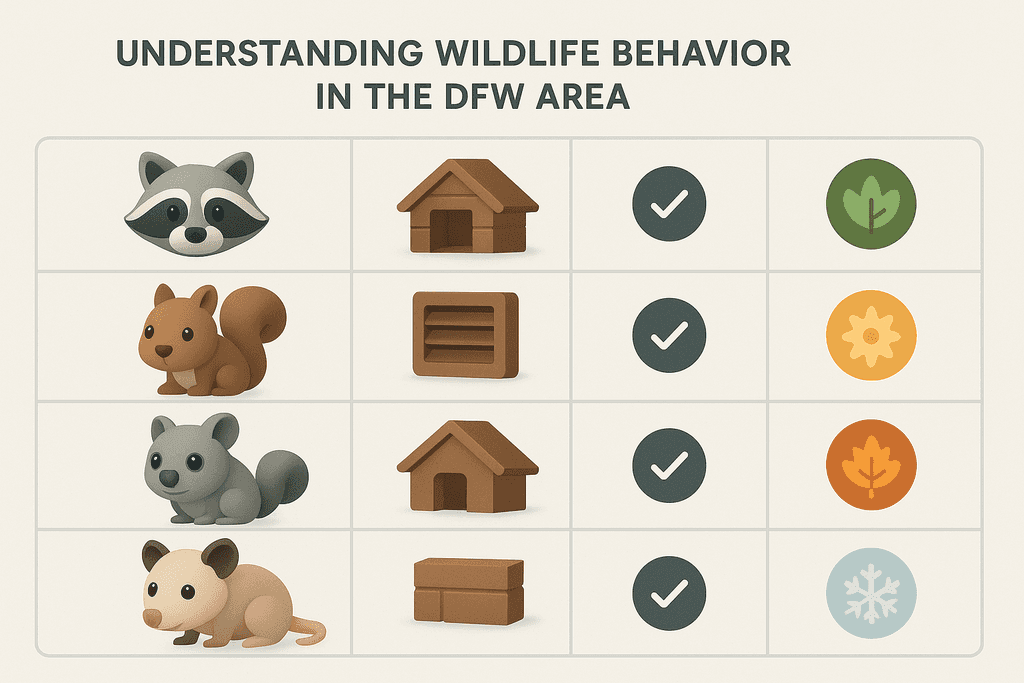
North Texas sees more wildlife intrusions between October and March than any other time of year. Animals are looking for warm places to nest and raise their young, and your attic or crawl space looks pretty inviting when temperatures drop. The Dallas-Fort Worth area sits right in the middle of several wildlife habitats, which means homeowners here deal with more critter problems than folks in many other parts of Texas. Understanding when and why these animals show up can help you spot the warning signs before a small problem turns into a big mess.
When Wildlife Problems Peak
Different animals cause problems at different times of the year. Raccoons typically invade attics in late winter when females look for safe places to have babies. Squirrels are most active in spring and fall, making noise in your walls as they gather food and build nests. Rats and mice don't really have an off-season, but you'll notice them more in winter when they move indoors.
Here's what you need to know about seasonal patterns:
- Fall brings squirrels storing nuts and preparing winter nests in attics
- Winter drives rats and mice indoors seeking warmth and food sources
- Spring means baby season for raccoons, opossums, and squirrels
- Summer heat pushes some animals to find cooler spots in crawl spaces
Common Wildlife Species in North Texas
The DFW area hosts several wildlife species that regularly cause problems for homeowners. Raccoons top the list because they're smart, strong, and can tear through roof vents like they're made of paper. Squirrels come in second, and they're surprisingly destructive for such small animals. Rats and mice round out the usual suspects, along with occasional visits from opossums and bats.
Each animal has its favorite entry points and hiding spots:
- Raccoons prefer roof vents, chimney caps, and soffit intersections
- Squirrels squeeze through gaps as small as two inches in fascia boards
- Rats and mice enter through foundation cracks and utility line openings
- Bats slip into attics through gaps around gable vents
- Opossums crawl under decks and into crawl spaces through foundation gaps
Why Some Homes Attract More Wildlife
Not all properties face the same risk. Homes near wooded areas or creeks see more wildlife activity because animals already live nearby. Older houses with worn-out roof materials and unsealed gaps make easy targets. Properties with mature trees touching the roofline basically roll out a welcome mat for squirrels and raccoons.
The biggest vulnerability factors include:
- Trees with branches within six feet of the roof
- Damaged or missing roof vents and chimney caps
- Gaps in soffits, fascia, or where different roof sections meet
- Unsealed utility entry points for cables and pipes
Risks You Can't Ignore
Wildlife in your home creates serious problems beyond the scratching noises at night. Animals carry diseases like rabies, leptospirosis, and histoplasmosis that can spread to humans and pets. Their droppings contaminate insulation and create health hazards that linger long after the animals leave. Raccoons and squirrels chew through electrical wiring, which causes house fires every year in North Texas.
The damage adds up fast. A single raccoon can destroy hundreds of dollars worth of insulation in just a few nights. Squirrels gnaw constantly to keep their teeth from growing too long, and they don't care if they're chewing on your expensive HVAC ducts. Wildlife X Team sees homes where animals caused thousands in damage before homeowners even realized they had unwanted guests.
Property damage includes:
- Torn and contaminated insulation reducing energy efficiency
- Chewed electrical wiring creating fire hazards
- Damaged ductwork affecting heating and cooling systems
- Structural wood damage from nesting and gnawing
- Water damage from animals tearing up roof materials
The Professional Wildlife Removal Process
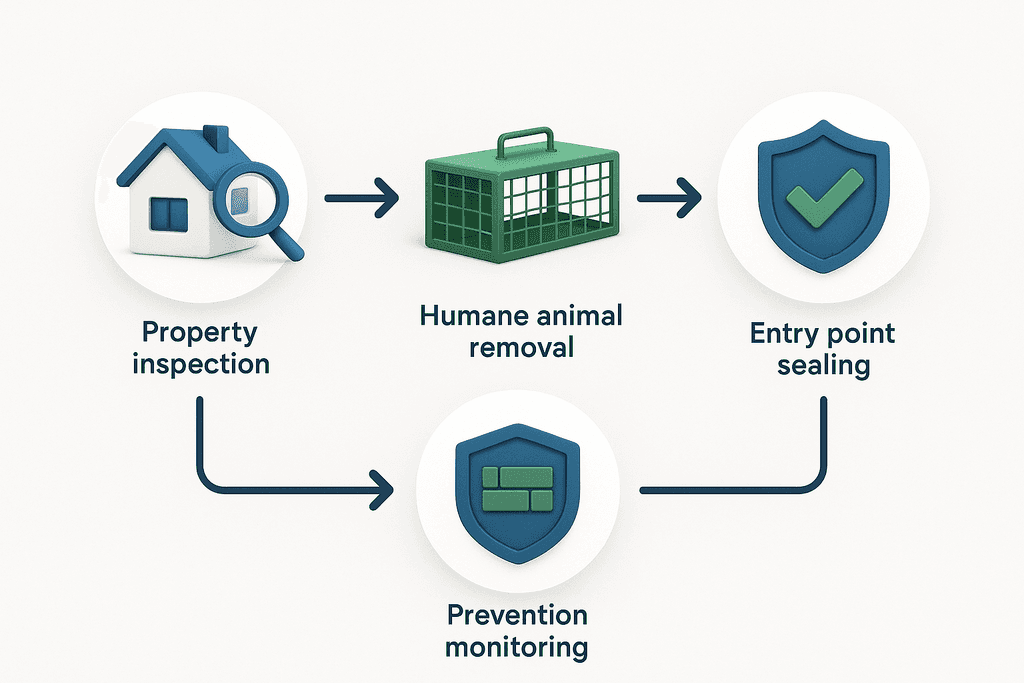
Most homeowners don't realize they have a wildlife problem until they hear scratching sounds at 2 AM or notice a strange smell coming from their attic. By that point, animals have often been living in your home for weeks or even months. The good news is that professional wildlife removal follows a proven process that addresses not just the animals you can see, but the hidden problems you might miss. Wildlife X Team starts every job with a thorough inspection because what you don't know about your wildlife problem can end up costing you more down the road.
The Professional Wildlife Removal Process
The Wildlife Inspection Report® is where everything begins. A trained specialist examines your entire property, from the foundation to the roofline, looking for signs of animal activity and potential entry points. They check areas most people never think to look, like roof edges, soffit gaps, and foundation cracks that are barely visible to the untrained eye.
What Happens During Inspection
- Complete exterior examination of all potential entry points
- Attic and crawl space assessment for animal presence and damage
- Identification of animal species and activity patterns
- Documentation of structural vulnerabilities with photos
- Written report detailing all findings and recommended solutions
Once the inspection is complete, the removal process uses humane trapping techniques that prioritize animal safety while getting them out of your home. This isn't about harming wildlife, it's about relocating them safely and making sure they can't come back. The methods vary depending on the species, but the goal stays the same.
Here's what separates professional removal from DIY attempts. When Jesse Bernard had squirrels in his attic, he thought he knew where they were getting in. But when Wildlife X Team showed up, they found multiple entry points he never would have discovered on his own. That's the difference between closing one hole and actually solving the problem.
Animal Proofing and Long Term Prevention
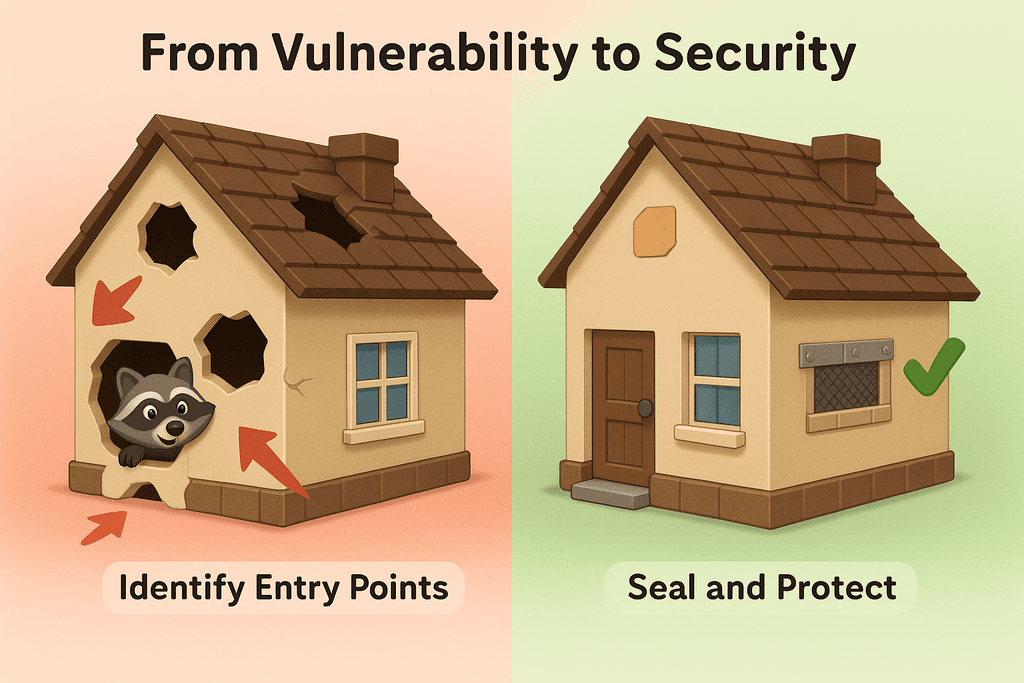
Getting animals out is only half the battle. Without proper exclusion work, you're basically leaving the door open for the next family of raccoons or squirrels to move in. Some companies will remove the animals and call it a day, but that approach usually means you'll be dealing with the same problem again in a few months. The real solution involves identifying every possible entry point and sealing it properly with materials that animals can't chew through or tear apart.
Animal Proofing and Long-Term Prevention
Foundation repair and sealing addresses one of the most overlooked entry points for wildlife. Small cracks and gaps around your foundation might not look like much, but to a determined raccoon or opossum, they're an open invitation. Professional sealing uses commercial-grade materials that hold up against weather and animal attempts to break back in.
Key Exclusion Services
- Chimney caps prevent raccoons and birds from nesting in your chimney
- Vent guards protect bathroom and dryer vents from animal entry
- Roof edge protection stops squirrels from chewing through fascia boards
- Soffit repairs eliminate gaps where bats and birds commonly enter
- Caulking and sealing closes small openings around pipes and wires
The difference between temporary fixes and permanent solutions comes down to materials and expertise. Hardware cloth, metal flashing, and professional-grade sealants last for years. Chicken wire and spray foam from the hardware store might work for a few weeks before animals tear through them.
Wildlife X Team backs their exclusion work with a Renewable Lifetime Warranty, which means if animals find a way back in through their sealed areas, they'll come back and fix it at no additional cost. That kind of guarantee only makes sense when you're confident in the quality of your work.
Attic Cleanup and Property Restoration
Even after the animals are gone and all entry points are sealed, your property isn't back to normal yet. Wildlife leaves behind more than just memories. Animal waste, contaminated insulation, damaged wood, and lingering odors create health risks that don't go away on their own. Raccoon feces can contain roundworm eggs that remain infectious for years, and bat droppings can harbor fungal spores that cause respiratory problems. This is the part of wildlife removal that many homeowners don't think about until they're dealing with persistent smells or health concerns.
The cleanup process starts with removing contaminated materials. Insulation replacement is often necessary because once it's been soiled by animal waste, it loses its effectiveness and becomes a breeding ground for bacteria and parasites. The contaminated material gets bagged and disposed of properly, not just tossed in your regular trash.
Restoration Steps
- Remove all contaminated insulation and nesting materials
- Apply professional-grade disinfectants to all affected surfaces
- Treat areas with deodorizers to eliminate persistent animal smells
- Repair structural damage from chewing and scratching
- Install new insulation to restore energy efficiency
- Final inspection to ensure complete restoration
Disinfection and deodorization go beyond what household cleaners can handle. Professional treatments kill bacteria, viruses, and parasites that animals leave behind. The deodorization process neutralizes the pheromones and scent markers that might attract new animals to your property.
For commercial properties, the stakes are even higher. A restaurant with a rodent problem or an office building with bats in the walls can't afford extended downtime or health code violations. Wildlife X Team works with businesses to minimize disruption while thoroughly addressing contamination issues that could affect employees or customers.
Mark Thompson's experience shows why the full process matters. After raccoons were removed from his attic, the team didn't just leave. They secured every entry point and cleaned up the mess, giving him actual peace of mind instead of just a temporary fix. That's what complete wildlife removal looks like in North Texas.
Why Humane Removal Matters for North Texas
Texas law actually requires specific permits and licenses for wildlife handling, and most homeowners don't realize that killing certain animals without proper authorization can result in hefty fines. The Texas Parks and Wildlife Department regulates how wildlife can be removed, and many species common to North Texas are protected under state law. When you choose humane removal methods, you're not just being kind to animals, you're staying on the right side of the law. Professional services like Wildlife X Team employ zoologists who understand these regulations inside and out, which means you avoid legal trouble while solving your wildlife problem.
Legal and Practical Benefits
Humane removal does more than keep you compliant with Texas wildlife laws. It actually solves problems more effectively than lethal methods because it addresses the root cause. When animals are simply killed without sealing entry points, new wildlife moves right into the vacant territory within weeks.
- Humane exclusion prevents animals from returning to the same location
- Professional inspections identify all entry points, not just the obvious ones
- Ethical removal protects beneficial species that control insects and pests
- Proper cleanup eliminates scent markers that attract new animals
Comparing Removal Methods
The difference between DIY attempts and professional humane removal becomes clear when you look at long-term results. Most homeowners who try DIY methods end up calling professionals anyway after spending money on ineffective solutions.
Humane Professional Removal
- Identifies all entry points, including hidden ones
- Prevents future infestations through proper exclusion
- Complies with Texas wildlife regulations
- Includes cleanup and restoration services
- Backed by warranties like Wildlife X Team's renewable lifetime guarantee
DIY or Lethal Methods
- Often misses secondary entry points
- May violate state wildlife laws
- Creates vacant territory that attracts new animals
- Leaves contamination and damage unaddressed
- No professional follow-up or guarantees
Community Impact
When wildlife removal companies use ethical practices, it benefits entire neighborhoods. Animals that are humanely excluded simply move to natural habitats instead of dying in walls or attics where they create health hazards. Professional wildlife management maintains the ecological balance that keeps North Texas communities healthy. The zoologist-led approach that Wildlife X Team uses means decisions are based on animal behavior science, not guesswork, which results in permanent solutions rather than temporary fixes.
Protecting Your North Texas Property
Dealing with wildlife in your home or business isn't just about getting rid of the animals that are already there. The real solution involves understanding how they got in, removing them safely, fixing the damage they caused, and making sure they can't come back. Wildlife X Team handles all of these steps in the Ft. Worth, Denton, and Granbury areas, which means you're not just paying for a quick fix that might fail in a few months.
The difference between a good wildlife removal service and a great one comes down to the details. Anyone can trap a raccoon, but finding every entry point and sealing it properly takes experience. That's where most homeowners run into trouble when they try to handle it themselves or hire someone who only does half the job.
Here's what matters most when you're choosing someone to handle wildlife problems:
- They should inspect your entire property, not just the obvious problem areas
- Removal methods need to be humane and legal
- All entry points must be sealed, including ones you didn't know existed
- Contaminated areas should be cleaned and restored properly
- The work should come with a warranty that actually means something
Spending money on proper exclusion work now saves you from paying for the same removal service again next year. Most wildlife will return to a location if they can still get in, which is why companies like Terminix and others in the area focus so much on prevention alongside removal.
The question isn't really whether you need professional help. It's whether you want to solve the problem once or deal with it over and over.
Common Questions About Wildlife Removal
Most North Texas homeowners have similar concerns when they discover wildlife in their attic or walls. The questions usually start with how fast the problem can be fixed and what the whole process actually involves. Wildlife X Team handles these situations daily across the Ft. Worth and Denton areas, so we've heard just about every question you can imagine. Here are the answers to what property owners ask us most often.
How quickly can wildlife be removed from my property?
Most wildlife removal starts the same day you call, especially for urgent situations. Wildlife X Team can often provide an estimate and begin work immediately, like they did for Jesse Bernard who had squirrels in his attic. The complete removal process typically takes a few days to a week, depending on the type of animal and how many entry points need to be sealed.
What does the Wildlife Inspection Report® include?
The Wildlife Inspection Report® is a detailed assessment of your property that identifies all potential entry points and vulnerabilities. Technicians check your roof, foundation, vents, chimneys, and other areas where animals commonly enter. You'll get a written report showing exactly where wildlife can get in and what needs to be fixed to keep them out for good.
Is wildlife removal safe for pets and children?
Yes, humane removal methods prioritize the safety of everyone in your home, including pets and kids. Wildlife X Team uses ethical techniques that don't involve harmful chemicals or dangerous traps. The process focuses on exclusion and prevention rather than methods that could put your family at risk.
How long does the exclusion process take?
The exclusion work usually takes one to three days for most homes. This includes sealing entry points, installing vent guards, repairing foundation gaps, and adding chimney protection. Larger properties or commercial buildings might take longer depending on the extent of repairs needed.
What's covered under the Renewable Lifetime Warranty?
The Renewable Lifetime Warranty protects against future wildlife invasions at the points that were sealed and repaired. If animals get back in through areas that were part of the original work, Wildlife X Team will return to fix the problem at no additional cost. This warranty gives you long-term peace of mind that your investment is protected.
Do you handle both residential and commercial properties?
Wildlife X Team services both homes and businesses throughout the Dallas-Fort Worth area. Commercial properties get tailored solutions that minimize disruption to operations while addressing wildlife problems. Whether you're dealing with raccoons in your attic at home or squirrels in your office building, the approach is customized to fit your specific situation.