
Compare Raccoon Removal Services and Choose a Humane Provider
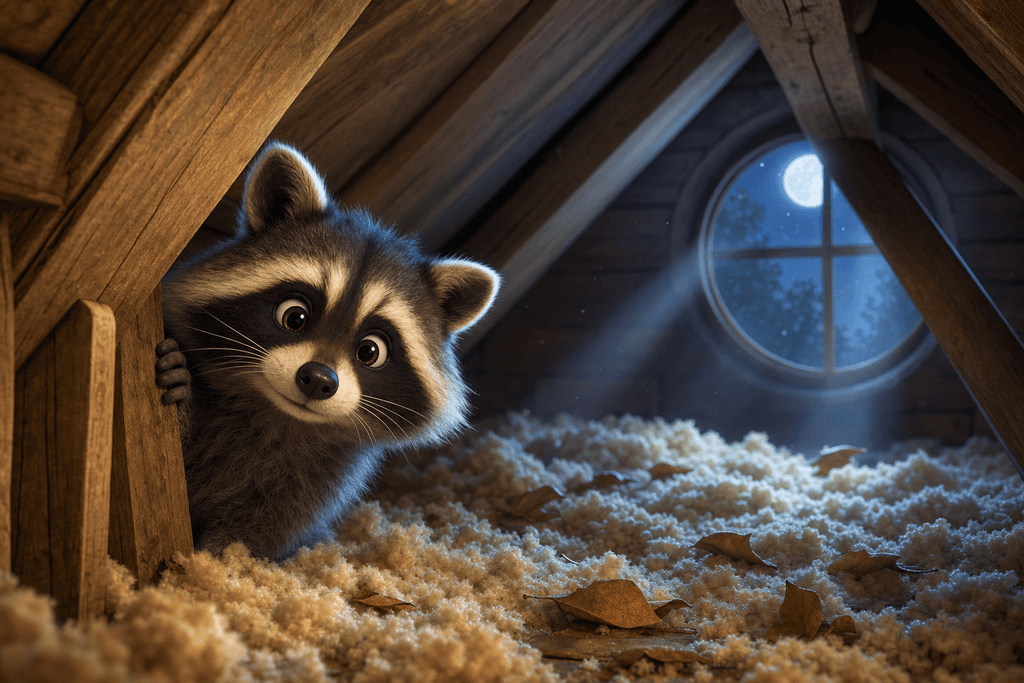
A mother raccoon can tear through soffit, insulation, and drywall in one night just to build a den for her babies, leaving homeowners with repair bills that stack up fast. Not every raccoon removal company handles this the same way, and some still use methods that hurt the animal or leave your attic open for the next critter. Picking the right team the first time, like Wildlife X Team, saves you money, stress, and a repeat visit down the road.
Table of Contents
- Why Raccoon Removal Isn't One-Size-Fits-All
- What A Real Raccoon Removal Service Should Include
- Red Flags Versus Signs Of A Trustworthy Provider
- How Wildlife X Team Handles Raccoon Problems
- Comparing Costs Warranties And What You Actually Get
- Why Prevention Matters More Than The Initial Removal
- Wrap-Up Picking A Raccoon Removal Company You Can Trust
- How much does raccoon removal typically cost
Why Raccoon Removal Isn't One-Size-Fits-All
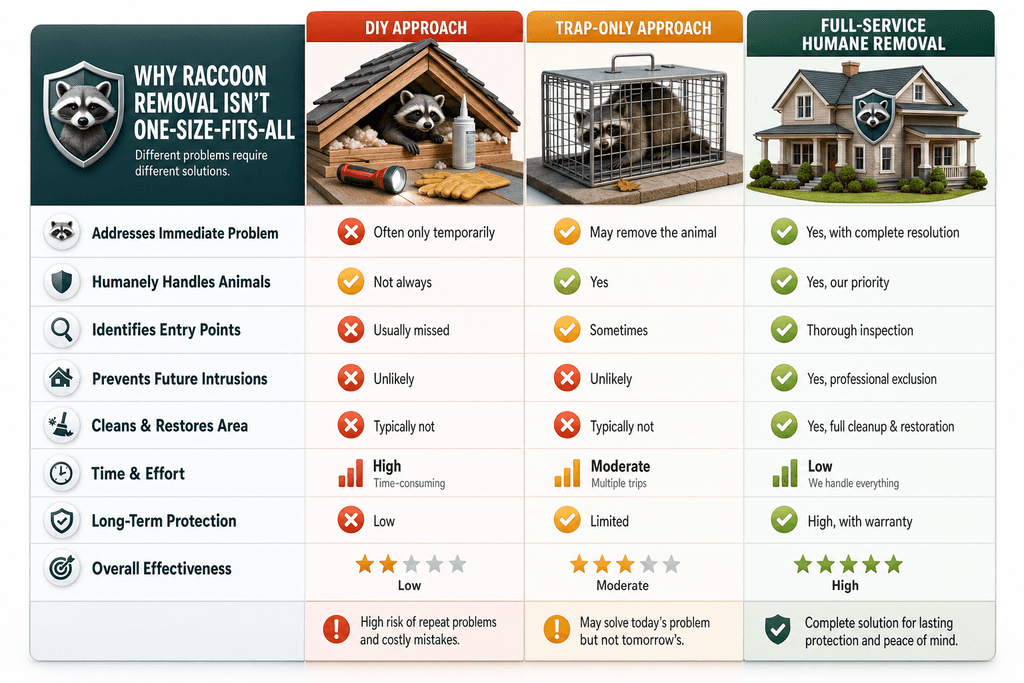
A single mama raccoon can rip open a roof vent, squeeze through a gap smaller than her own head, and set up a nursery in your attic within a couple nights. That's just how these animals work. They're smart, strong, and honestly pretty determined once they find a warm, dry spot to raise their babies. This is exactly why raccoon removal services can't just be a quick trap-and-go job. Every house, every raccoon family, and every entry point is a little different, which means the removal method has to match the situation.
One big thing people don't always know is that raccoons are protected under wildlife laws in a lot of states, including Texas. That means you can't just handle them however you want. There are rules about how they're trapped, where they can be relocated, and what happens if there are babies involved. Companies that skip these steps or don't know the local laws can actually get homeowners into legal trouble without meaning to.
Here's a quick breakdown of the common approaches homeowners run into:
- DIY methods like store-bought traps or home remedies, which often miss entry points and can be risky without proper handling knowledge
- Trap-only services that remove the animal but don't seal up how it got in, which usually means a new raccoon shows up later
- Full-service humane removal that combines trapping, exclusion repairs, and attic cleanup for a long-term fix
That last point is a big deal. Trapping without exclusion is basically like mopping up a leak without fixing the pipe. The raccoon problem goes away for a bit, then comes right back because the hole in the soffit or the gap by the chimney never got patched. This is one of the biggest complaints homeowners have after using bargain trap-only services.
Quality also varies a ton between local companies. Some focus only on speed, some focus only on price, and some genuinely care about doing the job right the first time. Knowing the difference matters more than people expect, especially once raccoons have already caused damage to insulation, wiring, or wood.
What A Real Raccoon Removal Service Should Include
A raccoon can rip open a hole in your roof in one night if it wants inside badly enough. That's why the first step in any decent raccoon removal service isn't trapping at all, it's finding out how the animal got in and where else it might try next. A company that skips this step is just guessing, and guessing costs you money later. Real removal work starts slow and careful, not fast and rushed.
Here's what should happen during a proper visit, in order:
- Full inspection to locate every entry point, not just the obvious one
- Humane trapping with safe relocation, and reunification if there are babies involved
- Exclusion work like sealing vents, chimneys, and any gaps found during inspection
- Attic cleanup to remove waste, disinfect the space, and check for damage
Skip any one of these steps and you're basically just delaying the problem. A raccoon that got in once will try again, or another one will find the same weak spot.
Red Flags Versus Signs Of A Trustworthy Provider
Not every company doing raccoon removal services is playing by the same rules. Some cut corners in ways that hurt the animal, your property, or both. Knowing what to watch for before you sign anything can save you a lot of frustration down the road. It's worth asking a few pointed questions before letting anyone onto your roof.
A company using poison, giving vague pricing over the phone, or dodging questions about what happens to the animal after capture is worth avoiding. Poison is especially risky because a poisoned raccoon can die inside a wall, and that smell doesn't go away on its own for weeks.
Signs of a trustworthy provider look pretty different:
- They give you a written inspection report, not just a verbal guess
- They explain their warranty terms clearly, upfront
- They answer directly when asked about relocation versus euthanasia policies
Going with the cheapest trapper you find online might solve the immediate problem, but a full-service company that handles exclusion and cleanup too tends to save money over time since you're not paying for repeat visits.
How Wildlife X Team Handles Raccoon Problems
Wildlife X Team works through raccoon problems in the Fort Worth, Denton, and Granbury areas using a process built around the steps mentioned above, not shortcuts. It starts with a Wildlife Inspection Report®, which maps out every possible entry point on the property before any trapping begins. That report becomes the plan for everything that follows, so nothing gets missed.
From there, the work includes:
- Animal Proofing & Exclusion Services to seal gaps, vents, and chimney access points
- Attic Cleanup & Restoration to handle contamination and replace damaged insulation
- A Renewable Lifetime Warranty backing the repairs against future invasions
Jesse Bernard's experience is a decent example of this in action. His attic had squirrels, and the team found entry points he hadn't even noticed, not just the obvious one he was already planning to seal himself. Mark Thompson had a similar result with raccoons, saying the team "effectively removed the raccoons and secured my attic against future invasions." That's the difference between removal alone and removal paired with real prevention.
Comparing Costs Warranties And What You Actually Get
Pricing for raccoon removal services varies a lot, and there's a reason for that. The number of entry points, the amount of attic damage, and whether babies are involved all change how much work is actually needed. A company quoting a flat number without ever inspecting the property is probably not accounting for any of that.
This is why the warranty matters more than the sticker price. A cheap trapping-only service might look good on paper, but if raccoons get back in through a gap nobody sealed, you're paying twice.
Before agreeing to any service, it helps to ask:
- Does the warranty cover reinfestation, or just the original visit
- Is exclusion work included, or is that a separate charge
- Does the price include attic cleanup, or just the trapping part
Companies like aaacwildliferemoval.com, Critter Control, or Terminix each structure their pricing differently, and it's worth comparing what's actually bundled into the quote rather than just the bottom line number. Bundled services, meaning trapping plus exclusion plus cleanup all under one visit, tend to come out cheaper than paying for each piece separately down the line. That's really the whole point of choosing a provider that handles the full process instead of just one piece of it.
Why Prevention Matters More Than The Initial Removal
Here's something most homeowners don't know until it's too late: a raccoon can squeeze through a hole the size of a grapefruit. That tiny gap you didn't notice? It's basically a front door with a welcome mat. This is why so many raccoon removal services fall short. They catch the animal, load it up, and leave. But if nobody closes up the hole it came through, you're just waiting for the next one to move in. Wildlife doesn't care that you already "solved" the problem once.
Trapping alone is like mopping up a leak without fixing the pipe. It looks fine for a while, then the water shows up again. The same thing happens with attics and crawl spaces. Animals leave scent trails, and other critters pick up on them fast.
That repeat cycle is where the real cost sneaks up on people. A cheap trapping job might look like a deal at first, but here's what tends to happen over time:
- Another animal finds the same opening and moves in
- You pay for a second, third, or fourth service call
- Insulation and wiring damage keeps piling up
- Stress and frustration build with every new noise in the attic
Companies like Terminix, Critter Control, or smaller local trapping outfits may offer removal, but full exclusion work isn't always part of the package. That's a big difference. A proper job includes sealing, repairs, and proofing so the same issue doesn't happen twice.
This is also why a lifetime warranty means something. It's not just a marketing line. It tells you the company is confident enough in their sealing work that they'll stand behind it long after the invoice is paid. Wildlife X Team backs their exclusion work this way, which says a lot about how seriously they take the "prevention" half of the job, not just the "removal" half.
Wrap-Up Picking A Raccoon Removal Company You Can Trust
Raccoons don't leave on their own, and picking the wrong company can mean paying twice for the same problem. A good raccoon removal service should cover the whole job, not just part of it. That means checking a few boxes before you sign anything.
Here's what actually matters when you're comparing options:
- A real inspection that finds every entry point, not just the obvious one
- Humane trapping methods that don't hurt the animal or leave babies stuck inside
- Exclusion work like sealing, vent guards, and repairs so raccoons can't get back in
- Attic cleanup if there's damage, mess, or contamination left behind
Don't forget to ask about warranties before you pick a price and run with it. A cheap quote that only covers trapping might cost more later if raccoons return through the same gap. That's why Wildlife X Team backs its work with a Renewable Lifetime Warranty, so the fix is meant to last, not just patch things up for a few months.
We serve Fort Worth, Denton, Granbury, and surrounding areas including Southlake, Grapevine, Colleyville, and Flower Mound. If raccoons have set up shop in your attic, it helps to know what questions to ask before anyone steps foot on your property. That's exactly what we'll cover next.
A single raccoon can tear open a roof vent in under an hour if it wants inside badly enough. That's the kind of thing that makes people start googling raccoon removal services at midnight. Here are the questions we hear most from folks in the Ft. Worth and Denton area when they're dealing with a raccoon problem for the first time.
How much does raccoon removal typically cost
Costs vary a lot depending on how many raccoons you're dealing with, where they got in, and how much damage they left behind. Some companies charge a flat trapping fee and then bill separately for repairs, while others bundle everything together. We don't publish set prices online because every attic and every raccoon situation is different, but we always give a clear estimate before any work starts.
Is it legal to trap and relocate raccoons
In Texas, there are rules about where and how nuisance wildlife can be trapped and relocated, and homeowners can actually get into trouble if they don't follow them. This is one reason DIY raccoon removal isn't always a great idea. A licensed team knows the local regulations and handles the animal humanely and legally from start to finish.
How long does the whole process take
Most raccoon jobs take a few days to about a week, start to finish. The timeline usually looks like this:
- Initial inspection to find entry points and confirm it's actually raccoons
- Trapping and removal, which can take a few days depending on the animal's behavior
- Sealing up entry points so they can't get back in
- Cleanup of any mess left in the attic or walls
Bigger infestations or homes with multiple entry points naturally take longer than a single raccoon that snuck in through one loose vent.
What happens to baby raccoons found in the attic
This is probably the question we get asked with the most worry behind it. If there's a litter of babies, a humane wildlife removal company will locate them, reunite them with the mother when possible, and then encourage the whole family to leave together rather than separating them. This is actually one of the biggest differences between companies, since some cheaper trapping services skip this step entirely.
Why does humane removal matter so much
Trapping an animal and dumping it somewhere without a plan often just moves the problem to a new spot, and it can be stressful or deadly for the animal. Wildlife X Team focuses on removal methods that keep the raccoon safe while also making sure it can't just wander back in through the same hole. That combination of care and prevention is really what separates a decent job from a lasting fix.