
Compare Bird Removal and Exclusion Services for Buildings
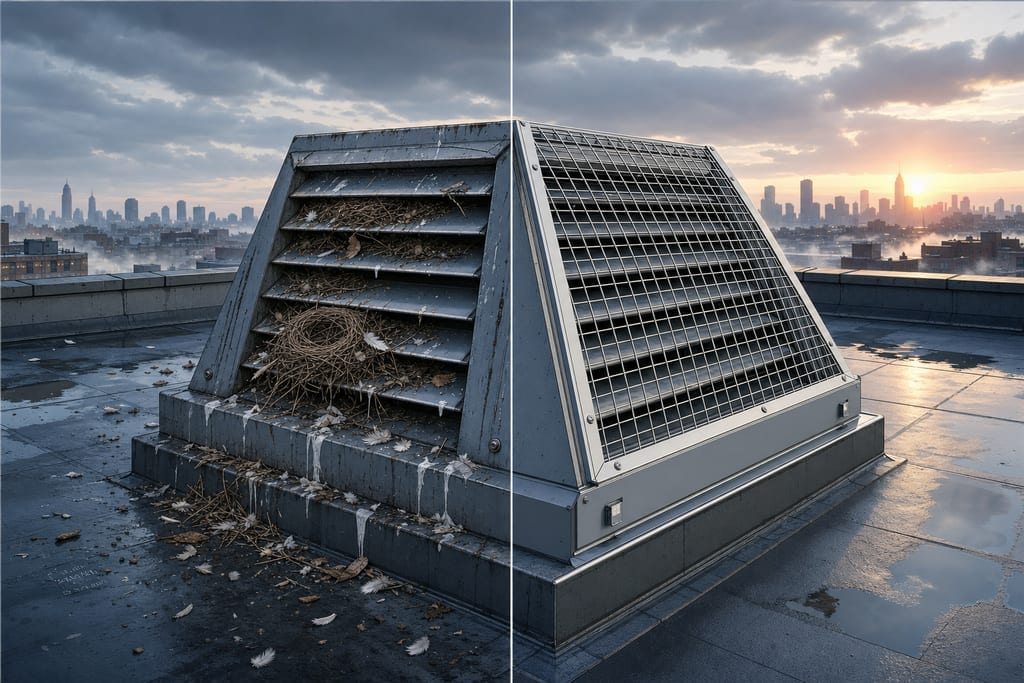
If your roof or vents are covered in droppings, you need bird exterminators who can stop the mess at the source, not just hose it off once. Bird droppings carry disease and eat through roofing materials fast, turning a small nesting problem into a repair bill within a few months. Pigeons, sparrows, and starlings all nest in gutters, vents, and eaves, and their waste is acidic enough to break down shingles, metal flashing, and even wood trim over time.
Not every pest control company treats birds the same way. Some only trap and remove, leaving the same entry points open for the next flock. Others build in repairs and barriers so birds cannot come back once they are gone. Comparing a handful of providers on what they actually do after removal, not just during it, makes it a lot easier to pick the right one for your building.
Table of Contents
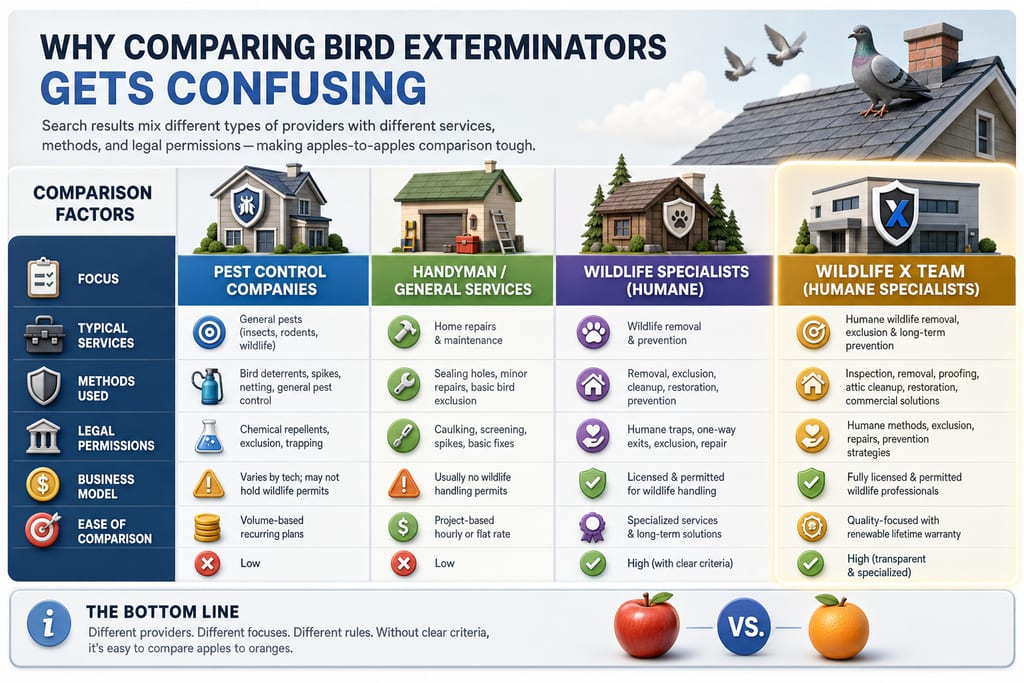
Why Comparing Bird Exterminators Gets Confusing
Search for bird removal near Fort Worth or Denton and you get a mix of general pest control companies, handymen who patch vents on the side, and wildlife specialists who focus only on animals. Each one quotes the job differently, and their idea of "done" rarely matches. A pest control outfit might spray or trap, a handyman might just cover a hole, and a wildlife specialist might inspect the whole roofline before touching anything.
The bird species involved also changes what a company is legally allowed to do. Pigeons and house sparrows are not protected, so a company can remove nests and eggs without a permit. Hawks, owls, and woodpeckers fall under federal protection, which means removal requires different handling and sometimes a permit before anyone touches a nest.
A short list of common building birds and their general risk level helps set expectations before you call anyone.
- Pigeons: high mess risk, no legal protection, frequent repeat nesting
- House sparrows: moderate mess risk, no legal protection, nest in small gaps
- Starlings: high mess risk, no legal protection, nest in large colonies
- Woodpeckers: low mess risk, federally protected, cause structural damage instead
- Hawks and owls: low mess risk, federally protected, rare on most buildings
Knowing which category a bird falls into before you call narrows down who can actually do the work. A company that only handles pigeons and sparrows will not be equipped for a protected species nesting under your eaves.
This clip shows how exclusion netting works on a building facade, which is the kind of detail worth asking about when you compare quotes.
Types of Companies That Handle Bird Problems
Three kinds of companies answer bird calls, and each one solves a different piece of the problem. National pest control chains move fast and can usually get someone out within a day or two, but their work often stops at spraying or trapping, with little attention paid to sealing the building back up. General handyman or roofing contractors can patch a gap in an afternoon, yet most of them have never handled a live bird and may miss entry points higher on the roofline.
Dedicated wildlife exclusion specialists, like Wildlife X Team, combine inspection, removal, and structural repair into one visit instead of passing you between three separate companies. Matching the provider to the building matters more than picking the cheapest quote. A homeowner with birds in the attic usually needs a wildlife specialist who can also fix insulation and vents, while a warehouse with birds roosting in open rafters may need a netting contractor built for large-scale coverage.
- Pest control chains: quick scheduling, limited exclusion work
- Handyman or roofing contractors: solid patching, no bird-specific training
- Wildlife exclusion specialists: inspection, removal, and repair in one trip
- Netting contractors: better fit for warehouses and large open structures
Spotting the Bird Problem Before You Call
Walk your roofline and attic before you dial anyone, because the details you find change what kind of quote you should expect. Droppings piled under a vent, loose nesting material in a gutter, or scratching sounds at dawn all point to an active problem rather than an old, empty nest.
Vents, chimney caps, and roof eaves are the entry points birds use most often on homes and small commercial buildings. Knowing exactly where the birds are getting in lets you tell a real repair quote from one that just covers the noise. Check these spots before you call:
- Bathroom and kitchen vents for feathers or droppings at the opening
- Chimney caps for bent screens or missing covers
- Roof eaves and soffits for small gaps where siding meets the roofline
- Gutters for nesting material stuck in the corners
- Attic insulation for staining or matted spots from droppings
What Exclusion Materials Separate Good Quotes From Bad Ones
Ask what material a company plans to install, not just whether they will "seal it up." Vent guards, bird spikes, and netting all come in different grades, and a thin plastic guard from a hardware store will not hold up the same way a metal one does against years of weather and determined birds.
Caulking and foam alone rarely stop birds at larger gaps, since most species can squeeze through openings smaller than people expect and will peck through soft sealant over time. Ask every company what materials they use and how long those materials are rated to last before you sign anything. Wildlife X Team's Animal Proofing & Exclusion Services rely on foundation repair and vent-guard installation built for long-term use rather than a quick patch.
This clip shows exclusion work on a building, which gives a sense of what a properly sealed vent or gap should look like once the job is finished.
- Vent guards: metal versions outlast plastic ones by years
- Bird spikes: stainless steel holds up better than plastic in sun and rain
- Netting: check the gauge, thin netting tears under bird weight
- Caulking: fine for small cracks, not for gaps birds can fit through
Your Comparison Checklist for Local Bird Exterminators
Once you have a few quotes in hand, compare them point by point instead of going by price alone. Start with certifications and humane handling practices, since some bird species are federally protected and require permitted handling before any nest comes down.
Warranty terms matter just as much as the repair itself. A renewable lifetime warranty on exclusion work means a lot more than a one-time service guarantee that expires after a year. Run through this list while you're on the phone with each company:
- Licensing or certification for humane wildlife handling
- Warranty length and whether it renews
- Pricing structure: flat fee versus charges per entry point
- Materials used for exclusion and their expected lifespan
- Reviews mentioning repeat bird problems after the first service
- How soon they can inspect and start the actual repair work
Companies serving Fort Worth, Denton, and Granbury vary in how fast they can respond, so ask for a specific inspection date rather than a vague window. A company that gives you a real appointment time is usually the one that treats the inspection as the start of the job, not just a sales visit.
Cheap Fix or Long-Term Protection
The lowest bid on a bird job usually means the fewest repairs. A company that quotes low is often planning to clear the nest and leave the gaps alone, which brings the birds back within a year and brings the same bill back with them.
A warranty only means something if real exclusion work backs it up. One company's lifetime warranty on vent guards and sealed entry points is worth more than another's thirty-day guarantee on a trap-and-remove visit, because the first one is betting on their repair holding, not just hoping the birds move on.
Jesse Bernard's squirrel job is a good example of what separates a real inspection from a quick patch. He expected one entry point, but the crew found two more he would have missed on his own, and the same thing happens on bird jobs, since birds use the same small gaps around vents, eaves, and roof seams that squirrels do.
Commercial buildings carry a different kind of cost. A restaurant or warehouse with an active bird problem risks closures over droppings and health code violations, so the price of the repair matters less than how fast the exclusion work gets done and how well it holds up against repeat roosting.
Choosing Who Gets the Job
Take your checklist and call at least two different provider types, a pest control chain and a wildlife exclusion specialist, so you can compare what each one actually includes in the price. Pay closer attention to the warranty terms and the exclusion materials than to who quotes the lowest number, since that's where the real difference between a short fix and a solved problem shows up. Wildlife X Team covers Fort Worth, Denton, Granbury, and the surrounding area with inspection, removal, and repair work done in one visit, which makes them worth adding to your short list if you want a single company handling the whole job instead of three.
Bird Removal Questions for Building Owners
What if two companies give me wildly different prices for the same bird problem?
The gap usually comes from what each quote includes. A low number often covers removal only, while a higher one includes repair materials, vent guards, and a warranty on the work. Ask each company to break down labor, materials, and warranty coverage separately so you are comparing the same scope, not just two totals.
Can I be fined for removing a bird nest myself if it's blocking my vent?
It depends on the species. Pigeons, sparrows, and starlings are not protected, so clearing their nests yourself carries no legal risk. Woodpeckers, hawks, and owls fall under federal protection, and disturbing an active nest without a permit can bring fines, so check what bird you are dealing with before you touch a vent.
What happens if birds return to the same spot after a company seals it?
A proper exclusion job should hold, but if birds get back in, the warranty terms decide what happens next. Wildlife X Team backs their exclusion work with a renewable lifetime warranty, so a repeat problem at a sealed entry point gets fixed again at no extra cost rather than billed as a new job.
Do commercial buildings need a different type of bird exterminator than houses?
Yes, scale changes the job. A house usually has a handful of entry points around vents and eaves, while a warehouse or restaurant may have open rafters, loading docks, and rooftop units spread across a much larger roofline. Look for a company with commercial experience and large-scale netting or barrier work, not just attic and vent repair.