
Bat Sounds Explained So You Can Identify Chirps, Squeaks, and Clicks
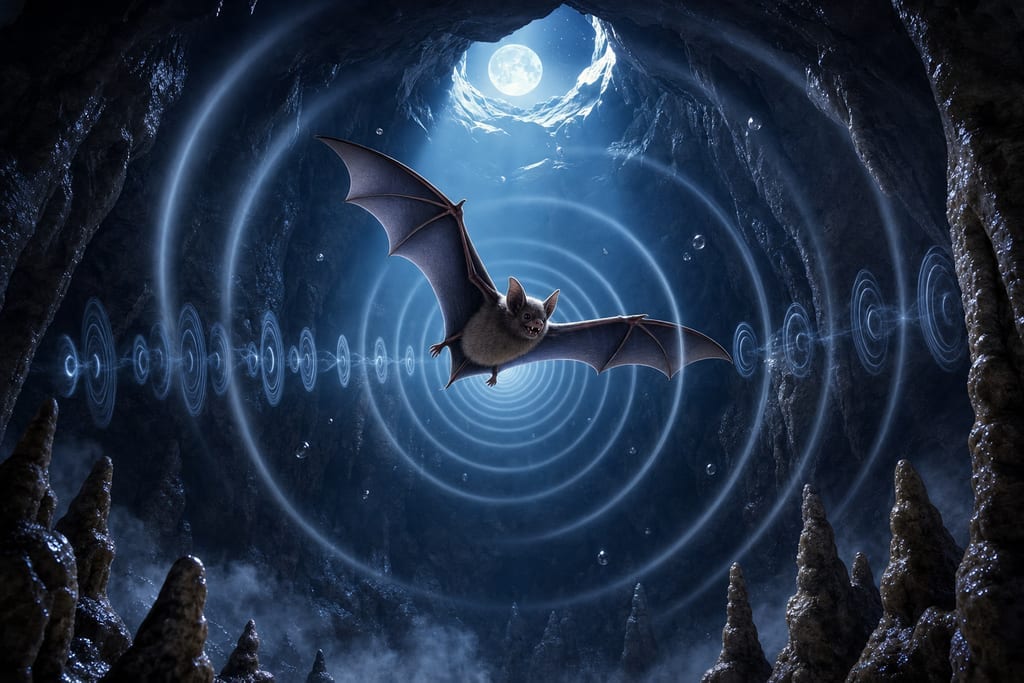
What sound do bats make? Mostly high-pitched squeaks, soft chirps, and quick clicking noises, especially when they're roosting close together or talking to each other in the dark. Most of their real work happens above that range though. Echolocation calls often sit higher than human ears can pick up, so the bat flying past your porch light is making far more noise than you'll ever hear.
What you can hear is usually the social chatter, not the navigation system. If you catch a steady squeaking at dusk or a scratchy clicking sound coming from the attic after dark, that's a strong sign bats have already moved in and are settling for the night.
Table of Contents
Why Bats Sound Different From Other Attic Pests
Bats rely on ultrasonic clicks to find their way around in the dark, and those calls sit far above what the human ear can register. That's why a bat colony can fill an attic with activity while the house stays quiet. The clicks you'd need equipment to hear are for flying and hunting, not for talking to each other.
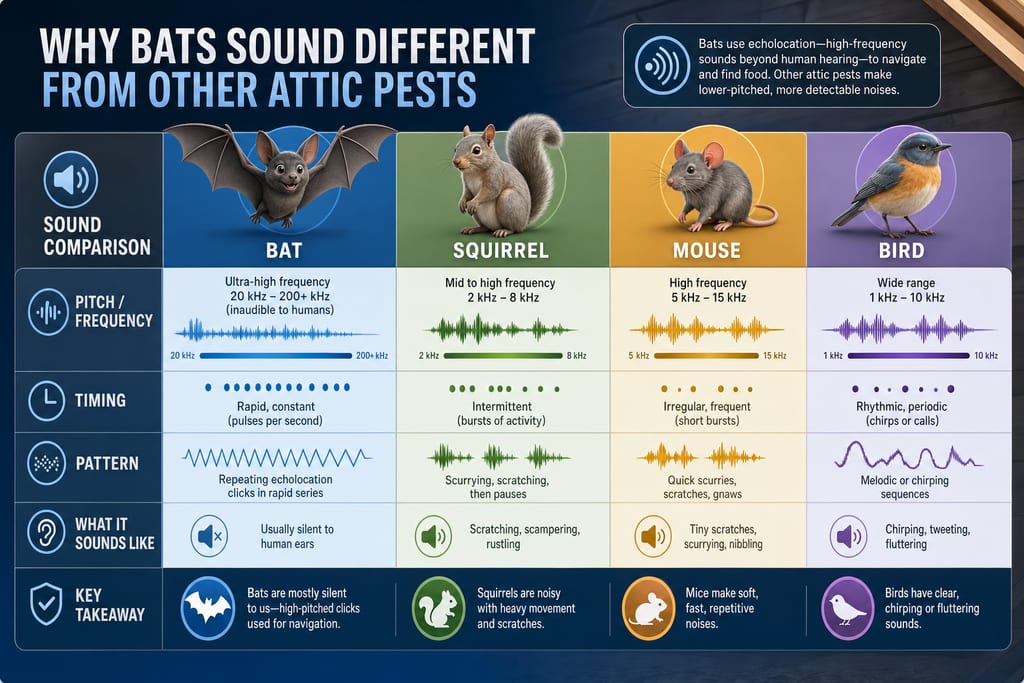
Any bat sound you actually notice is a social call, made when bats are close together, not when they're navigating. Squirrels scratch and thump as they move and chew, mice scurry in short bursts and gnaw on wood, and birds make distinct chirps during daylight hours. Bats, by contrast, stay mostly silent during the day and get active only after dusk, so timing is often the clearest clue.
A few traits to sort out what's overhead:
- Bats: soft squeaks and clicks, active after dark, little daytime movement
- Squirrels: scratching and running, active during the day
- Mice: quick scurrying and faint gnawing, active mostly at night
- Birds: chirping and rustling, active at dawn and during the day
The Squeaking and Chattering Bats Make at Rest
Bats roosting together during the day keep up a low, steady squeaking and chattering while they're packed in tight against each other. It's social noise, not distress, the kind of background sound a crowded colony makes while waiting out the daylight hours. You might only hear it if you're standing right under a roof section where a cluster has settled.
That chatter usually picks up near dusk, right before bats leave the roost to feed, so a quiet attic can suddenly get noisy for twenty or thirty minutes around sunset. Homeowners often mistake this for mice scratching behind insulation, since both sounds are soft, high, and come from inside a wall or ceiling cavity.
A few things separate the two once you listen closely:
- Bat chatter clusters at dusk, mouse scratching happens any time, day or night
- Bat sounds come from one tight cluster point, mouse noise moves along a run
- Bat chatter is a layered murmur, mouse scratching is a single scrape-scrape pattern
If the noise only shows up at one end of the attic and ramps up right before dark, that points more toward bats than rodents.
The Clicking Sound Bats Use to Navigate in the Dark
Echolocation clicks are how bats find insects and avoid walls in total darkness, and most of those clicks sit well above what adult human ears can register. That's why a bat can be working a space all night and the room stays silent to you. Younger ears, or certain lower-pitched species, can sometimes catch a faint ticking that older adults miss completely.
A few conditions make clicking more likely to reach your ears:
- Standing close to a vent or soffit where bats are flying in and out
- A quiet house at night with no fans, AC, or traffic noise competing
- A younger listener in the room, since high-frequency hearing fades with age
- A bat flying in a tight, enclosed space, which produces more audible clicking than open flight
Clicking near a wall or vent after dark usually means a bat is working a confined space, not just passing through. That's a different signal than the chatter from a resting colony, and it often means an active flight path in or out of the house.
Chirping Noises From Young Bats and Mothers
Pups chirp fast and repeatedly to call their mothers back to the roost, and that chirping sounds sharper and quicker than the soft chatter adult bats make at rest. It's a distinct, almost insistent pattern, not a single squeak here and there.
This noise spikes hard during spring and summer maternity season, when colonies raise pups in one spot before the young can fly. Continuous chirping behind a wall during these months usually points to an active colony, not a lone bat, since a single animal rarely makes that much repeated noise on its own.
A few signs help confirm it's a maternity colony:
- Chirping is constant rather than occasional, often for hours at a stretch
- Noise is concentrated in one section of attic or wall, not spread out
- Timing lines up with spring and summer, not fall or winter
Wildlife X Team treats maternity colonies carefully, since pups can't fly yet and removal has to wait until they're mobile, which is part of why timing matters when you first notice the chirping.
Telling Bat Noises Apart From Other Wildlife
Timing is the fastest way to sort bat sounds from other animals sharing your attic or walls. Bat activity clusters tightly around dawn and dusk, while squirrels are loudest in the middle of the day and go quiet at night.
Location matters too. Bat sounds come from tight, enclosed spots like soffits, gable vents, and narrow gaps near the roofline, not from open attic floor space where squirrels nest and scurry.
A sudden ammonia smell alongside squeaking is a strong giveaway, since it points to accumulated droppings rather than the dry debris rodents leave behind. A few clues worth checking in order:
- Time of day the noise happens, dawn or dusk versus midday
- Exact location, tight vent or gap versus open attic space
- Any smell, sharp ammonia versus no smell at all
- Sound pattern, clustered chatter or chirping versus scattered scratching
Running through those four points usually settles the question before you ever need to climb up and look.
Act on It Now or Wait and See What Happens
Hearing the same noise from the same spot, night after night, points to an established roost rather than a bat that wandered in once. A single visitor moves around and the sound shifts location. A fixed, repeating pattern means a group has settled and is not leaving on its own.
Waiting has a cost that grows fast. Spring colonies expand quickly, so the handful of chirps you hear in March can mean dozens of bats by the time summer heat sets in. The longer a colony stays, the more droppings build up, and once stains show on the ceiling or insulation, the cleanup job is bigger and more expensive than catching it early.
A property inspection that maps the exact gap bats are using gives you a clear choice: seal that one entry point now, or deal with a larger colony and a bigger mess later. The first option costs less time and less money. The second costs more of both, plus the health risk that comes with accumulated droppings sitting in an attic for months.
Deciding If It's Time to Get Your Attic Checked
Matching the sound to a bat is only step one. The next step is finding where they're getting in, and that's not a job for guesswork from the ground. Wildlife X Team checks soffits, vents, and rooflines across Fort Worth, Denton, and Granbury to find the exact gap a colony is using, then closes it with humane exclusion that lets bats leave on their own without trapping or harming them. If the chirping or clicking has repeated from the same spot for more than a few nights, that's your signal to get it inspected rather than keep listening and wondering.
Common Questions About Bat Noises
Can I hear bats if my house has vinyl siding instead of a wood roofline?
Yes, vinyl siding does not block the sound, but it can muffle it more than open soffits or wood trim. Bats often squeeze behind siding panels near the J-channel or where siding meets a corner post, and the squeaking or chirping carries through if the gap is close to a bedroom wall. A quieter room at night makes it easier to catch.
Why do I only hear scratching noises but never any squeaking at all?
Scratching without squeaking usually points to something other than bats, since bats roosting together almost always produce some chatter, especially near dusk. Steady scratching with no social noise fits squirrels or mice better. If the sound sticks to one tight gap near the roofline and never varies, it is worth having someone confirm which animal is actually there.
Is it normal for bat sounds to completely stop during winter months?
Yes, that is normal. Many bat species leave the area or go into a low-activity state called torpor once temperatures drop, so an attic that was noisy in September can go quiet by December. The sound usually returns in spring when bats become active again and start roosting in the same spot as before.
Can a single bat trapped in a room make noises loud enough to hear through a door?
Yes, a single bat flying inside a closed room often makes more noise than you would expect, with wing flutter against walls and sharp, panicked squeaking as it looks for a way out. That sound is usually louder and more erratic than the steady chatter of a roosting colony. Wildlife X Team can remove a trapped bat safely if you are not comfortable handling it yourself.