
Bat Removal Specialists: Understanding Texas Bat Exclusion Laws

Removing bats from your Texas home during the wrong time of year could land you with hefty fines and legal trouble that most homeowners never see coming. Between May 1st and August 15th, bat exclusion is completely illegal in Texas, and understanding these restrictions is crucial before you call any wildlife removal service. At Wildlife X Team, we help homeowners navigate these strict regulations while protecting both their property and staying on the right side of the law.
Table of Contents
- The Legal Framework Behind Bat Protection
- Understanding the Maternity Season Blackout Period
- Legal Bat Removal Methods in Texas
- Penalties for Violating Bat Exclusion Laws
- Planning Your Bat Removal Timeline
- Why These Laws Matter for Texas Homeowners
- Staying Compliant While Protecting Your Home
- Common Questions About Texas Bat Removal Laws
The Legal Framework Behind Bat Protection
Texas is home to more bat species than any other state in the country, with 33 different types calling the Lone Star State their home. The most common visitor to Texas homes is the Mexican free-tailed bat, which loves to roost in attics, chimneys, and wall spaces during certain times of the year. These flying mammals play a huge role in controlling insect populations, eating thousands of bugs every single night. Because of their importance to the ecosystem and their vulnerable breeding cycles, both federal and state laws protect bats during specific periods throughout the year.
Who Enforces Bat Protection Laws
The Texas Parks and Wildlife Department (TPWD) is the main agency that oversees bat protection laws in the state. They work alongside federal agencies to make sure bat populations stay healthy and safe. When homeowners need to remove bats from their property, they have to follow specific rules set by these agencies.
Here's what these agencies focus on:
- Monitoring bat populations across Texas to track their health and numbers
- Setting specific dates when bat exclusion is allowed or prohibited
- Educating homeowners and wildlife removal companies about proper bat handling
- Enforcing penalties for illegal bat removal during protected periods
- Working with wildlife removal services like Wildlife X Team to ensure humane practices
Why Maternity Season Matters
The biggest reason for bat protection laws comes down to baby bats. Female bats give birth to their pups between late spring and early summer, and these babies can't fly for several weeks. If you seal up your home during this time, the mother bats might get trapped outside while their babies are stuck inside, which means the pups would die.
Understanding when you can and can't exclude bats from your property is really important. The protected period exists to give baby bats time to grow strong enough to leave with their mothers.
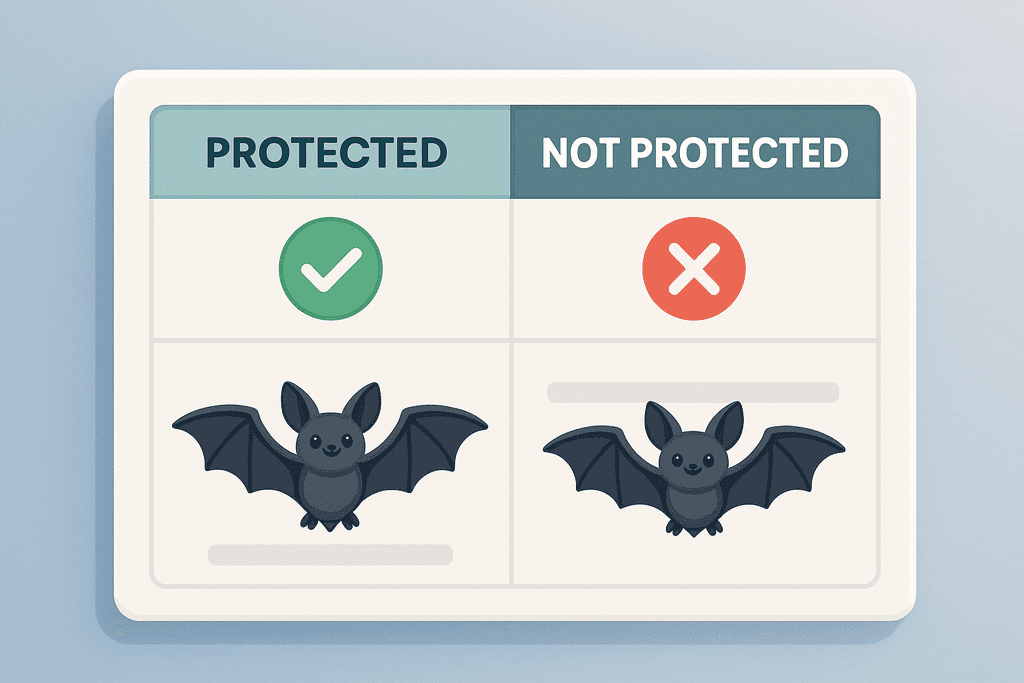
Protected vs Non-Protected Periods
Texas law divides the year into two main periods for bat exclusion work. Knowing these timeframes can save you from legal trouble and help protect bat populations. The maternity season runs from roughly May 1st through August 15th, though exact dates can vary slightly by region and species.
Here's what you need to know about each period:
- Non-Protected Period (August 16 - April 30): You can legally perform bat exclusion work
- Protected Period (May 1 - August 15): Bat exclusion is prohibited by law
- Emergency situations may have different rules but still require professional assessment
During the non-protected period, homeowners can work with professional wildlife removal services to humanely exclude bats from their homes. Companies like Wildlife X Team use one-way exclusion devices that let bats leave but prevent them from getting back in. This method keeps the bats safe while solving your home invasion problem.
The comparison between these periods shows why timing matters so much:
Bat Exclusion Periods in Texas
Non-Protected Period (August 16 - April 30)
- Bat exclusion is legal and recommended
- Professional removal services can install exclusion devices
- Best time to seal entry points and repair damage
- Bats are mobile and can find new roosting spots easily
- No risk of trapping flightless baby bats inside
Protected Period (May 1 - August 15)
- Bat exclusion is illegal in most cases
- Baby bats are present and cannot fly
- Sealing entry points could trap and kill pups
- Violations can result in significant fines
- Only emergency health situations may allow exceptions
Federal and State Cooperation
While Texas Parks and Wildlife handles most bat issues, federal laws also come into play for certain species. Some bat species are listed as endangered or threatened under federal law, which adds another layer of protection. The good news is that the Mexican free-tailed bat, the most common home invader, isn't on the endangered list.
Both levels of government agree on these key points:
- Bats should never be harmed or killed during removal
- Exclusion methods must allow bats to leave safely
- Property owners must wait until the non-protected period for most exclusion work
- Professional wildlife services must follow humane practices
When you're dealing with bats in your home, working with a licensed professional who knows these laws inside and out makes all the difference. Wildlife X Team stays up to date on all federal and state regulations, ensuring that your bat problem gets solved legally and humanely. They can inspect your property during the protected period and plan the exclusion work for the right time of year, so you're not left waiting without a plan.
Understanding the Maternity Season Blackout Period
Texas law protects bats during a specific time each year, and breaking these rules can cost you thousands of dollars. If you've discovered bats in your attic, the timing of when you can legally remove them matters more than you might think. The state has established a complete blackout period that runs from May 1 through August 15, during which no bat exclusion work can be performed. This isn't just a suggestion from wildlife experts, it's the law, and the reasons behind it are pretty straightforward once you understand bat biology.

Understanding the Maternity Season Blackout Period
Baby bats are born in late spring and can't fly for their first six to eight weeks of life. During this vulnerable period, they depend entirely on their mothers for survival. If you seal up your home while baby bats are still inside, the mother bats get locked out and the babies die a slow death in your walls or attic.
Here's what makes the maternity season so critical:- Baby bats cannot fly until they're 6-8 weeks old
- Excluding mothers during this time causes baby bats to die trapped inside
- Temperature and timing vary slightly by region across Texas
- Planning ahead prevents emergency situations during blackout months
- The May 1 to August 15 window applies statewide regardless of local conditions
Most homeowners don't realize they need to plan months in advance. If you discover bats in April, you're already cutting it close. If you find them in June, you're stuck waiting until mid-August to do anything about it.
Legal Bat Removal Methods in Texas
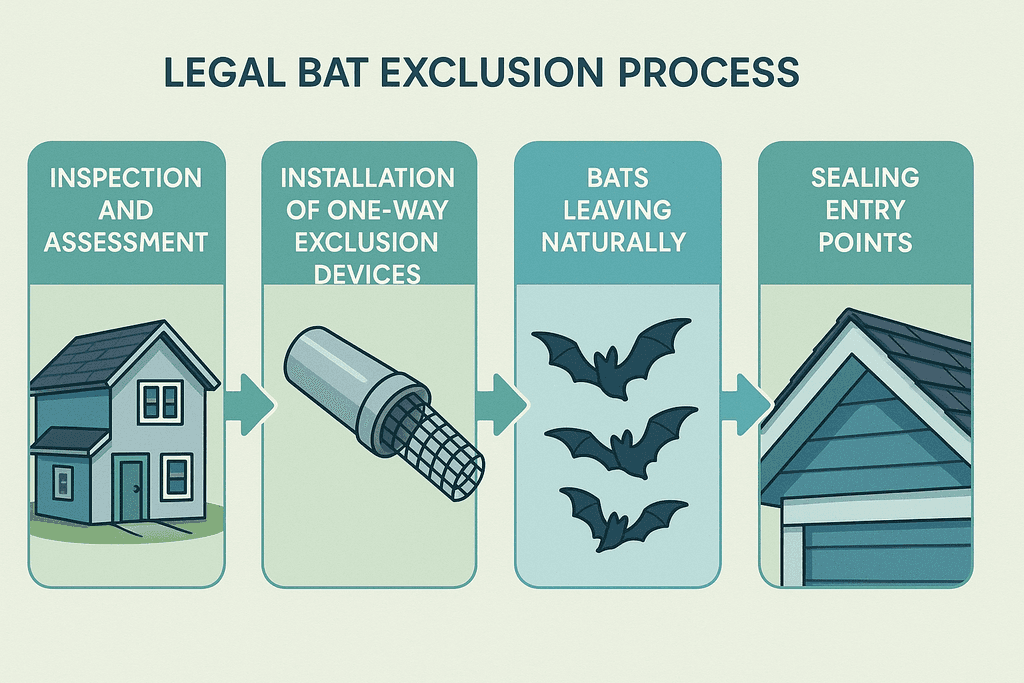
Texas doesn't give you many options when it comes to getting bats out of your home, but there's a good reason for that. The only legal method for bat removal in the state is using one-way exclusion devices. These devices let bats leave your home naturally but prevent them from getting back in. It sounds simple, but the installation requires knowledge of bat behavior and building construction that most homeowners don't have.
Legal Bat Removal Methods in Texas
Trapping bats is illegal. Killing them is illegal in most circumstances. Even relocating them to another area violates state guidelines. Professional wildlife removal companies like Wildlife X Team must follow these regulations, which means the work has to be done right the first time.
This video shows how proper bat exclusion works when done by professionals who understand both the legal requirements and bat behavior patterns.
Legal exclusion work must follow these guidelines:- All exclusion work must be completed before May 1 or after August 15
- One-way exclusion devices are the only approved removal method
- Every potential entry point must be sealed except for the exclusion device locations
- Devices must remain in place for at least three days to ensure all bats have left
- Final sealing can only happen after confirming no bats remain inside
The process takes time and patience. Companies that promise same-day bat removal are either breaking the law or don't understand how bat exclusion actually works.
Penalties for Violating Bat Exclusion Laws
The financial consequences of illegal bat removal can add up faster than most people expect. Texas Parks and Wildlife doesn't mess around when it comes to protecting bat populations. Fines start at $500 per violation but can climb all the way to $10,000 depending on the severity and circumstances. What makes this even more serious is that each bat harmed can count as a separate violation, which means a single bad decision during maternity season could result in dozens of individual penalties.
Contractors who perform illegal bat exclusion face additional penalties beyond what homeowners might receive. Operating without proper permits or during the blackout period can result in license suspension or revocation. Some companies in the Dallas-Fort Worth area have faced exactly these consequences for cutting corners.
The penalty structure breaks down like this:- First-time violations typically result in fines between $500 and $2,000
- Each bat harmed counts as a separate violation with its own fine
- Contractors without proper permits face additional penalties up to $10,000
- Civil liability for property damage caused by illegal exclusion methods
- Repeat offenders face increased penalties and potential jail time up to 180 days
Beyond the legal penalties, there's also the practical damage to consider. Homeowners who attempt DIY exclusion during the wrong season often end up with dead bats decomposing in their walls, which creates health hazards and odor problems that cost more to fix than hiring professionals would have cost in the first place.
Planning Your Bat Removal Timeline
The key to legal bat removal is getting ahead of the calendar. Most homeowners who run into problems waited too long to start the process. If you schedule an inspection in late winter or early spring, you give yourself enough time to complete all the exclusion work before the May 1 deadline hits. This is when companies like Wildlife X Team see the smartest homeowners calling, the ones who understand that bat removal isn't something you can rush.
The widest window for bat exclusion work runs from September through March. During these months, you don't have to worry about maternity season restrictions, and bats are less active due to cooler temperatures. Some bats even migrate during this period, which can make exclusion easier.
Your ideal timeline looks like this:- Schedule your initial inspection between January and March
- Complete all exclusion work by mid-April at the latest
- If you miss the spring window, wait until after August 15 to begin
- Plan for the entire process to take 1-2 weeks from start to finish
- Budget extra time for unexpected complications or weather delays
Emergency situations do come up, and Texas Parks and Wildlife can issue special permits in rare cases. But these permits are hard to get and only granted when there's an immediate health or safety risk. A professional wildlife removal company can assess whether your situation truly qualifies as an emergency or if you need to wait for the legal window to open.
The companies that have been doing this work for years know how to plan around the blackout period. They book up fast in March and April because that's when everyone realizes they're running out of time. If you're reading this and you have bats, don't wait until next spring to make the call.
Why These Laws Matter for Texas Homeowners
A single bat can eat up to 1,200 mosquitoes in just one hour, which means the colony living in your attic might actually be doing you a favor before you even realize they're there. Understanding bat exclusion laws isn't just about staying on the right side of regulations. It's about recognizing that these timing restrictions exist because bats provide massive benefits to Texas homeowners and the broader ecosystem. When you follow proper exclusion timelines, you're not just protecting wildlife, you're setting yourself up for better long-term results.
A colony of just 150 big brown bats can consume enough adult cucumber beetles each summer to prevent 33 million of their root-worm larvae from hatching in local farm fields. That's the kind of natural pest control you can't buy at any store.
The Real World Impact on Your Property
Most homeowners don't think about the connection between bat populations and their mosquito problems. But the numbers tell a different story. Mexican free-tailed bats, common throughout Texas, consume between 6,000 and 8,000 pounds of insects every night during peak season. That includes mosquitoes, moths, beetles, and other pests that would otherwise be bothering you and damaging your landscaping.
- Bats reduce the need for chemical pest control around your home
- They target agricultural pests that can damage gardens and crops
- Natural mosquito control means fewer disease-carrying insects near your family
- Healthy bat populations indicate a balanced local ecosystem
Why Proper Timing Protects Your Investment
Rushing a bat removal during maternity season doesn't just break the law. It creates bigger problems down the road. When baby bats are trapped inside during exclusion, they die in your walls and attic, creating odor issues and attracting other pests. The mother bats become more aggressive trying to return to their young, often finding new entry points you didn't even know existed.
Homeowners who attempt exclusion during prohibited months face potential fines up to $10,000 per violation and often end up paying twice for removal services.
Wildlife X Team's approach follows these seasonal restrictions while providing comprehensive solutions that address the root cause. Our Wildlife Inspection Report identifies all potential entry points, so when the legal exclusion window opens, we can complete the work efficiently without cutting corners or risking violations.
- Legal compliance eliminates liability and potential fines
- Proper timing ensures complete colony departure without stragglers
- Humane methods prevent property damage from desperate re-entry attempts
- Professional exclusion includes sealing all entry points simultaneously
Staying Compliant While Protecting Your Home
Texas bat exclusion laws might seem complicated at first, but they really come down to one simple idea: protect the bats during their maternity season, and you can handle your bat problem the rest of the year. The blackout period from May 1 to August 15 is the big one to remember because that's when you absolutely cannot exclude bats from your property. Breaking this rule can lead to fines and dead baby bats in your walls, which nobody wants.
Planning ahead is your best friend here. If you notice bats in spring, you'll need to wait until mid-August to do anything about it. That's a long time to share your attic with unwanted guests.
The good news is that professional wildlife removal companies already know these laws inside and out. Wildlife X Team handles all the legal stuff for you, making sure exclusions happen during the right time of year and using methods that keep both you and the bats safe. We've seen too many homeowners try DIY solutions only to realize they've accidentally trapped bats inside or violated state regulations.
Working with professionals also means the job gets done right the first time. Bats can squeeze through openings as small as a quarter inch, so finding every entry point takes experience and the right equipment.
The bottom line is this: bat problems don't fix themselves, but they do need to be fixed the right way. Understanding when you can and can't take action puts you way ahead of most homeowners who end up scrambling when they discover a colony overhead.
Common Questions About Texas Bat Removal Laws
Dealing with bats in your home brings up a lot of questions, especially when you're trying to stay on the right side of the law. Texas has specific rules about when and how you can remove bats, and breaking these regulations can lead to serious fines. Most homeowners don't realize that timing matters just as much as the method when it comes to bat exclusion. Here are the answers to the most common questions we hear from property owners across the Dallas-Fort Worth area.
When can I legally remove bats from my Texas home?
In Texas, you cannot exclude bats between May 1st and August 31st because this is maternity season when baby bats are present. Removing adult bats during this time would trap flightless pups inside your home, where they'd die and create health hazards. The legal exclusion window runs from September through April, giving you eight months to handle the problem properly.
What happens if I have a bat emergency during maternity season?
If a bat enters your living space during the restricted months, you can remove that individual animal for safety reasons. However, you still cannot seal entry points or perform full exclusion work until September 1st. Wildlife X Team can assess your situation and implement temporary solutions that keep bats out of living areas while waiting for the legal exclusion period to begin.
Do I need a permit to exclude bats from my property?
You don't need a permit for bat exclusion in Texas as long as you follow the seasonal timing restrictions. The key is that you're excluding them humanely, not trapping or killing them. Some companies ignore these rules, but working with a professional who understands Texas wildlife regulations protects you from potential legal issues down the road.
How much does legal bat removal cost in Texas?
Professional bat exclusion typically costs between $500 and $3,000 depending on colony size, entry point locations, and necessary repairs. While some homeowners consider DIY approaches to save money, improper exclusion often leads to bats returning or getting trapped inside walls, which ends up costing more to fix. Companies like Wildlife X Team include inspection, exclusion, and sealing work in their pricing, plus warranties that cover future issues.
Can I remove bats myself or do I need a professional?
Texas law doesn't require you to hire a professional, but bat exclusion is more complicated than most people expect. You need to identify every entry point, install one-way devices correctly, and seal openings at the right time. Missing even one gap means bats will return, and improper timing can trap animals inside your walls.
What should I do if I find a bat in my living space?
Never touch a bat with your bare hands because of rabies risk. Open windows and doors to give it an escape route, or carefully contain it using a box and thick gloves if you've had potential contact. Contact a wildlife removal service immediately if anyone was sleeping in the room or might have been bitten, as rabies exposure requires medical attention even if you didn't notice a bite.