
Bat Removal Services Explained for Texas Homes

A single bat colony in your Texas attic can house hundreds of bats, leaving behind droppings and potential health hazards that grow worse each day. Texas is home to 32 different bat species, and many of them see your home's warm, dark spaces as the perfect shelter. Professional bat removal services protect both your property and these protected animals through humane exclusion methods that keep them from returning.
Table of Contents
Understanding Bat Behavior in Texas
Texas is home to more bat species than any other state in the country, with 33 different types calling the Lone Star State their home. These flying mammals play a huge role in our ecosystem by eating tons of insects every night, but they can become a real problem when they decide your attic is the perfect place to raise their babies. Understanding why bats choose certain homes and when they're most active helps homeowners know what to expect and when to call for bat removal services. The good news is that with the right knowledge, you can spot the signs early and take action before a small bat problem turns into a major headache.
Why Bats Choose Your Home
Bats aren't trying to be pests when they move into your attic or walls. They're just looking for a safe, warm place that reminds them of their natural roosting spots like caves and hollow trees. Your home might seem like the perfect bat hotel if it has the right conditions, and these creatures are surprisingly good at finding their way inside.
Bats can squeeze through openings as small as 3/8 of an inch, which is about the width of a dime. That tiny gap under your roof shingles or that small crack near your chimney might as well be a welcome mat for these animals. Once one bat finds a good spot, others often follow because bats are social creatures that like to roost in groups.
- Attics provide the warm, dark environment bats prefer for roosting
- Older homes with more gaps and cracks are especially vulnerable to bat entry
- Bats return to the same roosting sites year after year if not properly excluded
- The smell of bat guano attracts more bats to an already occupied space
Seasonal Patterns and Maternity Season
Timing matters a lot when it comes to bat removal services. Female bats in Texas give birth to their pups during what's called maternity season, which runs from May through August. During these months, mother bats are nursing and caring for babies that can't fly yet, which means removal becomes more complicated and is actually restricted by law in many cases.
This is why many wildlife removal companies, including Wildlife X Team, recommend scheduling inspections in early spring before maternity season starts. Getting ahead of the problem means you can seal up entry points before bats move in for the summer.
- Spring (March-April) is the best time for bat exclusion work
- Summer months require special care due to flightless bat pups
- Fall (September-October) offers another window for removal before hibernation
- Winter bat removal is possible but less common as bats are less active
Legal Protections for Texas Bats
Here's something many homeowners don't know until they have a bat problem. Texas law protects certain bat species, which means you can't just remove them any way you want. Several bat species in Texas are considered threatened or of special concern, and harming them can result in serious fines. This is why humane bat removal methods aren't just the right thing to do, they're legally required.
Professional bat removal services understand these regulations and use exclusion methods that let bats leave safely without being able to return. Companies like Critter Control and Omega Animal Removal offer bat services, but it's important to choose a provider who follows all state and federal guidelines for protected species.
- Mexican free-tailed bats are protected under state wildlife regulations
- Killing or harming bats can result in fines up to several thousand dollars
- One-way exclusion devices are the legal and humane removal method
- Bat removal must not separate mothers from dependent pups during maternity season
Common Bat Species in Texas Homes
Not all bats are the same, and knowing which species you're dealing with can help you understand their behavior and what kind of damage they might cause. The two most common bats that invade Texas homes have different habits and preferences, though both can create the same messy problems with their droppings and the health risks that come with them.
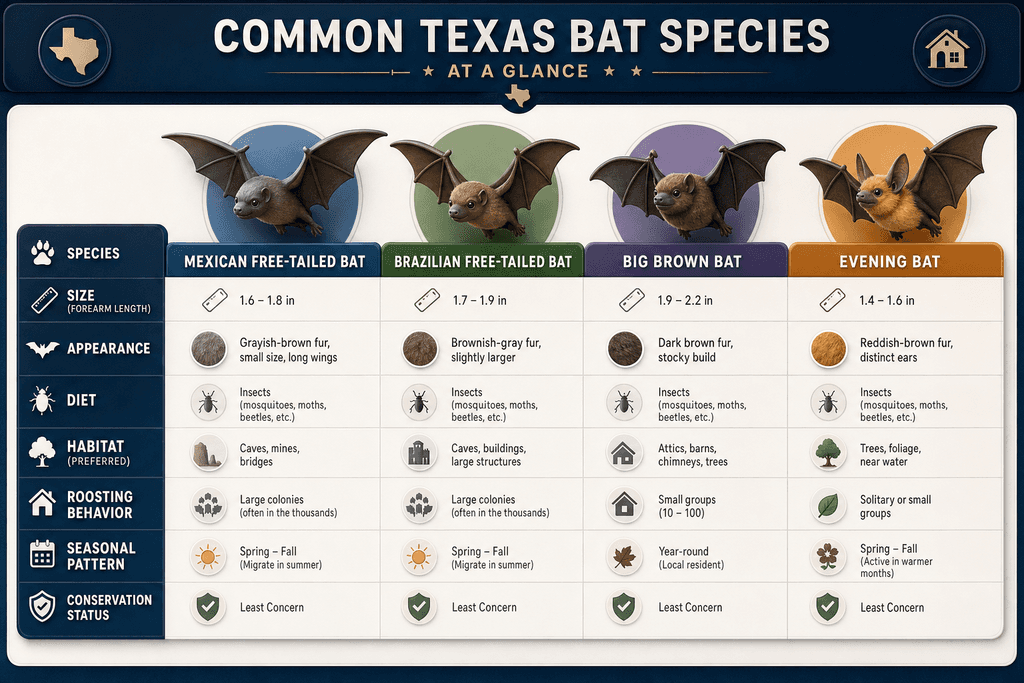
Common Texas Bat Species Comparison
Mexican Free-Tailed Bat: Small to medium size (3-4 inches long), reddish-brown to dark brown color, distinctive tail extending beyond tail membrane, forms large colonies of hundreds to thousands, most common in urban areas, very fast fliers reaching speeds up to 60 mph, primarily eats moths and beetles.
Evening Bat: Small size (2-3 inches long), dark brown fur, rounded ears, smaller colonies of 20-100 individuals, prefers wooded suburban areas, slower more erratic flight pattern, diet consists mainly of small flying insects like mosquitoes.
Mexican free-tailed bats are the ones you've probably seen flying out from under bridges in Austin or other Texas cities at dusk. They're the most common bat species found in Texas attics and can form massive colonies. Evening bats are smaller and tend to roost in smaller groups, but they're just as capable of causing problems in your home.
Signs You Need Bat Removal Services
Texas is home to over 30 bat species, and while they're great for controlling mosquitoes, having them in your attic is a different story. Most homeowners don't realize they have a bat problem until the colony has been there for weeks or even months. The tricky part is that bats are small enough to squeeze through gaps as tiny as a quarter inch, which means they can get into places you'd never expect. Knowing what to look for can save you from dealing with a much bigger problem down the road.
The first thing most people notice is scratching or squeaking sounds coming from their walls or attic, especially right around dusk when bats are getting ready to leave for the night. These sounds are different from what you'd hear with squirrels or raccoons because bats are much smaller and their movements are more subtle.
- Dark stains around entry points from bat body oils that build up over time
- Bat droppings (guano) piling up in your attic or around the outside of your home
- Strong ammonia smell from urine in enclosed spaces like attics or wall cavities
- Visible bats flying around your home at sunset, especially near the roofline
That ammonia smell is often what finally gets people to call for help. Once bat urine soaks into insulation or wood, the odor becomes hard to ignore. If you're noticing any combination of these signs, you're probably dealing with more than just one or two bats passing through.
Bat Infestation Warning Signs Checklist
- Listen for scratching or squeaking at dusk
- Check for dark stains near roof edges and vents
- Look for small droppings in attic or on ground below entry points
- Smell for strong ammonia odor in upper levels of home
- Watch for bats leaving home at sunset
- Inspect attic for guano accumulation
The Professional Bat Removal Process
Getting bats out of your home isn't as simple as shooing them away and closing up holes. Texas has specific laws protecting bats, and there are certain times of year when removal isn't even allowed. Between May 1st and August 15th, bat removal services have to pause because that's when mother bats are raising their young. Removing bats during this time would trap baby bats inside, which is both inhumane and illegal.
The process starts with a thorough inspection where professionals identify every entry point and estimate the size of the colony. Wildlife X Team uses humane methods that comply with all Texas wildlife laws, which means no trapping or harming the bats. Instead, the focus is on letting them leave naturally while preventing them from getting back in.
Here's how the removal actually works. Professionals install one-way exclusion devices at the main entry points. These devices let bats fly out at night to feed but prevent them from getting back in. At the same time, all other potential entry points get sealed up so the bats can't just find a new way inside.
- Complete inspection of property to map all entry points
- Install one-way exclusion devices at primary bat exits
- Seal all secondary entry points immediately
- Monitor for 3-7 days to ensure complete evacuation
- Remove exclusion devices and seal final entry points
- Verify no bats remain inside structure
The whole process typically takes between three to seven days for complete bat evacuation. This timeline gives the entire colony enough time to leave while ensuring none get trapped inside. Some companies rush this step, but that usually leads to bats finding their way back in or worse, dying inside your walls.
Success Rate: Professional bat removal services have a 95-98% success rate when proper exclusion methods are used
Average Timeline: 3-7 days for complete colony evacuation after exclusion devices are installed
Exclusion and Prevention Methods
Once the bats are out, keeping them out is the real challenge. Bats have incredible memory and will try to return to the same roosting spot year after year. That's why proper exclusion work matters so much. A half-done job just means you'll be dealing with the same problem next season.
The most common entry points are gaps in soffits, fascia, and roof vents where materials have deteriorated over time. Texas weather is tough on homes, and even small cracks can become bat highways. Professional exclusion involves using durable materials that can withstand both the elements and determined bats trying to chew their way back in.
- Installing chimney caps and vent guards specifically designed to exclude bats
- Repairing damaged roof shingles and flashing that create entry gaps
- Caulking and sealing around utility entry points like pipes and wires
- Replacing deteriorated soffit and fascia boards
- Adding screening to attic vents with appropriate mesh size
Wildlife X Team offers a Renewable Lifetime Warranty on their exclusion work, which covers the Fort Worth, Denton, Granbury, and surrounding areas. This warranty means if bats find a way back in through the sealed areas, they'll come back and fix it at no additional cost.
DIY vs Professional Bat Removal
DIY Attempts: Often miss hidden entry points, may violate wildlife laws, risk personal exposure to diseases, no warranty on work, bats frequently return
Professional Services: Complete property inspection, legal compliance guaranteed, proper safety equipment used, warranty protection, long-term prevention strategies
Regular inspections after the initial exclusion work help catch new vulnerabilities before bats return. Homes settle and shift over time, creating new gaps that weren't there before. Having someone check these areas annually is a lot cheaper than dealing with another full-blown infestation.
Attic Cleanup After Bat Removal
Getting the bats out is only half the job. What they leave behind can be just as problematic as the bats themselves. Bat guano isn't just gross, it's actually dangerous. The droppings contain a fungus called Histoplasma capsulatum, which causes histoplasmosis when the spores become airborne and get breathed in. This respiratory disease can be serious, especially for people with weakened immune systems.
That's why proper protective equipment is required for safe guano removal. We're talking respirators, protective suits, and proper ventilation. This isn't a job for a dust mask and rubber gloves. The contaminated insulation needs to be carefully removed and disposed of according to local regulations.
- Remove all contaminated insulation from affected areas
- Disinfect all surfaces to kill bacteria and eliminate odors
- Replace damaged insulation to restore energy efficiency
- Seal any remaining entry points discovered during cleanup
- Apply antimicrobial treatments to prevent future contamination
The cleanup process also reveals damage you might not have known about. Bat urine can soak through wood and drywall, weakening structural elements over time. Wildlife X Team provides complete attic restoration services that address both the contamination and any structural issues caused by the infestation.
Professional Attic Cleanup Steps
- Initial assessment of contamination level
- Set up containment and ventilation systems
- Remove contaminated insulation and materials
- Apply disinfectant to all affected surfaces
- Install new insulation to manufacturer specifications
- Final inspection and air quality verification
Replacing the insulation isn't just about getting rid of the smell. Bat-damaged insulation loses its effectiveness, which means your energy bills have probably been higher than they should be. New insulation brings your attic back to proper R-value standards and helps your HVAC system work more efficiently. The whole restoration process typically takes one to three days depending on the size of your attic and the extent of the damage.
Protecting Your Texas Home from Bats
Dealing with bats in your Texas home isn't something you want to handle on your own. These animals are protected by law in many cases, which means you need to follow specific rules when removing them. Professional bat removal services know exactly how to handle these situations the right way, keeping both you and the bats safe while staying within legal boundaries.
The real key to solving a bat problem isn't just getting them out. It's making sure they can't get back in. That's where proper exclusion work comes in, sealing up every possible entry point so your home stays protected for years to come.
Wildlife X Team handles bat removal across Fort Worth, Denton, Granbury, and surrounding areas, using humane methods that actually work long-term. Our approach includes a detailed inspection to find every vulnerability in your home, professional exclusion to keep bats out permanently, and cleanup services to restore any damaged areas.
The difference between a quick fix and a real solution often comes down to experience and the right equipment. Some homeowners try DIY methods or hire general pest control companies, but bats require specialized knowledge that most services don't have.
If you're hearing scratching sounds at dusk or finding droppings around your property, waiting usually makes things worse. You can reach Wildlife X Team at (817) 799-8686 to schedule an inspection and get a clear picture of what's happening in your home. The questions people ask most often about bat removal services might help you understand what to expect next.
Common Questions About Bat Removal
Dealing with bats in your home brings up a lot of questions, and getting the right answers can make the difference between a quick fix and a recurring nightmare. Most Texas homeowners aren't sure where to start when they discover bats in their attic or walls. The good news is that professional bat removal services have dealt with these situations thousands of times before. Here are the most common questions we hear from homeowners facing bat problems.
When is the best time to remove bats from my Texas home?
The best time for bat removal in Texas is between late summer and early spring, specifically from August through February. You want to avoid the maternity season from May through July when baby bats can't fly yet, and removing adults during this time would leave helpless pups to die in your attic. Most bat removal services won't perform exclusions during maternity season for both legal and humane reasons.
How much does professional bat removal cost?
Professional bat removal services typically range from a few hundred to several thousand dollars depending on the size of your home and the extent of the infestation. The cost includes inspection, exclusion work, and sealing entry points. Wildlife X Team provides detailed inspections through their Wildlife Inspection Report to give you an accurate estimate before any work begins, and they back their work with a renewable lifetime warranty so you're not paying for the same problem twice.
Can I remove bats myself?
While it's technically possible to attempt DIY bat removal, it's not recommended for several reasons. Bats are protected in Texas, and improper removal can result in legal issues and fines. You also risk getting bitten, which exposes you to rabies and other diseases. Professional bat removal services know exactly where to look for entry points that most homeowners miss, which is why DIY attempts often fail and bats return within weeks.
Are bats dangerous to my family?
Bats carry several health risks that make them more than just a nuisance. They can transmit rabies through bites, and their droppings (guano) contain histoplasmosis spores that cause serious respiratory infections when inhaled. Bat urine and feces also attract other pests and create terrible odors that seep into your living spaces. The longer bats stay in your home, the more contamination builds up in your insulation and walls.
How long does the bat removal process take?
The actual exclusion work usually takes one to three days depending on how many entry points need sealing. However, it can take up to two weeks for all the bats to leave through one-way exclusion devices. After all bats are gone, cleanup and restoration work adds additional time if your attic needs decontamination and new insulation.
Will bats come back after removal?
Bats will absolutely try to return if all entry points aren't properly sealed. They have incredible memory and will come back to the same roost year after year. This is why professional bat removal services focus heavily on exclusion work, sealing every possible entry point with materials bats can't chew through. Companies like Wildlife X Team offer warranties specifically because they're confident in their exclusion methods and know their work will keep bats out permanently.