
Bat Noises Explained in Attics and Walls
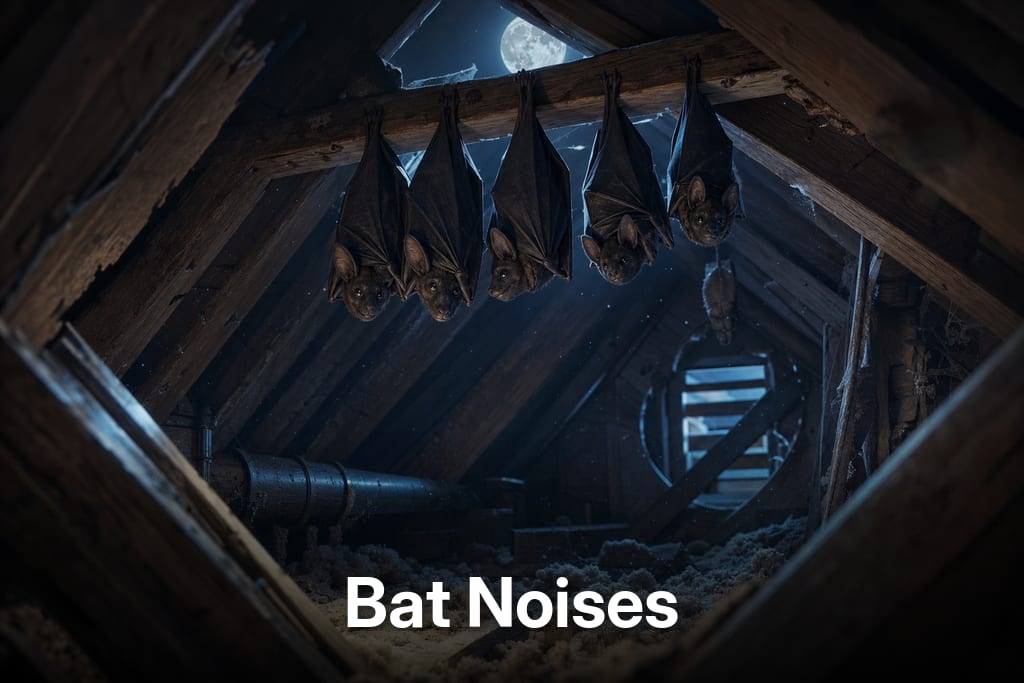
Most bat noises are quiet, not loud: a thin squeak, a soft click, a faint scratch against wood or insulation, nothing like the thumping you get from a raccoon or squirrel overhead. The timing is what gives them away. Listen around dusk, when the colony heads out to feed, and again near dawn, when they file back in. That narrow window of activity, paired with sounds too small to be any other animal, is the clearest sign bats have moved into your attic or wall space.
What makes this hard to catch early is how little space a bat needs to get in. A single bat can flatten its body and slip through a gap the width of a dime, so an opening you'd never notice from the ground is wide open from a bat's point of view. By the time the squeaking is loud enough to hear from inside the house, you're usually not dealing with one bat anymore.
Table of Contents
Why Bats Pick Attics and Wall Voids
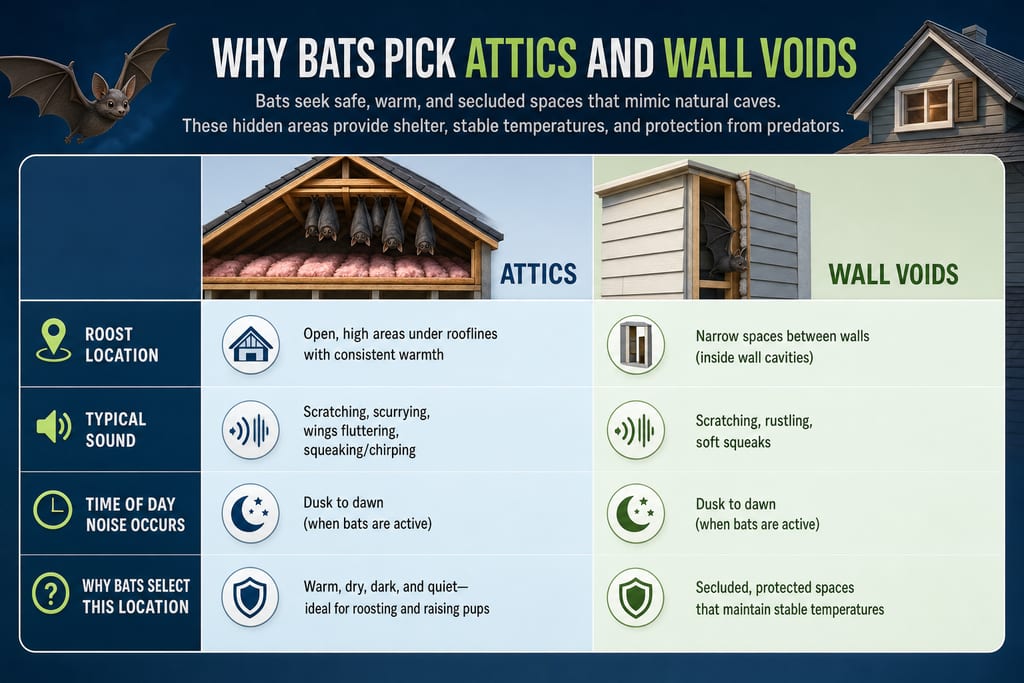
Bats roost in crevices and tight rock gaps in the wild, and an attic ridge or a wall cavity feels close enough to fool them. Dark, still, slightly warm, and hard for predators to reach, these spots check every box a bat looks for. That's why the same house can host bats year after year once one colony finds the entry.
Texas attics most often host Mexican free-tailed bats or big brown bats. Free-tails form large colonies and roost tightly packed, while big browns tend to show up alone or in small groups. Colony size matters because it sets the volume: a few big browns might give you one faint scratch a night, while a free-tail colony of fifty or more can turn a quiet attic into a steady chorus.
Roost type changes what you hear and when. A ridge vent or soffit gap usually carries scratching as bats squeeze in and out. A wall void tends to carry more clicking and rustling, since the bats are packed closer to the drywall. Open attic space produces the most noise overall, simply because it holds the biggest group.
This clip breaks down what those different sounds actually mean once they start coming from inside the house.
A few patterns hold across most Texas attics:
- Ridge vents and soffit gaps: light scratching, mostly at dusk and dawn
- Wall voids near pipes or siding: clicking and rustling, often after dark
- Open attic spaces: layered squeaking and movement, strongest overnight with a large colony
The Chirps and Squeaks You Hear at Dusk
Bats wake up hungry and restless, and the first sign of that is a run of sharp chirps or squeaks starting shortly before sunset. These are social calls, bats checking in with each other as the colony stirs before heading out to feed. The sound comes in short bursts, a few seconds of chatter, then quiet, not one long drone.
During pup season, late spring through midsummer, this chirping gets louder and more constant because young bats squeak for their mothers while the adults prepare to leave. That spike in noise around dusk is the single clearest sign you're dealing with bats and not birds. Birds nesting in a soffit or vent usually chirp at sunrise when they wake and start foraging, the opposite end of the day from a bat colony.
- Chirping starting 20 to 30 minutes before sunset: bats stirring to leave
- Chirping at or after sunrise: more likely birds
- Short bursts with gaps: bat social calls
- Nonstop chatter all day: unlikely to be bats, worth a second look
Clicking and Echolocation Sounds in Wall Voids
A faint, rhythmic clicking inside a wall usually means bats are using echolocation to feel their way through a tight gap between studs. The sound is soft, almost like a clock ticking, and it's easy to miss during the day when the house has its own background noise. At night, once things settle down, that same clicking becomes much easier to pick out.
This clip walks through how that clicking compares to the scratching and chirping covered elsewhere, which helps if you're trying to match a sound to what's actually in the wall.
Electrical ticking from an aging outlet or a cooling duct can sound close to this, so location matters more than the sound itself. Clicking that follows a wall line rather than a fixed point, and happens mainly after dark, points to bats and not wiring. A few quick checks help sort it out.
- Does the ticking move along the wall, or stay in one spot like an outlet
- Does it happen only after dark, or any time of day
- Is there a matching smell of guano nearby
- Does it stop when you tap the wall, which wiring noise usually won't do
Scratching and Fluttering Versus Other Pests
Bat scratching is light and brief, usually tied to a bat grooming itself or shifting position in a tight roost. It's nothing like the scrambling run of a squirrel or the heavier scratch of a raccoon settling in for the day. Right before dusk, that scratching often turns into a quick fluttering sound as bats stretch their wings to leave.
Squirrels produce a thumping, rolling noise as they move across joists, loud enough to hear clearly from a room below. Mice scratch in short, scrappy bursts, usually at night, and their sound carries a scurrying quality bats don't make. If the noise is soft, brief, and paired with a fluttering sound at dusk, bats are far more likely than any other attic pest. A short comparison helps when you're trying to tell them apart by ear.
- Light scratching plus dusk fluttering: bats
- Heavy thumping or running overhead: squirrels
- Scrappy scratching at random hours: mice
- Low growling or heavy shuffling: raccoons
When Noise Patterns Signal a Growing Colony
A single bat might show up for a night or two and then move on, but noise that turns up every evening means the colony has settled in. That shift from occasional to nightly is the signal worth paying attention to, since it means removal and exclusion work becomes more involved the longer it waits. A growing colony also leaves behind more guano, and the smell combined with steady noise confirms an active roost rather than a one-time visitor.
Pup season adds another layer of noise, since young bats squeak for their mothers on top of the usual social calls and echolocation clicking. Once nightly noise and a guano smell show up together, that's an active roost, not a passing bat. Waiting out a growing colony only adds to the cleanup, which is why Wildlife X Team pairs removal with attic cleanup and disinfecting once bats are cleared out.
- Noise once or twice a week: possible single bat passing through
- Noise every night: colony has likely settled in
- Noise plus a guano smell: active roost confirmed
- Extra squeaking in late spring to midsummer: pups in the roost
Calling It a Bird Costs You More Than a Few Days
Mistaking bat chirps for birds is an easy call to make, since both happen in the early hours. The difference is what comes after. Bats are protected in most states, so a homeowner who seals a gap thinking they've solved a bird problem can trap a colony inside, which is both a legal problem and a worse one to clean up.
Every week that passes with bats misidentified is another week of guano building up under the roost. That pile doesn't just smell, it draws insects and carries health risks once it gets into insulation or ductwork. A roost that's confirmed in its first week needs a simple exclusion. A roost confirmed two months later usually needs that exclusion plus a full attic cleanout.
A Wildlife Inspection Report® settles the guesswork by locating the actual entry gaps rather than guessing from the sound alone. That matters because the fix for a dime-sized gap near a ridge vent is nothing like the fix for a colony spread across a whole soffit line. Catching it early keeps the job to sealing and a bat valve. Catching it late adds insulation replacement and disinfecting on top.
Deciding Whether to Confirm It Yourself or Call Someone
Before you pick up the phone, write down what you actually heard: the time it started, how long it lasted, and which wall or attic corner it came from. That short log turns a guess into something a professional can act on fast. Since many bat species are protected, confirming the roost humanely matters as much as confirming it accurately, both for the house and for the bats living in it. Wildlife X Team runs a Wildlife Inspection Report and exclusion work for homes across Fort Worth, Denton, and Granbury, and matching your notes against what they find on the walkthrough is a faster path than guessing alone.
Bat Sounds in Your Home
Can I hear bats through drywall if the colony is small?
Yes, even one or two bats can be heard if the wall is thin or the room is quiet at night. A small colony of big brown bats tends to stay faint, so you may only catch it if you press your ear close or the house is otherwise silent. Insulation thickness also plays a role in how much sound actually makes it through.
Why do I only hear noises during certain seasons and not year-round?
Bats in Texas are most active from spring through early fall, then many migrate or go dormant as temperatures drop. That means a roost can go quiet for months and come back loud the next season without ever fully leaving. If the noise stops in winter and returns in spring, it's likely the same colony cycling back in.
Is it legal for me to seal the entry point myself once I confirm bats?
Sealing an entry point while bats are still roosting inside is not something you want to do on your own, since many bat species are protected and trapping them indoors creates both a legal issue and a cleanup problem. Wildlife X Team handles exclusion work so the colony is cleared before anything gets sealed shut.
Could the sounds I hear actually be moths or insects instead of bats?
Large moths and some beetles can produce a soft fluttering or tapping against a window or vent screen, which gets mistaken for bat wings. The difference is timing and location. Insect sounds tend to stay fixed near a light source or screen, while bat fluttering happens at dusk near the actual entry gap and pairs with the chirping or clicking covered earlier.