Attic Cleanup in Fort Worth After Wildlife Damage

A single raccoon living in your attic for just one month can leave behind gallons of urine-soaked insulation and dozens of contaminated droppings that spread disease-causing bacteria throughout your home's air system. Most Fort Worth homeowners don't realize the invisible health risks lurking above their ceilings until respiratory problems start affecting their families. Professional attic cleanup Fort Worth services like those from Wildlife X Team at 11833 Katy Rd in Keller go far beyond simply removing the animals, addressing the serious contamination that threatens your family's health and your property's value.
Table of Contents
Why Fort Worth Homes Face Wildlife Invasions
Fort Worth sits right in the middle of a wildlife hotspot where urban development meets natural habitats. The city's mix of wooded areas, creeks, and suburban neighborhoods creates the perfect setup for animals looking for shelter. When temperatures drop in winter or spike in summer, your attic becomes prime real estate for critters seeking climate-controlled living spaces. The Dallas-Fort Worth area has seen a 40% increase in wildlife removal calls over the past five years, and Fort Worth accounts for a big chunk of those numbers.
Common Wildlife Invaders in North Texas Attics
Three main culprits cause most attic problems in Fort Worth homes. Each species brings its own set of headaches and damage patterns that homeowners need to understand.
- Raccoons are the heaviest hitters, weighing up to 20 pounds and tearing through roof vents, soffits, and shingles to get inside
- Squirrels are the most common invaders, chewing through wood, electrical wiring, and insulation year-round
- Bats squeeze through openings as small as 3/8 of an inch and leave behind toxic droppings that pile up fast
- Opossums occasionally find their way in through existing damage and can carry fleas and other parasites
The damage these animals cause varies wildly depending on the species. A single raccoon family can destroy thousands of dollars worth of insulation in just a few weeks.
Seasonal Patterns and Peak Invasion Times
Wildlife activity in Fort Worth follows predictable patterns throughout the year. Understanding these cycles helps explain why attic cleanup Fort Worth services see spikes during certain months.
- Spring (March-May) brings baby season when mothers seek safe nesting spots for their young
- Summer (June-August) drives animals indoors to escape the brutal Texas heat
- Fall (September-November) triggers preparation mode as animals stockpile food and seek winter shelter
- Winter (December-February) pushes cold-sensitive species into warm attics for survival
Raccoons typically have babies between March and May, making spring the busiest time for attic invasions. Squirrels actually breed twice a year, with litters in early spring and late summer.
What Makes Fort Worth Attics So Attractive
The climate in North Texas creates unique challenges that other regions don't face. Fort Worth's weather swings from freezing winters to scorching summers, and animals know attics offer protection from both extremes. Most homes built in the area over the past 30 years have plenty of insulation, which animals see as perfect nesting material. The typical Fort Worth home also has multiple entry points that go unnoticed by homeowners.
- Roof vents and ridge caps that loosen over time from temperature changes
- Soffit gaps where the roof meets exterior walls
- Chimney openings without proper caps or screens
- Attic vents designed for airflow but not wildlife exclusion
Wildlife X Team's inspection reports show that the average Fort Worth home has 3-5 potential entry points that animals could exploit. Once inside, animals find everything they need including shelter, warmth, and safety from predators.
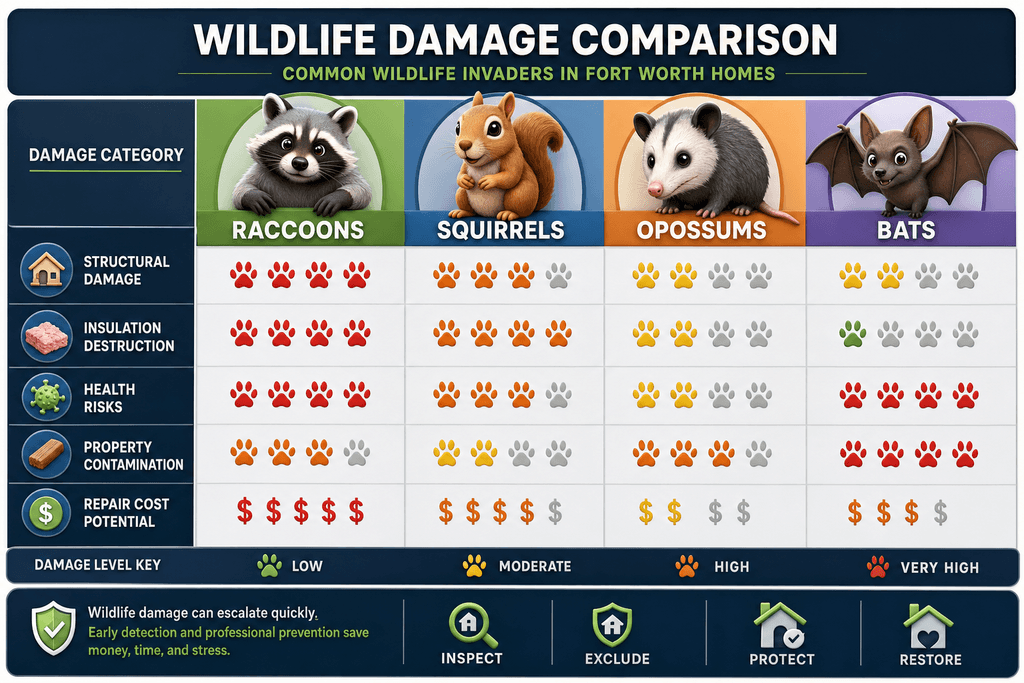
Damage Comparison by Species
Different animals cause different types of destruction in your attic. Here's what each species typically does during a standard 30-day invasion period.
Raccoons
Insulation Damage: Severe - tears apart and compresses 200-400 sq ft
Structural Damage: High - rips through wood, drywall, and ductwork
Waste Accumulation: Heavy - creates latrines with 2-4 gallons of droppings
Electrical Risk: Moderate - may chew wires while exploring
Average Cleanup Cost: $2,500-$5,000
Squirrels
Insulation Damage: Moderate - shreds 100-200 sq ft for nests
Structural Damage: Moderate - gnaws on wood beams and supports
Waste Accumulation: Light to moderate - scattered droppings throughout
Electrical Risk: Very high - constantly chew wires, major fire hazard
Average Cleanup Cost: $1,500-$3,500
Bats
Insulation Damage: Light - minimal physical damage to materials
Structural Damage: Very low - don't chew or tear structures
Waste Accumulation: Severe - guano piles up quickly, highly toxic
Electrical Risk: Very low - don't interact with wiring
Average Cleanup Cost: $2,000-$4,500
Opossums
Insulation Damage: Light - minimal nesting activity
Structural Damage: Low - don't typically chew or destroy materials
Waste Accumulation: Moderate - scattered droppings and urine
Electrical Risk: Low - rarely interact with wiring
Average Cleanup Cost: $1,000-$2,500
The numbers tell a clear story about why quick action matters. Professional attic cleanup Fort Worth services like those offered by Wildlife X Team become necessary once animals establish themselves for more than a few days. The longer they stay, the more expensive the restoration becomes.
Health Risks Hiding in Contaminated Attics
Beyond the visible damage, wildlife invasions create serious health hazards that many homeowners don't realize exist. Animal waste carries diseases and parasites that can affect your family even if you never go into the attic.
- Raccoon roundworm eggs can become airborne and spread through your HVAC system
- Bat guano contains fungal spores that cause respiratory infections when disturbed
- Squirrel droppings and urine attract insects and create mold growth in insulation
- Contaminated insulation loses its R-value, making your energy bills skyrocket
- Parasites like fleas, ticks, and mites spread from the attic into living spaces
Most Fort Worth pest control companies focus only on removing the animals, but that's just half the battle. The contamination left behind requires specialized cleaning and restoration that goes way beyond what a regular homeowner can handle safely.
Health Risks from Contaminated Attics
Wildlife droppings in your attic aren't just gross. They're actually dangerous. When raccoons, squirrels, or other animals take up residence in your Fort Worth home, they leave behind waste that can make your family sick. The longer that contamination sits there, the worse it gets. Most homeowners don't realize that the air they're breathing might be carrying particles from animal waste that's been sitting in their attic for months.
Diseases transmitted through wildlife droppings and urine include histoplasmosis, leptospirosis, and salmonella. These aren't minor illnesses either. Histoplasmosis comes from fungal spores that grow in bat and bird droppings, and it can cause serious lung infections. Raccoon roundworm is another nasty one that can lead to severe neurological problems if the eggs are accidentally inhaled or ingested.
- Histoplasmosis from fungal spores in droppings
- Leptospirosis from contaminated urine
- Salmonella from animal feces
- Raccoon roundworm that affects the nervous system
- Hantavirus in some rodent populations
Respiratory problems from contaminated insulation are one of the most common issues we see at our Keller location. When insulation gets soaked with urine or covered in droppings, it becomes a breeding ground for bacteria and mold. Every time your HVAC system kicks on, it can pull those contaminants through your home's air system.
The parasites and insects that come with wildlife are a whole other problem. Fleas, ticks, mites, and lice don't just stay in the attic. They spread throughout your home looking for new hosts. We've seen cases where families were dealing with mysterious bites for weeks before they discovered the real source was wildlife in their attic.
How contamination spreads through HVAC systems is something most people never think about. Your attic isn't sealed off from the rest of your house. Air circulates between your living spaces and your attic constantly. When your heating or cooling system runs, it can pull contaminated air from the attic and distribute it throughout your home. That's why families sometimes start experiencing allergies or respiratory issues without understanding why.
The long-term health impacts if left untreated can be serious. Chronic exposure to animal waste particles can lead to ongoing respiratory issues, weakened immune systems, and in severe cases, permanent lung damage. Children and elderly family members are especially vulnerable to these health risks.
What Professional Attic Cleanup Involves
Professional attic cleanup fort worth services go way beyond just sweeping up some droppings. It's a detailed process that requires proper equipment, training, and safety protocols. When Wildlife X Team handles a cleanup job in the Fort Worth area, we follow strict procedures to make sure the space is truly safe again. The process starts before anyone even enters the contaminated space.
Initial inspection and damage assessment helps us understand exactly what we're dealing with. We check how much insulation is damaged, where the animals were nesting, and what entry points they used. This inspection also identifies any structural damage that needs repair. Sometimes animals chew through electrical wiring or damage roof vents, which creates additional safety hazards.
This video shows the kind of damage raccoons can cause and what the restoration process looks like. The contamination you see here is pretty typical for homes in Southlake, Grapevine, and throughout the Fort Worth area.
Safe removal of contaminated insulation and materials requires protective gear and proper disposal methods. We can't just toss contaminated insulation in regular trash. It has to be bagged carefully and disposed of according to local regulations. The team wears respirators, gloves, and protective suits during this phase because the contamination levels can be high.
- Complete property inspection to assess all damage
- Remove all contaminated insulation and nesting materials
- Apply professional-grade disinfectants to all surfaces
- Install new insulation to proper R-value specifications
- Seal all entry points with durable materials
- Final inspection to ensure complete restoration
Disinfection and decontamination procedures involve more than spraying some cleaner around. We use commercial-grade disinfectants that are proven to kill the bacteria, viruses, and parasites that wildlife leave behind. Every surface gets treated, including the wooden beams, flooring, and any remaining structures in the attic.
Insulation replacement and restoration brings your attic back to proper condition. New insulation doesn't just make your home healthier. It also restores your energy efficiency, which probably dropped significantly while animals were tearing up the old insulation. We make sure the new insulation meets current standards for the Fort Worth climate.
Sealing entry points to prevent re-entry is the final critical step. There's no point in cleaning everything up if animals can just come right back in. Our team at 11833 Katy Rd in Keller identifies every possible entry point and seals them with materials that animals can't chew through or tear apart.
The Cost of Delaying Attic Cleanup
Putting off attic cleanup might seem like a way to save money right now, but it actually costs you more in the long run. The contamination doesn't just sit there doing nothing. It actively spreads and causes more damage every single day. What might be a straightforward cleanup job today could turn into a major restoration project six months from now. The math really doesn't work in your favor when you wait.
How contamination spreads and worsens over time is pretty straightforward. Urine soaks deeper into wood and insulation. Droppings dry out and turn into dust that circulates through your air system. Mold starts growing in the damp areas. Each of these problems compounds the others, creating a cycle of increasing damage.
- Contamination spreads to previously clean areas of the attic
- Moisture damage leads to wood rot and structural issues
- Mold growth creates additional health hazards
- Odors become embedded in building materials
- Insulation loses more effectiveness over time
Structural damage from prolonged wildlife presence can get expensive fast. Animals don't just live in your attic. They actively destroy it. Raccoons tear up insulation to make nests. Squirrels chew on wooden beams and electrical wiring. The longer they're up there, the more damage they cause. We've seen cases in Denton and Granbury where delays turned a simple cleanup into a project requiring serious structural repairs.
Increased energy costs from damaged insulation hit your wallet every single month. When insulation is torn up, compressed, or soaked with urine, it stops doing its job. Your heating and cooling systems have to work harder to maintain comfortable temperatures. Homeowners in the Fort Worth area often see their energy bills jump by 20-30% when they have significant attic damage.
Impact on home value and future sale potential is something sellers discover too late. Home inspectors find wildlife damage. When that happens, buyers either walk away or demand major price reductions. Even if you disclose the issue upfront, it creates doubt about what other problems might be hiding in the house.
Why immediate action saves money long-term comes down to simple math. A cleanup job that costs a certain amount today might cost twice that in six months after the damage spreads. Plus you're paying higher energy bills the whole time you wait. And if the contamination is affecting your family's health, there are medical costs to consider too.
Wildlife X Team's approach to preventing future damage includes our renewable lifetime warranty. We don't just clean up the mess and leave. We make sure animals can't get back in, which protects your investment for years to come. Our team serves the entire Fort Worth area, from Trophy Club to Weatherford, and we've seen what happens when cleanup gets delayed. The homes we restore stay protected because we address both the immediate damage and the underlying entry points that caused the problem in the first place.
Choosing the Right Cleanup Service in Fort Worth
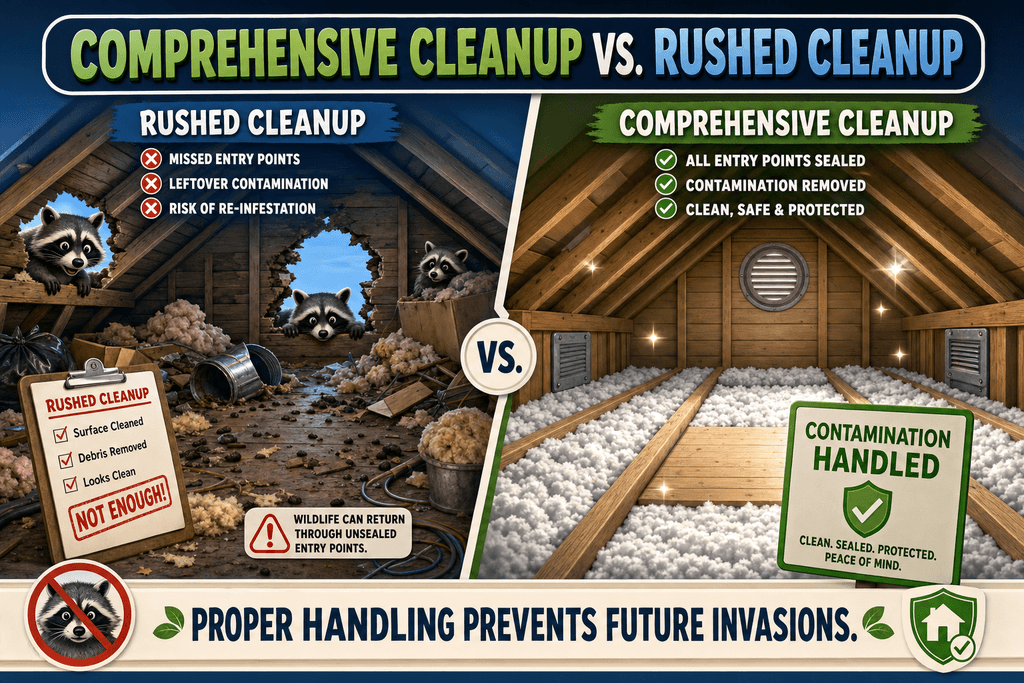
Most homeowners don't realize that picking the wrong attic cleanup fort worth company can actually make wildlife problems worse instead of better. A rushed cleanup job might remove the visible mess, but if entry points aren't properly sealed or contaminated materials aren't handled correctly, you're just setting yourself up for another invasion in a few months. The difference between a basic cleanup and a comprehensive restoration comes down to understanding what actually needs to happen after wildlife moves out. Wildlife X Team's approach at 11833 Katy Rd in Keller covers the Fort Worth area with services that go beyond just sweeping up droppings and calling it done.
What Separates Qualified Professionals from Amateurs
The attic cleanup industry has plenty of companies that will show up with a shop vac and some trash bags. But proper attic restoration requires specific training in biohazard handling, structural repair, and wildlife behavior patterns. Companies like fortworthwildlife.com and critterstop.com offer basic removal services, but not all include the full restoration process that prevents future problems.
- Licensed and insured technicians with biohazard certifications
- Experience identifying all potential entry points, not just obvious ones
- Proper equipment for contaminated insulation removal and disposal
- Knowledge of local Fort Worth building codes and wildlife patterns
- Detailed inspection reports that document the full scope of damage
Questions That Reveal Company Competence
Before hiring any attic cleanup fort worth service, you need answers that go deeper than a basic quote. The right questions expose whether a company actually knows what they're doing or if they're just winging it.
Essential Questions Checklist
- Do you provide a written Wildlife Inspection Report that documents all entry points and damage?
- What specific methods do you use to sanitize and deodorize contaminated areas?
- How do you handle insulation replacement and what R-value materials do you install?
- What warranty or guarantee covers your exclusion work if animals return?
- Are your technicians trained in proper biohazard disposal according to Texas regulations?
- Do you repair structural damage like chewed wiring and damaged ductwork?
- How long does the complete cleanup and restoration process typically take?
- Can you provide recent references from Fort Worth area customers?
Companies that hesitate or give vague answers to these questions probably lack the experience needed for thorough work. Wildlife X Team provides detailed inspection reports before starting any cleanup, which means you know exactly what you're paying for.
Warning Signs of Inexperienced Services
Some red flags are obvious while others hide behind professional-looking websites. Larger companies like Terminix focus mainly on pest control rather than specialized wildlife restoration. Local operations might offer cheaper prices but skip critical steps that lead to recurring problems.
- Quotes given over the phone without a physical inspection of your attic
- No mention of sealing entry points or prevention strategies
- Pressure to sign contracts immediately without time to review terms
- Lack of specific warranty details about what happens if animals return
- Unwillingness to provide proof of insurance or licensing credentials
Why Comprehensive Approaches Actually Save Money
The cheapest attic cleanup fort worth service usually ends up costing more in the long run. When companies like aaacwildliferemoval.com or alamopest.com focus only on animal removal without addressing the full restoration needs, homeowners often face repeat invasions within the same year. Wildlife X Team's renewable lifetime warranty covers the exclusion work, which means if animals find a way back in through their sealed entry points, they return to fix it at no additional cost.
- One comprehensive service prevents the need for multiple service calls
- Proper insulation replacement improves energy efficiency and lowers utility bills
- Thorough sanitization eliminates health risks that could lead to medical expenses
- Warranties protect against future repair costs from new wildlife entry
The difference between a $500 cleanup and a $2000 restoration might seem significant until you're paying for a second cleanup six months later. Investing in complete attic restoration from a qualified Fort Worth area provider protects both your property value and your family's health for years to come.
Protecting Your Fort Worth Home
Dealing with wildlife damage in your attic isn't something you want to put off. The health risks from contaminated insulation and droppings can affect your family for months or even years if left untreated. Plus, the structural damage only gets worse over time, which means higher repair costs down the road. Getting professional attic cleanup Fort Worth services takes care of both the immediate mess and the hidden dangers you can't see.
The real benefit of proper cleanup goes beyond just removing the mess. When professionals handle attic restoration, they seal up all those entry points that brought wildlife in the first place. That means you're not just cleaning up after one problem, you're preventing the next one from happening.
Wildlife X Team handles everything from the initial inspection to the final cleanup and prevention work. Our team serves Fort Worth, Denton, Granbury, and surrounding areas with complete attic restoration services. We don't just remove the contaminated insulation and sanitize your space, we also make sure animals can't get back in.
If you've had raccoons, squirrels, or other critters in your attic, the damage is probably more extensive than what you can see from below. The sooner you get a professional inspection, the less chance there is for mold growth, structural issues, or health problems to develop. Most homeowners are surprised by what a thorough inspection reveals about their attic's condition.
Common Questions About Attic Cleanup
Dealing with wildlife damage in your attic brings up a lot of questions. Most Fort Worth homeowners want to know what to expect before they commit to cleanup services. Here are the answers to the most common questions we hear about attic cleanup after animals have moved out.
How long does attic cleanup take?
Most attic cleanup projects in Fort Worth take between 4 to 8 hours for an average-sized home. The timeline depends on how much damage the wildlife caused and how much contaminated insulation needs removal. Larger attics or severe infestations might need a full day or even two days to complete properly.
Is attic cleanup covered by homeowners insurance?
It depends on your specific policy and how the damage occurred. Some homeowners insurance policies cover sudden wildlife damage, but most exclude damage from animals that moved in over time. Your best bet is to call your insurance company and ask about your coverage before scheduling attic cleanup Fort Worth services. Many companies like Wildlife X Team can provide detailed inspection reports that help with insurance claims.
Can I clean my attic myself after wildlife removal?
You technically can, but it's not recommended for several reasons. Wildlife droppings carry diseases like histoplasmosis and leptospirosis that become airborne when disturbed. Professional crews have the right protective equipment and know how to safely remove contaminated materials without spreading pathogens throughout your home. Plus, they can spot structural damage or remaining entry points you might miss.
How do you prevent wildlife from returning?
Prevention happens through exclusion work that seals every possible entry point. This includes installing vent guards, repairing foundation gaps, protecting chimneys, and sealing holes in soffits and fascia boards. Wildlife X Team offers a Renewable Lifetime Warranty on their exclusion work, which means they stand behind their prevention methods long-term.
What happens to the contaminated materials?
Contaminated insulation and debris get bagged in heavy-duty disposal bags and removed from your property. Professional services dispose of these materials at approved facilities that handle biohazardous waste. The attic then gets disinfected with commercial-grade cleaners before new insulation goes in.
When should I schedule attic cleanup after wildlife removal?
Schedule cleanup as soon as the animals are completely removed and all entry points are sealed. Waiting too long allows odors to set in and gives bacteria more time to spread. Most Fort Worth wildlife removal companies can start cleanup within a few days of finishing the exclusion work, so you're not left with a contaminated attic for weeks.