
Attic Animal Removal in Keller TX With Inspection and Exclusion
If you need attic animal removal in Keller TX, the short answer is that a trap alone will not fix it, you need an inspection, the removal itself, and the entry points sealed shut. Keller's mix of mature trees and mild winters gives raccoons and squirrels an easy reason to pick a warm attic over the cold ground. These animals do not leave on their own once they find a dry, quiet spot to nest, and a mother raccoon with babies will defend that space for weeks.
A homeowner who just sets a trap often ends up with the same problem months later, because the gap or vent that let the first animal in is still open for the next one. Fixing it for good means finding every entry point on the roofline, soffits, and chimney, removing the animals already inside, and sealing the house back up. Wildlife X Team works out of 11833 Katy Rd in Keller and handles this kind of job across the area, start to finish.
Table of Contents
What's Really Living in Keller Attics Right Now
Raccoons, squirrels, rats, and possums account for most of the attic calls in Keller. Each one moves in differently and leaves its own kind of mess behind, so the clues you notice often point straight to the culprit.
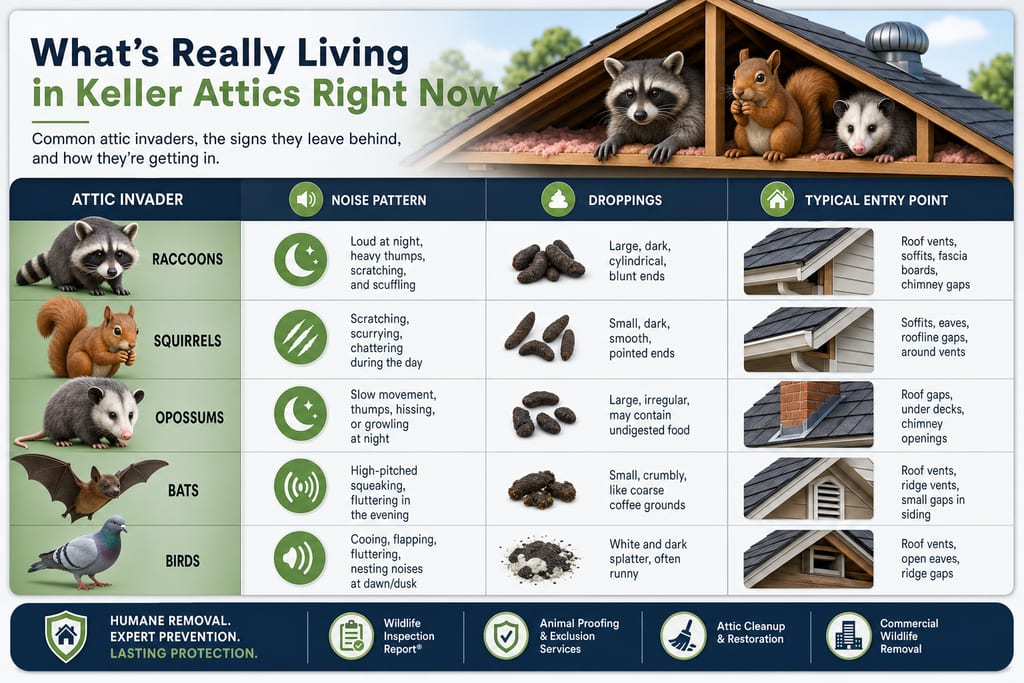
Squirrels are loud during the day, since they are active from sunrise to sunset and scratch around while gathering nesting material. Raccoons flip that pattern, with heavy thumping and dragging sounds after dark, plus droppings the size of a dog's left in one pile near their entry point.
Rats leave thin, dark droppings scattered along joists and gnaw marks on wiring or wood edges. Possums are quieter than either, more of a slow scraping noise, and they tend to settle in one corner rather than moving around the whole attic.
Fall and winter push all four of these animals toward houses because outdoor temperatures drop faster than attic temperatures do. An attic near the roofline stays warmer than a burrow or tree den, so a pregnant female or a family group looking for shelter will pick the easiest opening they can find.
Why a Wildlife Inspection Report Changes the Outcome
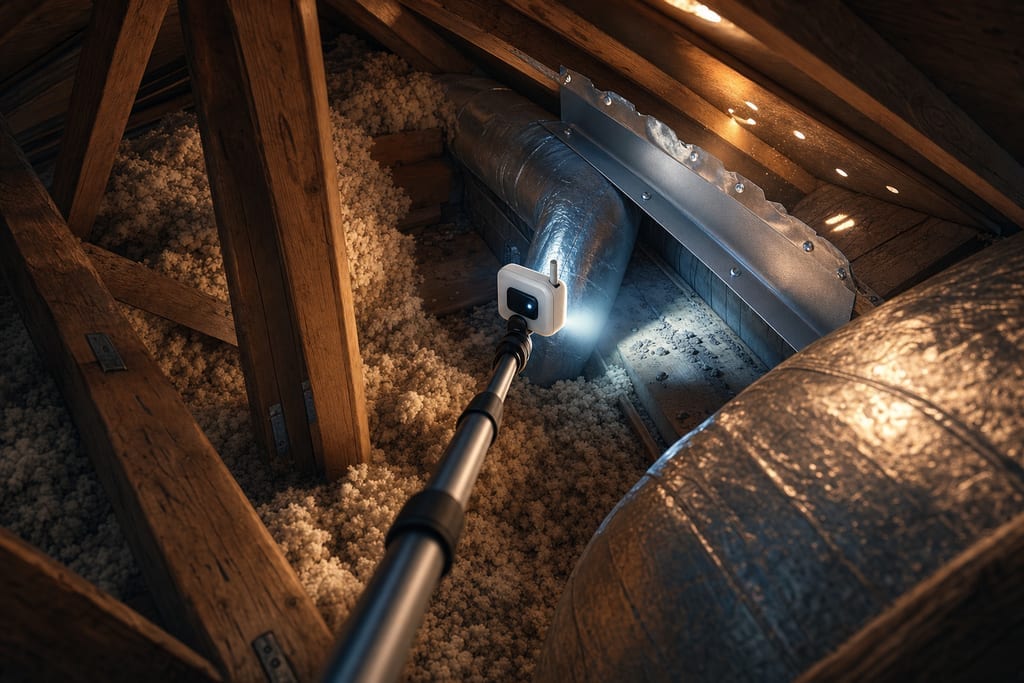
A full inspection checks the whole building, not just the spot where you heard noise last night. Techs work the roofline, vents, chimney, and foundation looking for gaps an animal could use, because wildlife rarely sticks to one entry point once an attic proves livable.
Jesse Bernard's attic had squirrels coming in through an obvious gap he'd already spotted himself. When the crew checked the rest of the roofline, they found a couple more openings he never would have caught on his own, and those extra spots were likely why the squirrels kept coming back even after one hole got patched.
A written report, the kind Wildlife X Team calls a Wildlife Inspection Report, puts every weak point on paper instead of in someone's memory. Here's what that kind of inspection actually looks at:
- Roofline and soffit gaps where shingles or boards have pulled apart
- Vent covers that are bent, missing, or chewed through
- Chimney caps and flashing that have come loose
- Foundation vents and crawl space openings
- Utility line penetrations where cable or pipe enters the wall
Missing even one secondary entry point is the most common reason a trap-and-leave job fails within a few months.
Getting Raccoons and Squirrels Out Safely
Live animals come out through humane traps and one-way doors, not poison or glue boards. A one-way door lets an adult squirrel or raccoon exit through its usual opening but blocks it from getting back in, which clears the attic without trapping an animal inside the walls.
Babies complicate this. A litter too young to follow its mother out gets handled on site rather than separated and left behind, since splitting up a nesting raccoon from her young usually just drives her to tear into a new part of the roof trying to reach them.
DIY trapping runs into trouble fast. A homeowner with a store-bought cage trap can catch the wrong animal, miss a nest of babies entirely, or violate how certain species are legally required to be handled in Texas.
- Check for a nest before setting any trap, not after
- Use one-way doors on active entry points instead of bait traps when possible
- Keep a family unit together until the young can travel
- Confirm the attic is empty before sealing anything shut
Sealing an entry point with an animal still inside is the single worst mistake in this whole process, and it happens more than people think.
Sealing the Attic So Animals Don't Return
Exclusion work is what actually stops the problem from coming back, not the trap. Once the attic is confirmed clear, crews install vent guards, chimney caps, and heavy mesh over gaps, then repair foundation cracks and caulk smaller openings that would otherwise let a mouse or rat back in later.
Sheryl Graham's review mentions Franklin's repair work keeping possums off her property for good, which is the kind of outcome this step is built for. The materials matter here, since a possum or raccoon can tear through thin screening in a single night if it's not rated for the job.
- Vent guards on all roof and soffit vents
- Steel mesh or caps on chimneys
- Foundation gap repair where crawl spaces connect to the house
- Caulking around utility lines and smaller cracks
This work comes backed by a renewable lifetime warranty, which means the seal is expected to hold, not just hoped to.
Cleaning Up the Mess Animals Leave Behind
Animals leaving an attic doesn't mean the attic is clean. Droppings and urine soaked into insulation carry bacteria and parasites, so the space needs disinfecting, not just a quick sweep before someone calls the job finished.
Insulation that's been matted down, soaked, or chewed through loses its ability to hold heat, so it gets pulled and replaced rather than left in place. A commercial building with the same kind of infestation carries extra weight, since droppings in a stockroom or ceiling tile above a customer area turn into a liability question for the business owner, not just a cleanup job.
A full attic restoration generally covers:
- Removing and bagging contaminated insulation
- Disinfecting the attic surfaces where droppings sat
- Replacing insulation to restore proper coverage
- Rechecking the sealed entry points before closing out the job
Skipping the disinfecting step is the part that causes lingering health complaints long after the animals themselves are gone.
One Visit or Several Separate Calls
A homeowner can hire a trapper for removal, then a handyman for repairs, then a cleaning crew for the insulation, three separate bills and three separate schedules to coordinate. Or the same crew can handle inspection, removal, and sealing in one visit, which matters more here than in milder climates because Keller's attic traffic rarely stops at one species in a season. A raccoon that moves out in October often leaves an opening a squirrel finds by December.
Mark Thompson's review mentions the raccoons being removed and his attic secured in the same job, and David Lee's points to a fast turnaround on a squirrel problem handled start to finish. Both point to the same trade-off: paying for one coordinated visit costs more upfront than a bare trap job, but it skips the repeat call that a trap-only fix usually leads to.
Commercial properties face a sharper version of this choice. A business owner who calls a trapper but skips the inspection is still exposed to the liability of droppings turning up in a ceiling tile or stockroom weeks later, so the same inspection-first approach that protects a house is really a cost-control decision for a business.
Deciding Between a Trap and a Full Repair
A trap pulls one animal out of your attic, but the hole that let it in is still open for the next one. The fix that actually holds is the inspection, removal, and sealing done together, backed by a warranty that stays good if something gets through later. If you're hearing movement in the attic or finding droppings near a vent, call Wildlife X Team at (817) 799-8686 and get it looked at before the opening widens or a second animal finds it first.
Attic Removal Questions Keller Homeowners Ask
Will sealing my attic trap an animal that's still inside?
It can, if the attic isn't checked first. That's why a crew confirms the space is empty before any vent guard, cap, or mesh goes on. Sealing an occupied attic turns a removal job into a dead animal problem inside your walls, which costs more to fix than doing the check up front.
Can an inspection find problems that aren't animal related, like a roof leak?
Yes, since techs are already on the roofline and in the attic looking closely at every gap and seam. Loose flashing, rotted fascia, or a soft spot in the decking often turns up during the same walk-through. Wildlife X Team will point out that kind of damage even though patching a leak itself isn't part of the wildlife work.
How long does a typical removal and sealing job take at a Keller home?
Most single-family homes take one visit for the inspection, trapping setup, and initial sealing, usually finished in a few hours. If babies are involved, the crew may need a return trip once they're old enough to leave with the mother, which can stretch the full job to one or two weeks from start to finish.
Do I need to leave the house during removal and sealing?
No, you can stay home for most of this work. Crews mainly operate on the roof, in the attic, and around the foundation, so there's little reason to clear out unless loud repair work near a bedroom wall bothers you during the day. Pets should be kept away from the work area while ladders and tools are out.