Attic Animal Removal in Keller TX for Scratching and Nesting
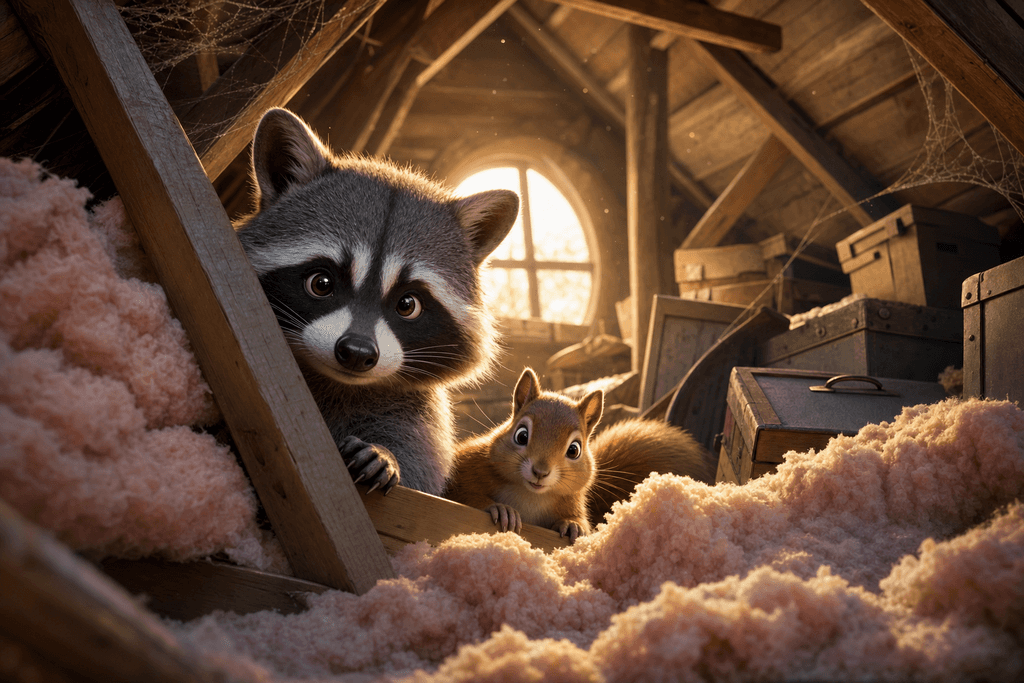
That scratching sound coming from your attic at 3 AM isn't your imagination, and it's probably not settling pipes. Keller homeowners dealing with mysterious attic noises are usually hosting uninvited wildlife guests like raccoons, squirrels, or rats that have turned the space above your ceiling into their personal bedroom. Understanding what's causing those sounds and getting professional attic animal removal in Keller TX can save you from thousands in damage and serious health risks down the road.
Table of Contents
- What's Really Happening Above Your Ceiling
- Identifying Which Animal Moved Into Your Attic
- The Real Dangers of Attic Wildlife
- How Professional Removal Actually Works
- Keeping Animals Out for Good
- Why Keller Homeowners Choose Professional Help
- Getting Your Attic Back to Normal
- Common Questions About Attic Animal Removal
What's Really Happening Above Your Ceiling
North Texas homeowners hear an average of 3 to 5 scratching incidents before they realize they have a wildlife problem in their attic. Those sounds aren't random, and they're definitely not your imagination. Animals follow predictable patterns when they move into your home, and understanding these patterns helps you figure out what you're dealing with. Keller sits right in the middle of prime wildlife habitat, with plenty of trees, water sources, and older neighborhoods that make perfect targets for animals looking for shelter.
Seasonal Wildlife Patterns in Keller
Wildlife doesn't just randomly decide to move into your attic. They follow specific seasonal patterns based on their breeding cycles and weather conditions. Spring and fall are the busiest times for attic animal removal in Keller TX because animals are either looking for safe places to raise babies or seeking warm shelter before winter hits.
Here's what happens during different times of the year:
- Spring (March-May): Raccoons and squirrels search for nesting sites to have babies, making your attic look like a perfect nursery
- Summer (June-August): Young animals become more active and noisy as they grow and explore their surroundings
- Fall (September-November): Rats, mice, and squirrels stock up on food and look for warm winter homes
- Winter (December-February): Animals hunker down in attics to escape cold temperatures and harsh weather
Why Keller Homes Attract Wildlife
Keller's mix of established neighborhoods and natural areas creates the perfect storm for wildlife intrusions. Many homes in the area were built 20 to 40 years ago, which means roof vents, soffits, and fascia boards have had plenty of time to develop gaps and weak spots. Animals can squeeze through openings as small as a quarter, and they're experts at finding these entry points.
Your home becomes a target when it offers these features:
- Overhanging tree branches that create highways directly to your roof
- Unsealed roof vents and damaged soffit areas that animals can tear through
- Attic spaces that stay warm in winter and cool in summer
- Easy access to food sources like pet food, bird feeders, or unsecured garbage
Occasional Visitors Versus Permanent Residents
Not every animal sound means you have a full-blown infestation. Sometimes animals just pass through your attic while exploring, but other times they've set up a complete living situation. The difference matters because it affects how quickly you need to act and what kind of attic animal removal in Keller TX you'll need.
Occasional visitors typically make noise for a few hours and then disappear for days. Permanent residents follow consistent patterns, making noise at the same times every day and leaving behind clear signs like droppings, nesting materials, and damage to insulation or wiring.
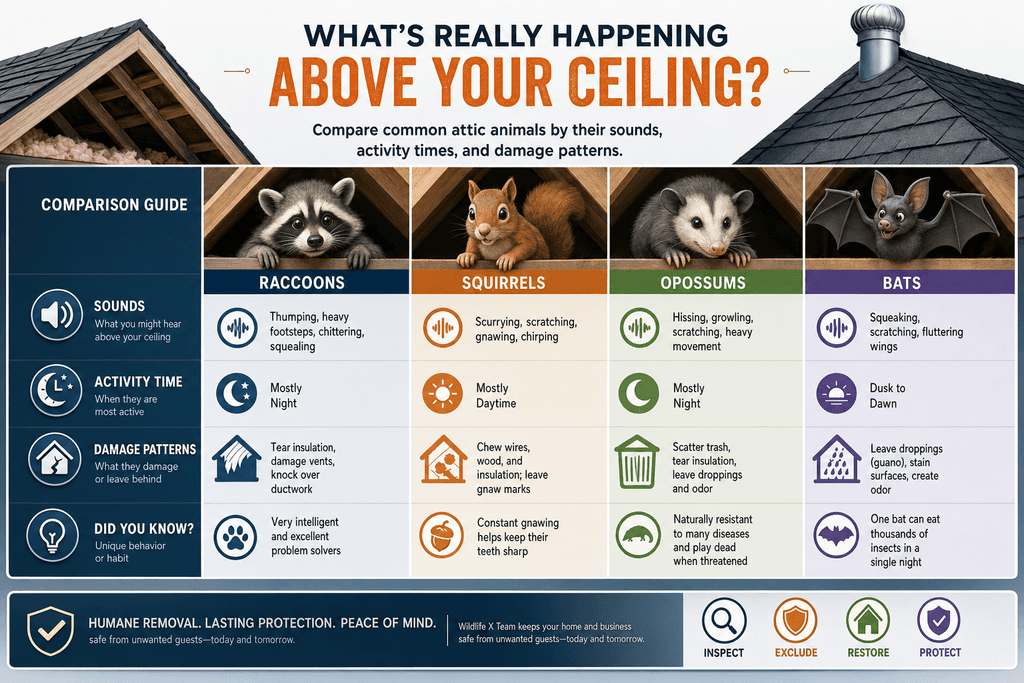
Common Attic Animals Comparison
Different animals make different sounds and cause different types of damage. Here's what you're likely dealing with based on what you hear:
| Animal | Sound Type | Active Times | Common Damage |
|---|---|---|---|
| Squirrels | Fast scratching, rolling sounds | Dawn and dusk | Chewed wires, torn insulation |
| Raccoons | Heavy thumping, vocal sounds | Night time | Torn ducts, large holes, heavy contamination |
| Rats | Light scratching, squeaking | Night time | Chewed wires, droppings everywhere |
| Opossums | Slow shuffling, hissing | Night time | Minimal damage, strong odor |
| Bats | High-pitched chirping, fluttering | Dusk and dawn | Guano buildup, staining |
How Animals Find and Exploit Entry Points
Animals don't need a wide-open door to get into your attic. They're incredibly good at finding tiny gaps and making them bigger. Squirrels can chew through wood and plastic, raccoons can tear through shingles and soffit material, and rats can squeeze through holes the size of a quarter.
The most common entry points include:
- Roof vents with damaged or missing screens that animals push right through
- Soffit and fascia intersections where wood has rotted or separated over time
- Gable vents that weren't properly screened during construction
- Roof-to-wall joints where flashing has come loose or deteriorated
- Plumbing vent pipes that animals can climb and access through gaps
Wildlife X Team's Wildlife Inspection Report identifies all these vulnerable spots before they become major problems. Most homeowners are surprised to learn they have 5 to 8 potential entry points they never knew existed. Once animals find one way in, they often create backup entrances, which is why professional exclusion work matters so much for long-term protection.
Identifying Which Animal Moved Into Your Attic
That scratching sound coming from your ceiling at 2 AM isn't your imagination. Different animals make different noises, and knowing what you're dealing with matters more than you might think. Squirrels create fast, scurrying sounds during daylight hours, usually starting right around sunrise when they head out to forage. Raccoons, on the other hand, sound like someone walking around up there with heavy footsteps and thumping noises, mostly at night. Rats and mice produce constant scratching and gnawing sounds that can happen any time, though they're typically more active after dark.
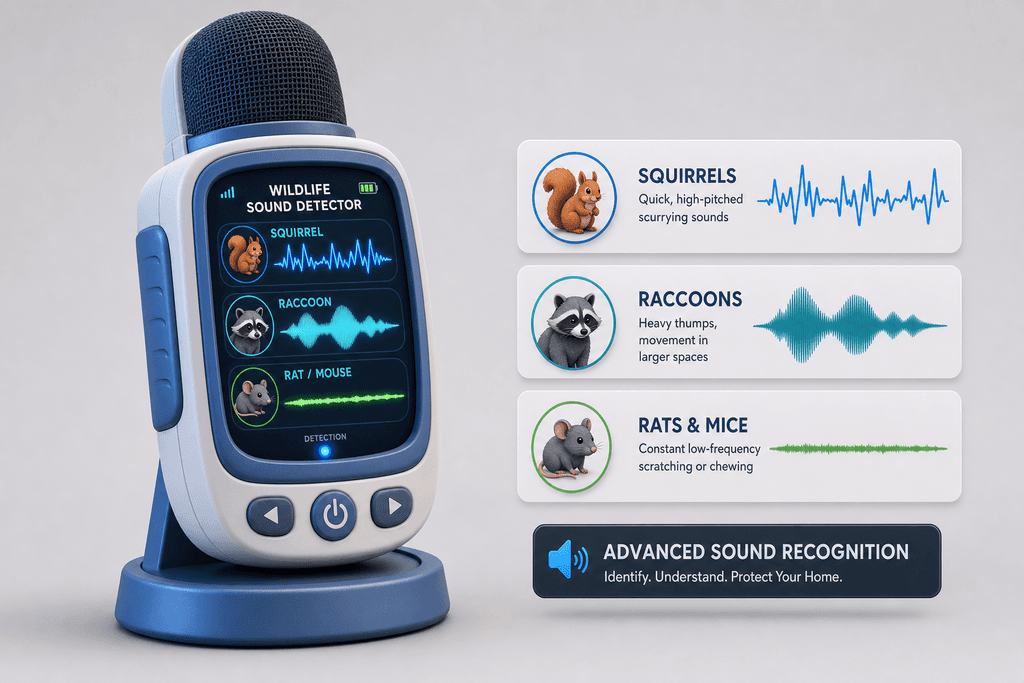
The timing of these sounds tells you almost everything you need to know. If you're hearing activity between dawn and mid-morning, you're probably dealing with squirrels. Nighttime noises between dusk and dawn usually mean raccoons, rats, or opossums have moved in.
Beyond sounds, the evidence left behind helps confirm what's living rent-free above your head. Look for these signs:
- Droppings size and shape vary by animal (squirrel droppings look like small pellets, raccoon droppings are larger and tubular)
- Chewed entry holes around roof vents, soffits, or fascia boards
- Nesting materials like shredded insulation, leaves, or twigs
- Grease marks along entry points where animals repeatedly enter and exit
- Footprints in dusty attic spaces
In Keller and the surrounding North Texas area, spring and fall bring the most wildlife intrusions. Squirrels look for nesting spots in spring to raise their young, while raccoons seek warm shelter as temperatures drop. Getting a professional identification matters because each animal requires different removal techniques and exclusion methods. What works for squirrels won't work for raccoons, and using the wrong approach just wastes time and money.
The Real Dangers of Attic Wildlife
Wildlife in your attic creates problems that go way beyond annoying noises. Animal droppings and urine carry diseases like histoplasmosis, leptospirosis, and salmonella that can make your family seriously sick. The waste also attracts parasites like fleas, ticks, and mites that eventually find their way into your living spaces. Every day these animals stay up there, the contamination gets worse and spreads further through your home's ventilation system.

The fire risk alone should get your attention. Rodents chew through electrical wiring because their teeth never stop growing, and they need to gnaw on things constantly. One exposed wire is all it takes to start a fire in your attic, surrounded by dry insulation and wood. Insurance companies see this happen more often than most homeowners realize.
Structural damage adds up fast too. Animals tear apart insulation to build nests, reducing your home's energy efficiency and driving up utility bills. Raccoons can rip open air ducts, squirrels chew through wooden beams, and the constant traffic wears down your ceiling structure. Water damage often follows when animals damage roof vents or create new openings that let rain inside.
Here's what happens when you wait too long:
- Contaminated insulation requires complete replacement (often $2,000-$5,000)
- Damaged wiring needs professional electrical repairs
- Weakened structural supports may need reinforcement
- Air quality issues affect everyone in the home
- Secondary pest infestations from fleas and mites
DIY removal usually makes things worse because homeowners often seal up entry points while animals are still inside, or they miss secondary entry points that animals quickly exploit. Trapped animals become desperate and cause even more damage trying to escape. Professional attic animal removal in Keller TX addresses the complete problem, not just the obvious parts.
How Professional Removal Actually Works
The process starts with a thorough inspection of your entire property, not just the attic. Wildlife X Team's Wildlife Inspection Report® documents every vulnerability in your home's exterior, from ground level to roofline. This detailed assessment identifies active entry points, potential future entry points, and the full extent of any damage. You get a complete picture of what's happening and what needs to happen next, with no surprises down the road.
Humane trapping comes next, using methods that don't harm the animals while effectively removing them from your property. The specific approach depends on what type of wildlife moved in and whether babies are present. Spring removals often involve waiting for young animals to mature enough for safe relocation, which is why timing matters.
Here's what the complete process looks like:
- Initial inspection and Wildlife Inspection Report® creation
- Humane trapping and removal of all animals
- Entry point sealing with professional-grade materials
- Animal proofing installation at vulnerable areas
- Attic cleanup and restoration including contaminated insulation removal
- Final inspection and warranty activation
The animal proofing phase prevents future problems. Every potential entry point gets addressed with barriers, repairs, and exclusion devices designed specifically for North Texas wildlife. This includes chimney caps, vent guards, foundation repairs, and sealing gaps in soffits and fascia boards. Missing even one entry point means animals will find their way back in.
Attic cleanup and restoration handles the contamination left behind. Soiled insulation gets removed and replaced, surfaces get disinfected, and air quality gets restored to safe levels. The timeline for complete resolution typically runs 3-7 days depending on the severity of the infestation and extent of damage. Wildlife X Team's Renewable Lifetime Warranty covers the work, giving you long-term protection against future invasions at the same entry points.
Keeping Animals Out for Good
Prevention works better than removal, but most Keller-area homes have vulnerabilities their owners don't know about. Roof-to-wall junctions create small gaps that squirrels exploit, and builder-grade roof vents practically invite wildlife inside. Older homes around Keller often have deteriorating fascia boards and loose soffits that animals pry open with minimal effort. Even newer construction has weak points where different materials meet or where contractors cut corners during installation.
Professional exclusion uses materials that actually hold up against determined wildlife. Heavy-gauge steel mesh, reinforced vent covers, and properly installed chimney caps create barriers animals can't chew through or pry open. The key is addressing every potential entry point at once, not just the obvious ones. Animals are smart enough to find alternative routes if you leave any openings.
Common entry points in North Texas homes include:
- Roof vents and turbine vents without proper screening
- Soffit and fascia gaps where materials have separated
- Chimney openings without caps or with damaged caps
- Gable vents with broken or missing screens
- Roof edge gaps where shingles meet walls
- Plumbing stack openings around pipes entering the roof
After professional exclusion work, homeowners should check their roof line twice a year for any new damage or wear. Spring and fall inspections catch small problems before they become animal entry points. Look for loose shingles, separated trim, or damaged vents that need attention.
Real Customer Experience: Jesse Bernard from the Keller area had squirrels throw a party in his attic. Wildlife X Team came out for an estimate and started work immediately. "One entry point was obvious and I'd considered closing it up myself, but they found a couple of others I never would have," Jesse said. Months later, still no squirrels.
Wildlife X Team's warranty protects your investment by guaranteeing the exclusion work. If animals get back in through a sealed entry point, they come back and fix it at no charge. This matters because some companies in the area do removal without proper exclusion, or they use cheap materials that fail within months. The seasonal considerations for North Texas mean different animals pose threats at different times, so year-round protection beats reactive removal every time.
The team at 11833 Katy Rd in Keller handles attic animal removal throughout Fort Worth, Denton, Granbury, and surrounding communities. Getting ahead of wildlife problems costs less than dealing with established infestations, and it definitely beats listening to scratching sounds at 2 AM while wondering what's destroying your attic.
Why Keller Homeowners Choose Professional Help
Most DIY attic animal removal attempts in Keller fail within the first month, leaving homeowners frustrated and out of pocket. The scratching sounds return, the smell gets worse, and the initial money spent on hardware store solutions feels wasted. What seems like a simple problem of blocking a hole quickly becomes a cycle of temporary fixes that never address the real issue. Professional attic animal removal in Keller TX involves understanding animal behavior, identifying all entry points, and implementing exclusion methods that actually last.
The Real Cost of Going It Alone
When you compare professional removal to DIY attempts, the numbers tell an interesting story. A typical homeowner spends between $200-400 on materials from hardware stores, only to call professionals anyway after animals return.
- DIY success rate sits around 15-20% for complete animal removal and exclusion
- Professional services achieve 95%+ success rates with proper follow-up
- Incomplete removal leads to continued property damage averaging $2,000-5,000
- Animals trapped inside walls create emergency situations costing 3x normal removal fees
The hidden costs add up fast. Damaged insulation from animal waste requires replacement. Chewed electrical wiring creates fire hazards that insurance companies care about. Wildlife X Team's approach includes attic cleanup and restoration, addressing problems that DIY methods completely miss.
Texas Law and Local Wildlife Patterns
Texas Parks and Wildlife regulations restrict how homeowners can handle certain animals. Relocating raccoons without permits violates state law, and improper handling of protected species brings fines up to $500 per violation.
- Licensed professionals understand seasonal breeding patterns specific to North Texas
- Local expertise identifies whether you're dealing with raccoons, squirrels, or rats based on Keller's ecosystem
- Proper exclusion timing prevents separating mothers from babies inside your attic
- Knowledge of Keller's construction styles helps locate hidden entry points in older neighborhoods
Companies serving the broader Dallas-Fort Worth area often lack specific knowledge about Keller's unique wildlife challenges. The mix of established neighborhoods near Bear Creek and newer developments creates different animal pressure points. Working with specialists familiar with Keller's layout means faster identification and permanent solutions rather than generic approaches that work elsewhere but fail locally.
Long Term Value of Proper Exclusion
Professional exclusion work costs more upfront but saves thousands over time. A renewable lifetime warranty means you're not paying for the same problem twice. The average Keller homeowner who chooses professional attic animal removal spends less over five years than someone attempting multiple DIY fixes.
Getting Your Attic Back to Normal
Those scratching sounds in your attic won't go away on their own, and waiting usually makes things worse. The longer animals stay up there, the more damage they cause to your insulation, wiring, and wood beams. Plus, the health risks from droppings and urine keep building up every day they're living rent-free above your head.
Professional attic animal removal in Keller TX means you get someone who knows how to find every entry point, not just the obvious ones. Wildlife X Team handles the whole process from inspection to cleanup, which matters because missing even one small gap means animals can get back in next month.
Here's what you can expect when you call for help:
- A detailed inspection to find all entry points and identify which animals you're dealing with
- Humane removal that gets the animals out without harming them
- Repairs and exclusion work to seal up your home properly
- Attic cleanup and restoration if there's contamination or damage
- A renewable lifetime warranty so you're covered long-term
The Keller location at 11833 Katy Rd serves homeowners throughout the area, including Fort Worth, Southlake, Grapevine, and surrounding communities. You can reach them at (817) 799-8686 to schedule an inspection.
Most people have questions about the process, costs, and what happens next. That's completely normal when you're dealing with wildlife in your home for the first time.
Common Questions About Attic Animal Removal
Most homeowners in Keller have similar concerns when they first hear scratching sounds coming from their attic. These questions come up time and time again, and getting clear answers helps you make the right decision about handling your wildlife problem. Whether you're dealing with raccoons, squirrels, or other critters, knowing what to expect from the removal process makes everything less stressful.
How quickly can someone inspect my attic?
Wildlife X Team typically responds to service calls within 24 hours for attic animal removal in Keller TX. In many cases, technicians can come out the same day you call, especially if you're hearing active scratching or seeing signs of animal activity. The initial inspection usually takes about an hour, and some companies will even start the removal process during that first visit if the situation allows.
Is the removal process safe for my family and pets?
Yes, professional wildlife removal uses humane methods that don't put your family or pets at risk. The technicians use specialized equipment and techniques that safely capture animals without harmful chemicals or dangerous traps. You and your pets can typically stay in the home during the removal process, though you might want to keep pets away from the work area to reduce their stress.
What happens to the animals after removal?
Animals are relocated according to Texas wildlife regulations, which means they're released in appropriate habitats away from residential areas. Wildlife X Team follows all state and local laws regarding animal relocation. The goal is to solve your problem while treating the animals ethically and giving them a chance to thrive elsewhere.
How long does the complete process take?
The removal itself might only take a few hours, but the complete process including exclusion work and cleanup can take several days. It depends on how many animals are present and how much damage they've caused. Most attic animal removal in Keller TX projects are finished within a week, including sealing entry points and installing preventive measures.
Does insurance cover wildlife damage?
It depends on your specific homeowner's policy. Some insurance plans cover the damage animals cause but not the removal itself. Others might cover both, while some exclude wildlife damage entirely. Check with your insurance provider before scheduling service, and ask for detailed documentation of all work performed to submit with your claim.
What areas does Wildlife X Team serve around Keller?
Wildlife X Team covers Keller and the surrounding areas including Fort Worth, Denton, Granbury, and the broader Dallas-Fort Worth region. They service both residential and commercial properties throughout these areas. If you're not sure whether your location is covered, a quick phone call can confirm service availability in your specific neighborhood.