
Armadillo Dens and Burrows Around Homes in North Texas
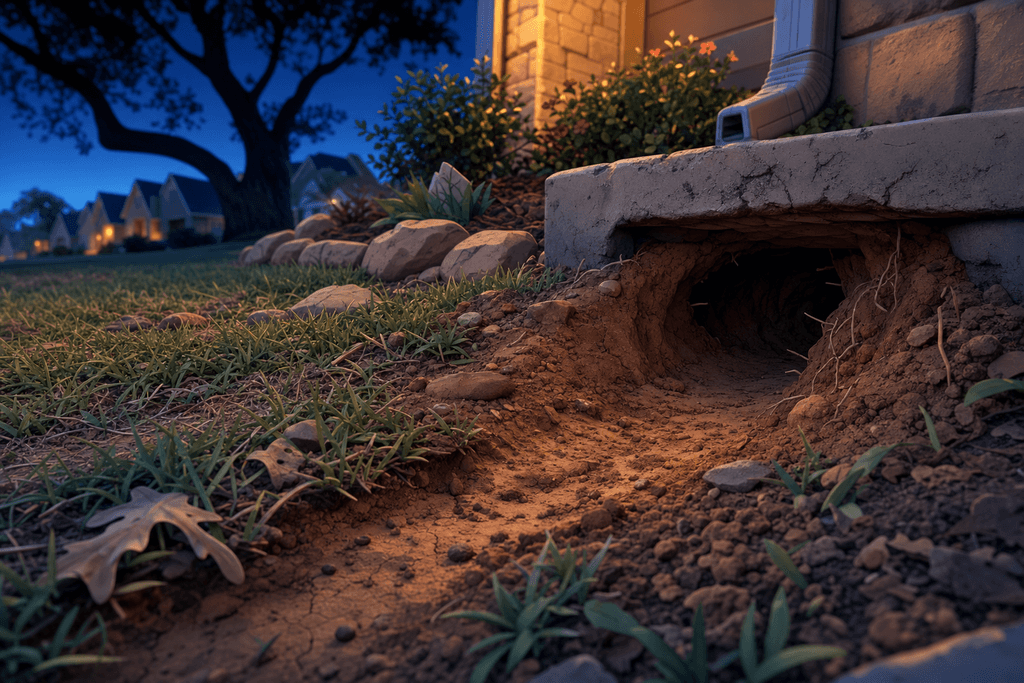
An armadillo can dig a burrow 15 feet long and up to 5 feet deep, all from an animal that weighs about as much as a house cat. North Texas clay and sandy loam soils, combined with mild winters, give armadillos ideal digging conditions almost year round, which is why yards from Granbury to Grapevine end up with more than one hole. Their dens usually sit near foundations, under sheds, or along fence lines where the ground stays soft and shaded.
Most homeowners spot the entrance before they ever see the animal, a rough opening about 7 to 8 inches wide with loose dirt piled to one side. Left alone, that single den can turn into a network of tunnels that undermine a patio, a slab, or a porch step. You'll walk away knowing how to spot an active den, what kind of damage to expect underground, and when the situation calls for someone to remove the armadillo rather than wait it out.
Table of Contents
Why Armadillos Dig Burrows in the First Place
Armadillos dig for three reasons: a place to sleep during the day, a way to escape summer heat and winter cold, and a safe spot to raise pups. Their body temperature runs low for a mammal their size, so a burrow keeps them insulated from both extremes. Females also use a den chamber to give birth, usually to a litter of four identical pups.
One armadillo rarely sticks to a single hole. A property can end up hosting three to five separate burrows from the same animal, since it rotates between dens while foraging across its territory. That habit is part of why a yard with one visible entrance often has more damage underground than it looks like from the surface.
North Texas conditions make this easy work for them. Clay-heavy soil holds a burrow's shape well once dug, and because the ground rarely freezes solid, armadillos keep digging through fall and winter instead of slowing down like they would farther north.
Not every hole an armadillo digs is a den. A lot of them are shallow foraging pits made while hunting grubs and insects, and those look different from a true burrow if you know what to check.
- Main den burrow: wide entrance, long tunnel, used for sleeping and raising young, often under a slab or shed
- Escape burrow: shorter side tunnel near the main den, used to dodge predators, rarely has a second exit
- Foraging pit: shallow cone-shaped hole in the lawn, one to three inches deep, abandoned after a single feeding
Knowing which type you're looking at tells you whether you've got a resident animal or just a visitor passing through for a meal.
Spotting an Armadillo Burrow Entrance
Look for a rough, round or oval hole cut straight into the dirt, usually against something solid like a foundation wall, a porch footing, or a slab edge. The opening itself is small for the size of tunnel behind it, and the dirt around the rim is loose rather than packed down by weather.

A single den rarely has just one door. Active burrows often connect two or three openings to the same tunnel, so check nearby brush piles, fence lines, and the far side of a shed before assuming you found the only entrance.
- Fresh, dark soil pushed to one side of the hole, not scattered evenly
- No spider webs or leaf litter blocking the opening
- Soft ground for a foot or two around the rim from repeated digging
- A second hole within 10 to 20 feet that looks connected
If the dirt inside the hole looks recently disturbed and dry rather than caked and damp, an animal has likely used it in the last day or two.
Where Burrows Show Up Around North Texas Properties
Garden beds and mulched areas are common targets because the soil stays loose and holds moisture longer than open lawn. Under decks, sheds, and crawl spaces work just as well since the structure blocks sun and rain, keeping the ground soft year round.
Properties near creek beds and wooded lots around Denton, Granbury, and Weatherford see more burrows simply because there's more cover and more insects nearby. A lawn with a grub problem is basically an open invitation, since armadillos dig where the food already is.
- Mulch beds along the house foundation
- Space under a raised deck or storage shed
- Low, shaded spots near a creek or tree line
- Lawn areas with visible grub damage or brown patches
Seeing an armadillo dig in real time helps explain why these spots get picked over others.
Damage a Burrow Can Cause to Your Home
A tunnel running under a patio or walkway hollows out the base that concrete needs to stay level. Over months, that missing support shows up as cracking, sinking slabs, or a step that suddenly feels loose underfoot.
Burrowing near an AC unit or a buried plumbing line is the costlier version of the same problem, since a shifted pipe or an unsettled pad can mean a repair bill that has nothing to do with the animal itself. A collapsed tunnel section in an open yard is also a real trip hazard, especially in grass tall enough to hide it.
- Cracked or sinking patio and walkway slabs
- Shifted AC pads or disturbed plumbing lines
- Uprooted flower beds and torn-up sod from grub hunting
- Soft spots or sudden dips in the lawn from collapsed tunnels
None of this shows up overnight, which is part of why a burrow left alone for a season does more damage than one caught early.
Telling Armadillo Dens Apart From Other Burrows
An armadillo hole is smoother and rounder than a groundhog den, which usually has a wider, more oval mouth and a noticeable dirt fan pushed out in front of it. Skunk burrows tend to be shallower and messier, often dug under a shed corner without much tunnel behind them.
Tracks help confirm it. Armadillo prints show three toes with claw marks, different from the five-toed hand prints raccoons and opossums leave in the same soft dirt.
- Armadillo: round, smooth-edged hole, 7 to 8 inches wide, little dirt fan-out
- Groundhog: oval entrance, larger dirt mound spread in front
- Skunk: shallow, uneven opening, usually under a structure edge
If tracks and hole shape still don't add up, a company that runs inspections for a living, like Wildlife X Team, can confirm which animal is actually digging before any exclusion work starts.
Watch the Yard or Wait for the Repair Bill
A yard check twice a month costs nothing but a few minutes. Waiting until a slab cracks or a pipe shifts turns the same problem into a contractor invoice, and that gap is the real decision here.
One burrow rarely stays one burrow. Give it a few weeks and an armadillo will connect it to a second and third entrance, and each new tunnel is another spot where the ground can give way under a patio or foundation footing.
Cost climbs fastest once a tunnel runs under a slab or near a utility line, since fixing a shifted pipe or a sunken pad means bringing in a foundation crew, not just a wildlife service. Catching the den while it's still one shallow entrance near a fence line is the cheaper problem to solve, by a wide margin.
A DIY fix, filling the hole with dirt or rocks, buys a day or two at best. Armadillos dig back through loose fill without much effort, so the hole reopens and the tunnel keeps growing underneath it. A barrier buried below grade and tied into the exclusion work stops the re-digging in a way that backfilling never does.
Deciding Whether to Fill It In or Call Someone
A single, shallow entrance out in the open yard, away from the house, a shed, or a patio, is usually fine to keep an eye on for a week or two before doing anything else. But any burrow within a few feet of a foundation wall, a patio slab, or a buried utility line is worth a professional look, since that's exactly where the underground damage gets expensive fast. Wildlife X Team works throughout Fort Worth, Denton, Granbury, and the surrounding North Texas towns, and backs its exclusion work with a renewable lifetime warranty, so a den near the house gets handled once instead of every spring.
Armadillo Burrow Questions From North Texas Homeowners
Can I just fill in an armadillo hole myself and expect it to stay closed?
Not for long. An armadillo can dig through loose fill dirt or rocks in a single night, since it's just re-opening a path it already carved. Packing the hole tight only slows it down by a day or two. A lasting fix needs a barrier set below grade, which is part of the exclusion work a company handles, not a shovel job.
Will an armadillo come back to the same burrow after I block the entrance?
Yes, if the entrance is blocked with something it can dig through. Armadillos are creatures of habit and will return to a den site they've used before, even after weeks away. Blocking one opening also does nothing for the second or third entrance that often connects to the same tunnel system underground.
Are armadillo burrows dangerous to pets that go exploring in the yard?
The bigger risk is a twisted leg or a stumble, not the armadillo itself, since they're shy animals that avoid confrontation. A dog nosing around a burrow can trigger a tunnel collapse, especially near a soft spot in the lawn. Keep pets away from any active hole until it's been checked out.
How do I know if a burrow under my shed is still active or abandoned?
Fresh, loose dirt at the entrance and a dry, undisturbed look inside the hole both point to recent use. An abandoned burrow collects leaf litter, spider webs, or packed-down soil from rain over time. A shed makes this harder to check since the entrance is often hidden, which is when a Wildlife Inspection Report from Wildlife X Team settles the question for good.