Animal Proofing in Fort Worth to Block Attics and Crawl Spaces
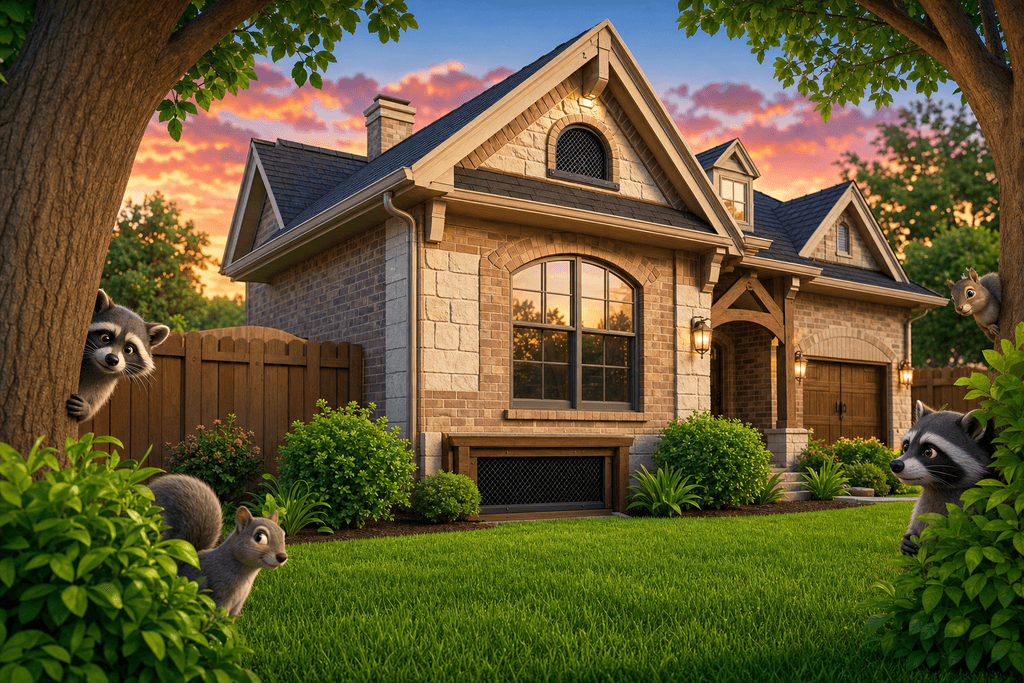
A single raccoon can tear through roof shingles in less than an hour, turning your Fort Worth attic into its personal den before you even notice the damage. As urban development continues to push into natural habitats across the Fort Worth area, wildlife like raccoons, squirrels, and opossums are finding their way into residential attics and crawl spaces at alarming rates. Professional animal proofing Fort Worth services protect your home from these intrusions before they lead to costly repairs and health hazards.
Why Fort Worth Homes Need Animal Proofing
Fort Worth's rapid urban expansion has created a perfect storm for wildlife conflicts in residential neighborhoods. As new developments replace natural habitats in areas like Keller, Southlake, and Trophy Club, displaced animals are forced to seek shelter wherever they can find it. Your attic and crawl spaces offer everything wildlife needs: warmth, protection from predators, and a safe place to raise their young. The problem isn't going away on its own, and waiting until you hear scratching sounds overhead usually means animals have already established themselves in your home.
Attics and crawl spaces are particularly attractive to Fort Worth's most common nuisance animals. Raccoons can squeeze through openings as small as four inches, while squirrels need only a gap the size of a golf ball to gain entry. Once inside, these animals cause significant damage by chewing through electrical wiring, tearing apart insulation, and leaving behind contaminated waste that poses serious health risks. The longer they remain, the more extensive the damage becomes and the harder they are to remove permanently.
Animal proofing Fort Worth properties isn't just about keeping wildlife out today. It's about creating long-term barriers that prevent future invasions and protect your investment. Wildlife X Team at 11833 Katy Rd in Keller provides comprehensive animal proofing and exclusion services that address every vulnerable point in your home's structure. Without proper exclusion work, even professional removal becomes a temporary fix, as new animals will simply move into the space left behind by the ones that were removed.
The health risks associated with wildlife in your living spaces extend beyond the obvious. Raccoon feces can carry roundworm parasites that remain infectious in your attic for years, while squirrel urine soaks into insulation and creates respiratory hazards. Bats bring histoplasmosis concerns, and all wildlife can introduce fleas, ticks, and mites into your home. Professional animal proofing eliminates these entry points before contamination occurs, saving you from expensive attic restoration and potential medical issues down the road.
Table of Contents
Common Wildlife Problems in Fort Worth Homes
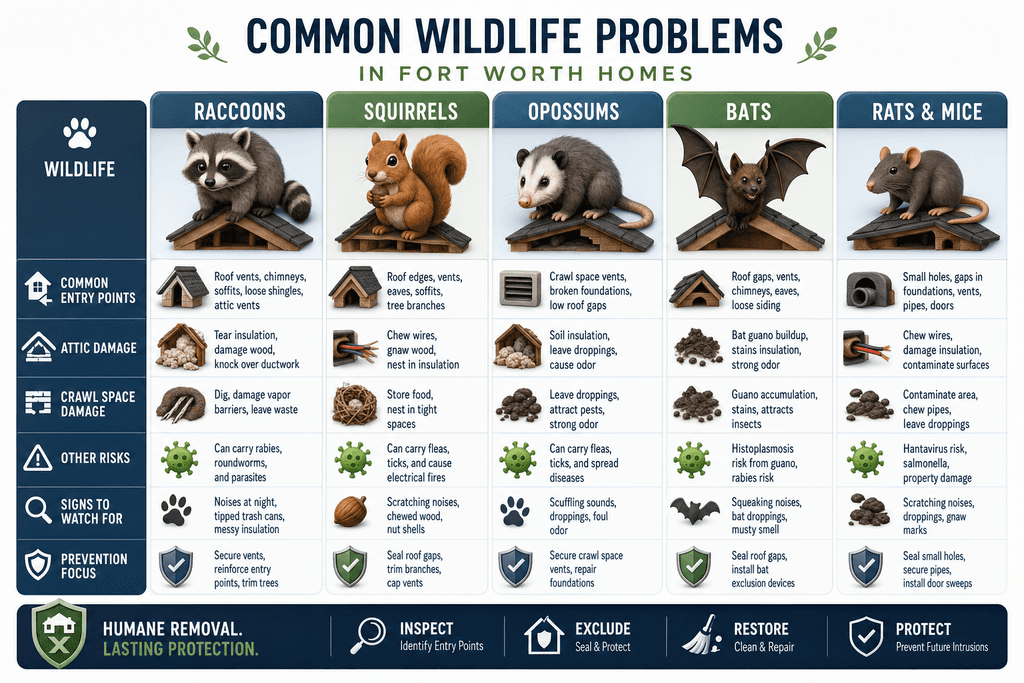
Fort Worth homeowners deal with uninvited wildlife guests more often than most people realize. The warm Texas climate and suburban expansion create perfect conditions for animals looking for shelter, especially during breeding season and extreme weather. Attics and crawl spaces offer everything these critters need - warmth, safety from predators, and plenty of nesting materials. What starts as a few scratching sounds at night can quickly turn into thousands of dollars in property damage. Understanding which animals cause the most problems helps you spot warning signs before things get worse.
The Main Culprits Behind Attic Damage
Three types of wildlife cause most of the headaches for Fort Worth property owners. Each animal has different habits and creates unique problems that require specific animal proofing fort worth solutions.
Raccoons are the heavy hitters when it comes to destruction. These masked bandits can tear through roof shingles, rip apart vent covers, and create entry holes the size of softballs. They shred insulation to build nests and their waste carries dangerous parasites. A single raccoon family can contaminate an entire attic in just a few weeks.
Squirrels might seem harmless, but they cause serious fire hazards. Their teeth never stop growing, so they constantly chew on everything including electrical wiring and wooden support beams. They're most active during fall and spring when they're gathering food or preparing to have babies.
Opossums prefer crawl spaces and lower areas of homes. While they're less destructive than raccoons, they leave behind contaminated droppings and urine that soaks into insulation. The smell alone can make parts of your home unlivable.
How Different Animals Damage Your Property
The type of damage you find tells you which animal moved in. Here's what each species typically does to Fort Worth homes:
- Raccoons create large 6-12 inch entry holes, flatten insulation into nesting areas, and leave piles of droppings in specific spots
- Squirrels make smaller 2-4 inch holes, scatter acorns and food throughout the space, and leave gnaw marks on wood and wires
- Opossums squeeze through existing gaps, create trails through insulation, and leave a strong musky odor behind
Wildlife X Team's inspection process identifies which animals you're dealing with based on these damage patterns. This matters because each species needs different exclusion methods to keep them out permanently.
Seasonal Patterns in North Texas
Wildlife activity follows predictable patterns throughout the year in the Fort Worth area. Knowing when animals are most likely to invade helps homeowners stay one step ahead.
- Spring (March-May) brings baby season when mothers seek safe nesting spots in attics
- Summer (June-August) sees increased activity as young animals explore and look for new territories
- Fall (September-November) triggers frantic preparation as animals gather food and find winter shelter
- Winter (December-February) drives animals indoors during cold snaps and ice storms
The breeding cycles make spring and fall the busiest times for wildlife intrusions. Female raccoons and squirrels become aggressive when protecting their young, making removal more complicated. Professional animal proofing fort worth services work best when done before these peak seasons hit.
Critical Entry Points That Need Protection
Most Fort Worth homeowners don't realize their attic has a dozen potential entry points until they hear scratching sounds at 2 AM. Wildlife doesn't need much space to get inside. A gap the size of a quarter is enough for a mouse, while raccoons can tear through weakened areas to create their own doorways. Understanding where animals get in is the first step to keeping them out for good. The typical North Texas home has several vulnerable spots that wildlife exploits year after year.
Roof vents and soffit gaps are like welcome mats for squirrels and raccoons. These areas often have small openings that expand over time due to weather damage and normal wear. Foundation cracks and crawl space vents give ground-level animals easy access to the underside of your home, where they can nest and breed without you knowing.
Common Vulnerability Checklist
- Check all roof vents for gaps or damaged screens
- Inspect soffit areas for separation from the roofline
- Look for foundation cracks wider than a pencil
- Examine crawl space vents for missing or damaged covers
- Verify chimney cap is present and secure
- Check roof shingles for damage or missing sections
- Inspect where utility lines enter your home for gaps
Chimneys without caps are particularly inviting to raccoons looking for a safe place to raise their young. Birds also love uncapped chimneys because they mimic the hollow trees they naturally nest in. Damaged or missing roof shingles create direct pathways into your attic space, and once one animal finds the opening, others will follow the scent trails.
Utility line penetrations are often overlooked during construction, leaving gaps around pipes, electrical lines, and cable entry points. These openings might seem small, but they're perfect for rats, mice, and even young squirrels to squeeze through.
Professional Animal Proofing Methods That Work
The difference between a temporary fix and permanent protection comes down to materials and technique. Hardware store solutions might work for a few weeks, but wildlife is persistent and surprisingly strong. Professional animal proofing uses commercial-grade materials designed to withstand chewing, clawing, and weather exposure. The methods that actually work long-term involve multiple layers of defense and strategic placement that considers animal behavior patterns.
Heavy-duty steel mesh is the gold standard for blocking entry points because animals can't chew through it. Unlike chicken wire or plastic screening, galvanized steel mesh maintains its integrity even when raccoons try to tear it apart. One-way exclusion doors solve a critical problem by letting animals exit safely without allowing them back inside, which means no animals get trapped during the sealing process.
Real Results: Jesse Bernard from the Fort Worth area shared his experience: "We had a squirrel party in our attic. They came out to give an estimate and got to work on the spot. One entry point was obvious and I'd considered closing it up myself, but they found a couple of others I never would have. Great, quick work, and no squirrels, now months later."
Chimney caps with spark arrestors do double duty by preventing animal entry while also stopping embers from escaping during fireplace use. These caps block raccoons, squirrels, birds, and bats all at once. Foundation sealing requires a combination of concrete patching and steel wool insertion because concrete alone can crack again, but the steel wool creates a barrier animals won't chew through.
Vent guards are specially designed to maintain proper airflow while blocking even the smallest animals from entering. The team at Wildlife X Team uses a comprehensive approach that starts with their Wildlife Inspection Report to identify every vulnerability before any work begins, and backs it up with a renewable lifetime warranty.
The Complete Animal Proofing Process
Animal proofing isn't just about nailing some boards over holes. There's a specific order to the work that prevents problems and ensures animals don't get trapped inside your walls or attic. The process starts before any sealing happens and continues well after the last barrier goes up. Understanding what happens at each stage helps you know what to expect and why each step matters for long-term protection.
The Wildlife Inspection Report identifies every current and potential entry point around your property. This isn't a quick walk-around. It involves checking areas most homeowners never look at, from the peak of the roof to the foundation corners. The inspection reveals not just where animals are getting in now, but where they'll try next.
- Complete property inspection and vulnerability assessment
- Humane removal of any animals currently inside
- Strategic sealing starting from the top down
- Installation of exclusion devices and barriers
- Attic cleanup and restoration if needed
- Final inspection and warranty activation
Humane removal happens before any sealing work begins because trapping animals inside creates bigger problems than you started with. Animals trapped in walls or attics will die, causing odor issues and attracting other pests. The removal process uses methods that don't harm the animals while ensuring they leave your property.
The strategic sealing order matters more than most people realize. Professionals seal from the top of the structure down, leaving one primary exit point open until they're certain all animals have left. This prevents the panic situation where an animal is sealed in and tears apart your insulation or drywall trying to escape.
Attic cleanup and insulation replacement becomes necessary when animals have been living in your attic for a while. Wildlife leaves behind droppings, urine, nesting materials, and contamination that can affect your home's air quality. The cleanup process includes disinfecting contaminated areas and replacing damaged insulation to restore your attic's condition.
The final inspection confirms every entry point is properly sealed and all barriers are correctly installed. Wildlife X Team, located at 11833 Katy Rd in Keller, TX, serves the entire Fort Worth area including Denton, Granbury, Southlake, and surrounding communities. Their renewable lifetime warranty means if wildlife finds a way back in through a sealed area, they'll come back and fix it at no additional cost.
Protecting Your Fort Worth Home Long Term
Most homeowners try to fix animal problems themselves at first. They patch up the obvious holes and think the problem is solved. But here's what usually happens next: the animals find another way in, sometimes within days. Raccoons can tear through weak spots, and squirrels can chew through materials you'd never expect them to get through.
Professional animal proofing in Fort Worth actually saves you money over time. Think about it this way: paying for removal once is expensive, but paying for it three or four times adds up fast. When you get proper exclusion work done, you're dealing with the root cause instead of just treating symptoms.
Wildlife X Team's approach includes finding every possible entry point, not just the obvious ones. Our team at 11833 Katy Rd in Keller serves the entire Fort Worth area, and we've seen what happens when people skip the prevention step. The animals come back, and the damage gets worse each time.
The renewable lifetime warranty means you won't be dealing with this problem again next year. If an animal does find a way back in through our work, we handle it at no extra cost. That kind of protection matters when you're trying to budget for home maintenance.
You can reach the Keller location at (817) 799-8686 to schedule an inspection. The Wildlife Inspection Report shows you exactly where your home is vulnerable, which helps you understand what needs to be done before animals cause more damage.
Animal Proofing Questions Fort Worth Homeowners Ask
Fort Worth homeowners dealing with wildlife problems often have similar concerns about protecting their homes long-term. The questions below cover what most people want to know before investing in animal proofing services. Understanding the costs, timing, and effectiveness helps you make better decisions about protecting your property from unwanted critters.
How much does animal proofing cost in Fort Worth?
Animal proofing costs vary based on your home's size, the number of entry points, and the type of repairs needed. Most Fort Worth homeowners spend between $500 and $3,000 for comprehensive animal proofing, though larger homes or severe damage can cost more. Wildlife X Team provides detailed inspections through their Wildlife Inspection Report® to identify all vulnerabilities before giving you an accurate estimate, so you know exactly what you're paying for upfront.
Can I animal proof my home myself?
You can handle some basic tasks like trimming tree branches away from your roof or securing loose vent covers. However, professional animal proofing catches hidden entry points that most homeowners miss, like gaps in soffits, foundation cracks, or roof line vulnerabilities. One customer mentioned finding "a couple of entry points I never would have" after professionals inspected their attic, which shows why expert eyes matter when dealing with determined wildlife.
How long does animal proofing last?
Quality animal proofing typically lasts 10 to 20 years when done correctly with durable materials. Wildlife X Team backs their work with a Renewable Lifetime Warranty, which means they stand behind their exclusion work for the long haul. The materials used matter too, since cheap fixes like hardware cloth can rust or deteriorate within a few years.
What happens if animals return after proofing?
Reputable companies guarantee their work and will return to address any issues at no extra cost. If animals get back in after professional animal proofing fort worth services, it usually means a new entry point developed or wasn't part of the original work scope. This is why warranties matter, and why companies like Wildlife X Team offer lifetime protection to ensure your home stays wildlife-free.
When is the best time to animal proof my home?
Late fall and early spring are ideal times for animal proofing since you can seal up your home before wildlife seeks shelter for winter or nesting season. That said, the best time is really whenever you notice signs of wildlife activity. Waiting too long can lead to more damage and higher repair costs down the road.
Does animal proofing work for all wildlife species?
Yes, proper exclusion techniques work for raccoons, squirrels, rats, possums, and other common Fort Worth wildlife. Each species has different behaviors and entry preferences, which is why comprehensive inspections identify species-specific vulnerabilities in your home. A squirrel might squeeze through a two-inch gap while raccoons tear open weak spots, so the proofing approach needs to address multiple threat types at once.