Affordable Wildlife Removal: Quality Services That Won't Break the Bank

That scratching sound in your attic at 2 AM usually means two things: you have unwanted wildlife guests, and you're about to face a bill that might make you consider just living with them. Most homeowners assume professional wildlife removal will drain their savings, but the truth is that affordable service exists without sacrificing quality or cutting corners. Understanding what drives costs and how to spot fair pricing can help you protect your home without breaking the bank, and companies like Wildlife X Team prove that humane, effective removal doesn't require a premium price tag.
Table of Contents
What Actually Drives Wildlife Removal Costs
Most homeowners get sticker shock when they first call about wildlife removal, but the pricing isn't random. The cost to remove a raccoon family from your attic can range anywhere from a few hundred to several thousand dollars, and understanding why helps you avoid getting ripped off. Several key factors determine what you'll actually pay, and knowing them ahead of time means you can budget properly and spot fair pricing when you see it.
Animal Type Makes a Huge Difference
Not all wildlife removal jobs are created equal. A single squirrel that wandered into your garage is way easier to handle than a family of raccoons that's been living in your attic for months. Larger animals require more specialized equipment, more time, and often multiple visits to ensure complete removal. Bats need special permits in many areas because they're protected species, which adds paperwork and compliance costs.
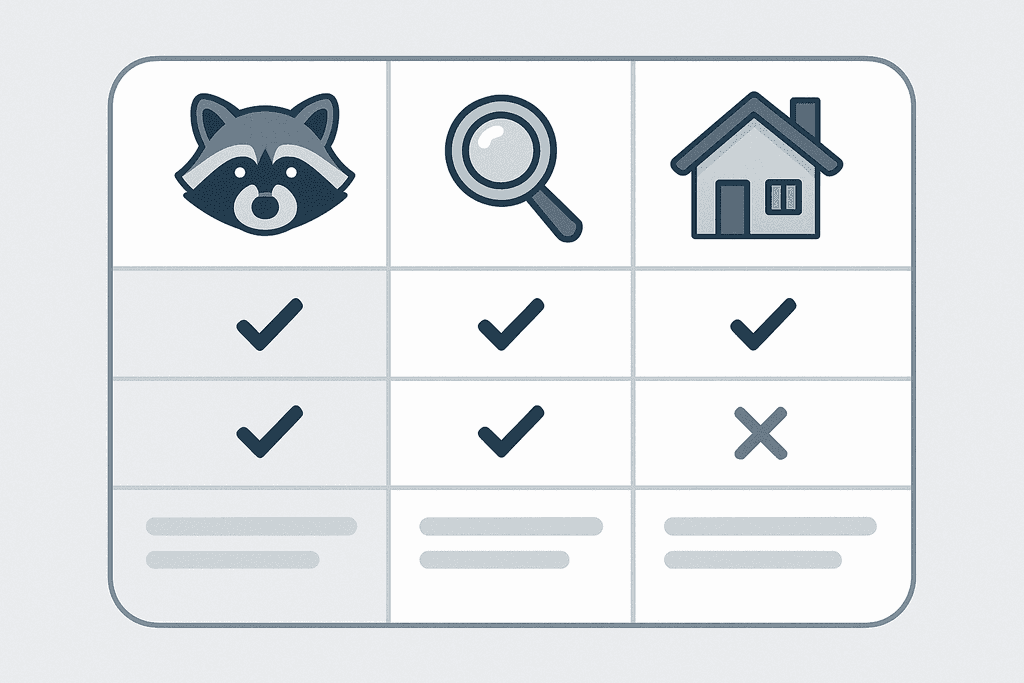
Here's how different animals typically stack up in terms of removal difficulty and cost:
- Squirrels are usually the easiest and least expensive to remove since they're smaller and less aggressive
- Raccoons require more expertise because they're smart, strong, and can cause serious damage
- Bats need specialized exclusion methods and often can't be removed during maternity season
- Opossums are generally mid-range in difficulty but may require multiple trapping sessions
- Skunks add complexity because of the obvious spray risk during removal
This video shows what can happen when you hire the wrong wildlife removal company. The difference between a professional job and a rushed one can cost you thousands in the long run.
Damage Repair Adds Up Fast
The animal removal itself is often just the beginning of your total cost. Wildlife doesn't knock politely on your door and ask to come in. They chew through wood, tear up insulation, rip open vents, and leave contaminated waste everywhere they go. Repairing all that damage is where costs can really climb.
Entry point repairs vary widely based on what needs fixing. A simple vent cover replacement might cost under $100, but repairing a damaged roof line or replacing contaminated insulation can run into thousands. Companies like Wildlife X Team include these repairs as part of their comprehensive service because sealing entry points is the only way to prevent animals from coming right back in.
Common repair costs include:
- Sealing holes and gaps in siding, rooflines, or foundations
- Replacing damaged insulation that's been contaminated with urine and feces
- Installing chimney caps and vent guards to prevent future entry
- Repairing chewed electrical wiring that poses fire hazards
Prevention Versus One Time Removal
You can pay for basic removal and hope the problem doesn't come back, or you can invest in prevention services that actually keep wildlife out for good. Prevention costs more upfront but saves you from paying for the same removal service over and over. Think of it like fixing a leaky roof versus just putting a bucket under the drip every time it rains.
Most budget wildlife removal companies just trap the animal and leave. They don't inspect your whole property for other entry points, and they don't seal up the vulnerabilities that let animals in. That's why some homeowners end up calling for help three or four times in a single year, spending way more than if they'd done it right the first time.
Professional prevention services include:
- Complete property inspection to find all potential entry points
- Installation of barriers like chimney caps, vent guards, and foundation screens
- Sealing and caulking vulnerable areas before animals find them
- Attic cleanup and decontamination to remove attractants
- Ongoing monitoring and warranty coverage for long-term protection
Timing and Location Impact Your Bill
When you call matters almost as much as what you're calling about. Emergency wildlife removal outside normal business hours costs more because technicians are on call and responding immediately. If you've got a raccoon in your living room at 2 AM, you'll pay a premium for that urgent response compared to scheduling a routine inspection during business hours.
Geographic location plays a role too. Service areas that require longer drive times naturally cost more to cover travel expenses. In the Dallas-Fort Worth area, companies typically charge standard rates for their primary service zones but may add travel fees for properties in more remote areas. Some national chains like Terminix have higher overhead costs that get passed to customers, while local specialists often offer more competitive pricing.
Factors that increase service costs:
- After-hours emergency calls requiring immediate response
- Weekend or holiday service requests
- Properties located outside the company's primary service area
- Difficult access situations like steep roofs or tight crawl spaces
- Multiple animals or large infestations requiring extended work
Understanding these cost drivers helps you make smarter decisions about wildlife removal. You're not just paying for someone to catch an animal. You're paying for expertise, proper equipment, thorough repairs, and most importantly, prevention that keeps your home protected long-term. Wildlife X Team's approach includes all these elements with their renewable lifetime warranty, which means you're covered even if wildlife tries to return years down the road.
How to Spot Fair Pricing vs Overcharging
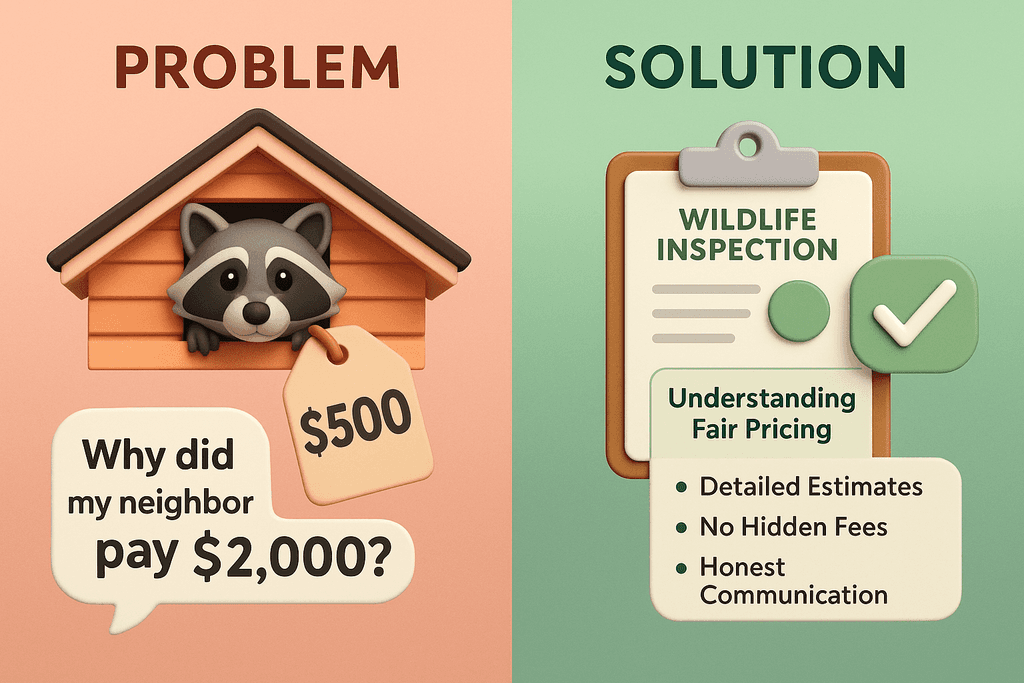
Most homeowners have no idea what wildlife removal should actually cost, which makes it easy for some companies to take advantage. You might get quoted $500 for a simple raccoon removal, while your neighbor paid $2,000 for the same problem. The difference often comes down to knowing what you're actually paying for and whether the company is being straight with you. Understanding the warning signs of overcharging can save you hundreds or even thousands of dollars while still getting quality service that actually solves your problem.
How to Spot Fair Pricing vs Overcharging
Red flags show up pretty quickly when a company is trying to overcharge you. Watch out for estimates that include vague line items like "additional services" or "emergency fees" without clear explanations. Some companies will quote you for removing one animal, then suddenly discover a whole family once they're on site and triple the price.
- Pressure tactics that demand immediate payment or claim you need service "right now" before getting other quotes
- Estimates that don't include a detailed inspection or skip checking common entry points
- Companies that refuse to explain their pricing or provide written estimates
- Services that only focus on removal without addressing how the animals got in
- Prices that seem too good to be true, which usually means corners will be cut
A fair estimate for common wildlife problems should break down exactly what you're paying for. For a typical squirrel removal with basic exclusion work, you should expect costs that cover the inspection, humane removal, sealing entry points, and a follow-up visit. Wildlife X Team provides transparent pricing that explains each step, so you know whether you're paying for materials, labor, or prevention services.
The cheapest option almost always ends up costing more down the road. A company that charges $200 to remove a raccoon but doesn't seal the entry point is basically guaranteeing you'll have another raccoon next month. Then you're paying another $200, plus dealing with more damage to your attic insulation and wiring.
Ask these questions during any estimate to understand what you're really getting. How many entry points will be inspected and sealed? What's included in the warranty? Will you clean and disinfect contaminated areas? Companies that give clear, detailed answers without dodging questions are usually the ones offering fair pricing.
Services That Save Money Over Time
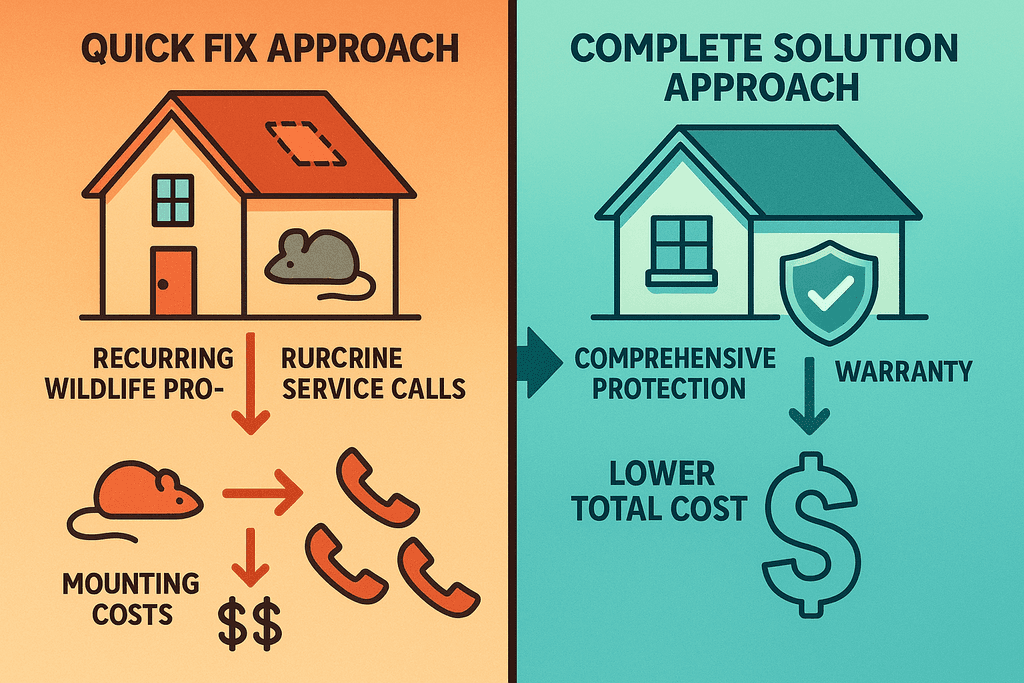
Prevention and exclusion services might seem expensive upfront, but they're actually the smartest money you can spend on wildlife problems. Think about it like this: you can pay $300 to have someone remove a squirrel, or you can pay $800 for removal plus sealing all the entry points. The second option sounds pricier until you realize the first option will have you calling someone back every few months when new squirrels move in. Over a year, you'll spend way more on repeated removals than you would have on doing it right the first time.
Services That Save Money Over Time
Proper attic cleanup does more than just make things look better. When animals live in your attic, they leave behind droppings, urine, and nesting materials that can grow mold and attract insects. These contaminants create health risks for your family and actually make your home more attractive to the next wave of wildlife. Cleaning and disinfecting the space, replacing damaged insulation, and sealing everything properly means you're not just removing the current problem but preventing future ones.
Comprehensive inspections find problems you didn't even know existed. Jesse Bernard thought he had one obvious entry point for squirrels, but the team found several others he never would have spotted. Missing even one entry point means animals will keep getting in, no matter how many times you remove them.
- Foundation gaps that look tiny but give raccoons easy access
- Damaged vent screens that squirrels can push through
- Chimney openings that welcome bats and birds
- Roof edge vulnerabilities where materials have separated
Wildlife X Team's Renewable Lifetime Warranty protects your investment for the long haul. Most companies offer a 30-day or maybe 90-day guarantee, which sounds good until you realize wildlife problems often come back seasonally. A lifetime warranty means if animals find a way back in through the areas that were sealed, the company comes back and fixes it at no additional cost.
Here's a real cost comparison that shows the difference. One-time removal for a raccoon family might run $400 to $600 with a basic company. But if they come back three times over two years, you're looking at $1,200 to $1,800 total. A complete solution with removal, exclusion, cleanup, and warranty might cost $1,200 upfront but actually costs less overall because you're done dealing with the problem.
Getting the Most Value From Your Service
A detailed inspection report should tell you exactly what's wrong with your property and why animals are getting in. Look for reports that include photos of entry points, descriptions of damage, and specific recommendations for repairs. Vague reports that just say "animal activity detected" don't give you enough information to know if the company actually found all the problems. The Wildlife Inspection Report that Wildlife X Team provides identifies every vulnerability in your property, which means you're not guessing about what needs to be fixed.
Verifying humane methods doesn't mean you have to pay premium prices. Ask what happens to the animals after removal and whether the company uses live traps or relocation when appropriate. Companies that use humane methods as a standard practice, not an upcharge, are usually more honest about their overall pricing.
- Request details about the removal process before signing any contract
- Ask if the company is licensed and insured for wildlife work
- Check if technicians have specific training in humane wildlife handling
- Find out what happens if an animal is injured during removal
Warranties and guarantees protect you from paying twice for the same problem. Read the fine print to understand what's actually covered. Some warranties only cover the exact spot that was repaired, not new entry points. Others require you to pay for annual inspections to keep the warranty active. A solid warranty should cover the work that was done without a bunch of hidden conditions.
Scheduling service during off-peak times can sometimes save you money, though this depends on the urgency of your situation. Late fall and early spring tend to be busier seasons for wildlife removal as animals look for warm places to nest. If you're dealing with prevention work rather than an active infestation, scheduling during slower periods might give you more flexibility on pricing.
Wildlife X Team's comprehensive approach delivers better value than piecemeal solutions because everything works together. When you get inspection, removal, exclusion, and cleanup all from one company, they can coordinate the work efficiently and stand behind the entire job. Hiring different companies for each step often means no one takes responsibility when something goes wrong, and you end up paying multiple service fees instead of one complete solution.
Why Cheap Wildlife Removal Costs More Later
Most homeowners who hire the cheapest wildlife removal company end up paying twice or even three times more within the first year. The problem isn't just about money though. When a bargain service misses hidden entry points or skips proper cleanup, you're left with health risks and property damage that keeps getting worse. What seems like a smart way to save a few hundred dollars today often turns into thousands in repairs and repeated service calls down the road. Understanding the real cost of cheap wildlife removal helps you make a choice that actually protects your wallet and your family.
The Hidden Price of Incomplete Work
Budget wildlife removal companies cut corners in ways you won't notice until the animals come back. They might catch the raccoon in your attic but miss the three other entry points along your roofline. Within weeks, you're hearing scratching sounds again and calling for another service visit.
- Animals return through unsealed entry points within 2-4 weeks on average
- Each additional service call costs $150-$300 that wasn't in your original budget
- Structural damage continues while you wait for the next appointment
- Some discount services charge separately for each visit instead of completing the job
The companies offering rock-bottom prices often lack the training to find every vulnerability in your home. A thorough inspection takes 60-90 minutes, but budget services rush through in 20 minutes or less. Wildlife X Team's Wildlife Inspection Report® identifies all potential entry points before work begins, which is why customers like Jesse Bernard found entry points they never would have discovered on their own.
Contamination Risks Nobody Talks About
Here's what cheap services don't tell you about cleanup. Animal waste carries diseases like histoplasmosis and leptospirosis that stay active in your attic for months. Simply removing the animal and calling it done leaves your family exposed to serious health hazards.
- Contaminated insulation reduces your home's energy efficiency by up to 40%
- Airborne pathogens from droppings circulate through your HVAC system
- Urine-soaked materials attract new animals with scent markers
- Professional attic restoration costs $2,000-$5,000 when done as emergency work later
Comparing Budget Versus Quality Affordable Services
Not all affordable wildlife removal is created equal. The difference between cheap and quality affordable comes down to what's included in the service and how long the solution lasts.
Budget Services What You Get
- Basic animal trapping only without prevention measures
- Quick visual inspection that misses hidden entry points
- No cleanup or sanitation of contaminated areas
- Short-term fixes that fail within months
- No warranty or guarantee on work performed
Quality Affordable Services What You Get
- Complete removal plus exclusion to prevent return visits
- Detailed inspection report identifying all vulnerabilities
- Professional cleanup and restoration of affected areas
- Durable repairs using proper materials and techniques
- Renewable lifetime warranty protecting your investment
The annual repeat problem costs add up fast. Homeowners who choose the cheapest option typically face the same wildlife issue every year because nothing was done to prevent it. You end up paying $300-$500 annually for the same raccoon or squirrel problem instead of solving it once. Quality services like those from Wildlife X Team include animal proofing and exclusion work that stops the cycle, which is why customers report no issues months and even years later.
What Affordable Really Means
Affordable doesn't have to mean cheap or incomplete. It means getting comprehensive service at a fair price that solves the problem permanently. The key is finding a company that includes prevention, cleanup, and warranty protection without charging premium luxury prices.
- Look for services that bundle removal, exclusion, and cleanup together
- Ask about warranty coverage before signing any contract
- Compare the total cost including follow-up visits, not just the initial quote
- Check if the company employs trained specialists or just general handymen
Companies like Wildlife X Team balance affordability with effectiveness by doing the job right the first time. Their approach prevents the expensive cycle of repeated service calls that make budget options so costly in the long run. When you factor in health risks, property damage, and multiple service visits, quality affordable service actually costs less than the bargain alternative over a 12-month period.
Smart Spending on Wildlife Protection
Finding affordable wildlife removal doesn't mean picking the cheapest company that shows up in a search. It means getting fair pricing for work that actually solves the problem and keeps animals out for good. Some companies will charge you less upfront but miss entry points or skip prevention steps, which means you'll be calling someone back in a few months when the raccoons return. That's not saving money, that's just delaying the real fix.
The best value comes from comprehensive service that includes removal, repairs, and prevention. Wildlife X Team handles all three parts in the Ft. Worth and Denton areas, which means one call takes care of the whole problem. They also back their work with a renewable lifetime warranty, so you're not gambling on whether the solution will hold up.
When you're comparing options, look for companies that explain what they'll do and why. Transparent pricing matters because wildlife work can vary a lot depending on what animals you're dealing with and how they got in. Humane methods should be standard, not an extra feature.
The money you spend now on proper wildlife removal and exclusion work saves you from bigger bills later. Damaged insulation, chewed wires, and contaminated attics all cost more to fix if you wait. Getting it done right the first time protects both your home and your budget, which is what affordable really means.
Common Questions About Wildlife Removal Costs
Most homeowners in the DFW area have similar questions when they first deal with a wildlife problem. The cost of removal can vary quite a bit depending on what kind of animal you're dealing with and how bad the situation has gotten. Here are the answers to the questions we hear most often from people looking for affordable wildlife removal services.
How much does wildlife removal typically cost in the DFW area?
Wildlife removal in the Dallas-Fort Worth area usually ranges from $300 to $1,500 for most residential jobs. Simple cases like a single raccoon in your attic might cost around $300 to $500, while more complex situations involving multiple animals or extensive damage can run higher. The final price depends on the type of animal, how many entry points need sealing, and whether you need attic cleanup or restoration work. Companies like Wildlife X Team provide detailed inspections upfront so you know exactly what you're paying for before any work begins.
What is included in a standard wildlife removal service?
A complete wildlife removal service should include more than just catching the animal. Here's what you typically get:
- Full property inspection to find all entry points
- Humane removal of the animals
- Sealing and repairing entry points to prevent future problems
- Basic cleanup of droppings and contaminated materials
- Follow-up visits to ensure the problem is solved
Some companies charge separately for each service, while others bundle everything together. Wildlife X Team includes prevention work as part of their standard approach, which saves you money in the long run.
Are payment plans available for larger wildlife removal jobs?
Many wildlife removal companies offer payment plans for bigger jobs that involve extensive repairs or attic restoration. These larger projects can cost $2,000 or more, so breaking up the payments makes it more manageable. It's worth asking about financing options when you get your estimate, especially if you need foundation repairs or complete insulation replacement.
How long does a wildlife removal warranty typically last?
Most companies offer warranties ranging from one to five years on their exclusion work. Wildlife X Team stands out by offering a Renewable Lifetime Warranty, which means you're protected as long as you maintain the warranty terms. This is much better than competitors who only cover their work for a year or two.
What makes one wildlife removal service more expensive than another?
The biggest factors affecting cost are the type of animal, the extent of damage, and how hard they are to reach. Squirrels in an easily accessible attic cost less than raccoons that have torn through your roof and damaged insulation. Companies with more experience and better warranties typically charge a bit more upfront but save you money by doing the job right the first time.
Is emergency wildlife removal significantly more expensive?
Emergency or after-hours service usually costs 20 to 50 percent more than regular appointments. However, waiting can sometimes make the problem worse and more expensive to fix. If an animal is causing active damage or poses a health risk, the extra cost for immediate service is often worth it to prevent bigger repair bills later.