5 Signs You Need Emergency Wildlife Removal in Your DFW Home

A single raccoon family living in your attic can cause over $5,000 in damage within just a few weeks, and that's before you factor in the health risks from contaminated insulation. Most DFW homeowners don't realize they're dealing with an emergency wildlife situation until the damage becomes obvious, but by then the problem has already escalated. Knowing the warning signs that require immediate professional intervention can save you thousands of dollars and protect your family from serious health hazards.
Table of Contents
- Why DFW Homes Attract Wildlife
- Strange Noises Coming From Your Walls or Attic
- Foul Odors That Won't Go Away
- Visible Damage to Your Home's Exterior or Interior
- Health Hazards and Contamination Risks
- Signs of Active Nesting or Multiple Animals
- Taking Action Before Its Too Late
- Common Questions About Emergency Wildlife Removal
Why DFW Homes Attract Wildlife
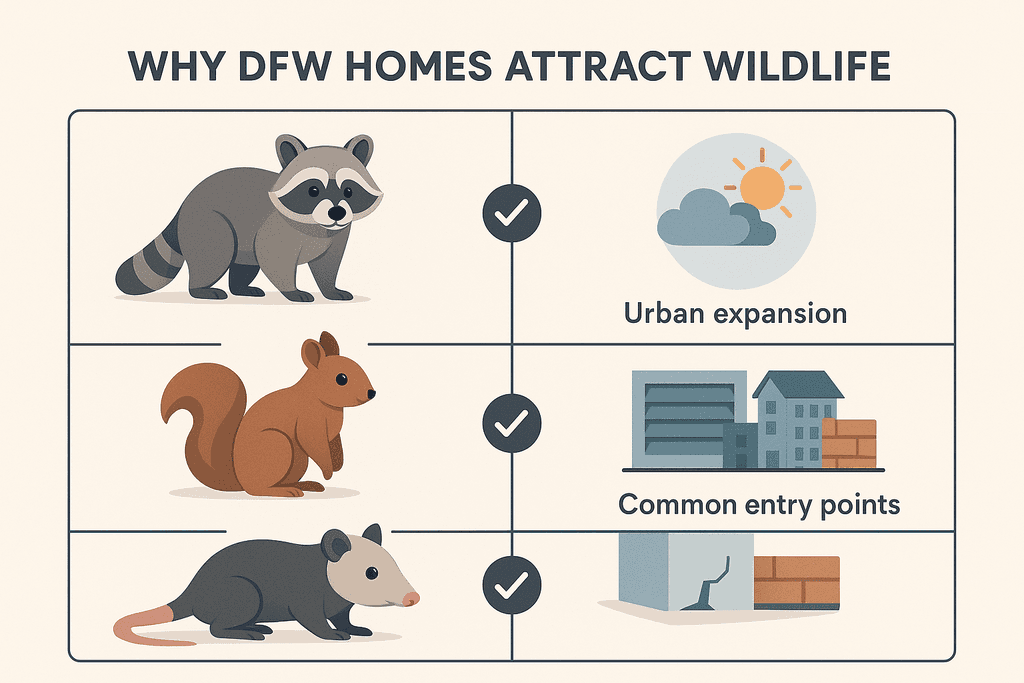
The Dallas-Fort Worth area sits right in the middle of a wildlife highway, where urban neighborhoods bump up against natural habitats. As cities like Fort Worth, Denton, and Granbury keep expanding outward, they're pushing raccoons, squirrels, and opossums out of their traditional homes. These animals don't just disappear though - they adapt and move into our attics, crawl spaces, and chimneys instead. The warm Texas climate means wildlife stays active year-round, unlike northern states where animals hibernate for months. This creates a perfect storm where homeowners face wildlife problems during every season, not just certain times of the year.
Climate and Geography Factors
DFW's mild winters and hot summers create ideal conditions for wildlife to thrive. Animals don't need to travel far for food or shelter because the weather rarely gets harsh enough to limit their movement. The mix of prairies, wooded areas, and water sources throughout the metroplex gives wildlife everything they need to survive.
Here's what makes our region especially attractive to unwanted guests:
- Year-round warm temperatures mean animals breed more frequently than in colder climates
- Abundant oak and pecan trees provide natural food sources in residential areas
- The Trinity River and numerous creeks create water corridors that guide wildlife into neighborhoods
- Mild winters allow animals to stay active and search for shelter in homes instead of hibernating
Urban Expansion Impact
Every year, DFW adds thousands of new homes and businesses. This construction destroys natural habitats and forces wildlife to relocate. Animals that once lived in wooded areas now find themselves surrounded by houses, and they quickly learn that attics are warm, safe, and protected from predators.
Understanding how to identify wildlife activity in your home is crucial. The video above shows professional techniques for checking if raccoons have been completely removed from an attic space, which is something many homeowners struggle with after attempting DIY solutions.
The most common wildlife intruders in our area include:
- Raccoons - intelligent and strong enough to tear through roof vents and soffits
- Squirrels - can squeeze through holes as small as 1.5 inches and chew through wood
- Opossums - seek out crawl spaces and areas under decks or porches
- Rats and mice - enter through gaps in foundations and utility line openings
Common Entry Points by Species
Different animals prefer different ways into your home. Knowing which species targets which entry points helps homeowners understand their vulnerabilities. Wildlife X Team's inspection process identifies these specific weak spots that animals exploit to gain access to your property.
Here's how common DFW wildlife typically enters homes:
| Wildlife Species | Preferred Entry Points | Peak Activity Season |
|---|---|---|
| Raccoons | Roof vents, chimneys, damaged soffits, loose shingles | Spring (breeding season) |
| Squirrels | Attic vents, gaps in fascia boards, tree branches touching roof | Fall and winter |
| Opossums | Crawl space openings, broken foundation vents, gaps under decks | Year-round |
| Rats/Mice | Utility line penetrations, weep holes, gaps around pipes | Fall and winter |
Seasonal Patterns in DFW
Wildlife behavior changes throughout the year based on breeding cycles and weather patterns. Spring brings pregnant raccoons looking for safe places to raise babies, which is why attic invasions spike from March through May. Squirrels become more aggressive about finding shelter in fall as they prepare for winter, even though our winters are mild.
Seasonal wildlife activity patterns include:
- Spring - Raccoons and squirrels seek nesting sites for babies, leading to aggressive entry attempts
- Summer - Animals search for cool spaces during extreme heat, often entering attics at night
- Fall - Squirrels stockpile food and create winter nests, causing increased attic activity
- Winter - Rodents and opossums seek warmth, targeting crawl spaces and wall voids
Understanding these patterns helps homeowners stay alert during high-risk periods. Many companies like Critter Control and Omega Animal Removal offer seasonal inspections, but Wildlife X Team provides a comprehensive Wildlife Inspection Report that identifies vulnerabilities year-round, not just during peak seasons. This proactive approach prevents problems before they start, which saves money compared to emergency removal services.
Strange Noises Coming From Your Walls or Attic
Most homeowners in the DFW area hear the occasional house settling noise, but when you start hearing scratching, scurrying, or thumping sounds that follow a pattern, you're dealing with something alive. These aren't random creaks from your foundation or HVAC system. Wildlife has likely moved into your home and made itself comfortable. The timing of these sounds tells you a lot about what kind of uninvited guest you're hosting, and ignoring them only makes the problem worse.

Strange Noises Coming From Your Walls or Attic
Nighttime noises usually mean you're dealing with raccoons or opossums, since these animals are most active after dark. If you hear sounds during the day, especially in the morning or late afternoon, squirrels are the likely culprits.
- Scratching sounds indicate animals clawing at wood or insulation
- Scurrying noises mean they're moving around your attic or walls
- Thumping sounds suggest larger animals like raccoons
- Chattering or crying sounds mean you have nesting animals with babies
- Multiple overlapping sounds indicate more than one animal
When you hear vocal sounds like chattering, crying, or squeaking, that's a red flag that animals have established a nest and possibly had babies. This situation requires immediate attention because baby animals mean the parents will be extremely protective and more likely to cause damage defending their territory.
Foul Odors That Won't Go Away
Your nose knows when something isn't right in your home. That strange smell you keep noticing isn't just a plumbing issue or something you forgot in the back of the fridge. Wildlife intrusions create very specific odors that get worse over time, and these smells can actually spread contamination throughout your entire house if they're coming from near your vents or HVAC system. The type of smell you're experiencing tells you exactly what kind of problem you're facing.

Foul Odors That Won't Go Away
Urine and feces from animals like raccoons and squirrels create a strong ammonia-like smell that burns your nostrils. This odor intensifies in enclosed spaces like attics and wall cavities where air doesn't circulate well.
Dead animals produce an unmistakable decay odor that's hard to describe but impossible to forget once you've smelled it. Musky scents indicate active animal presence, as many wildlife species mark their territory with scent glands. If the smell gets stronger each day, you're dealing with a growing infestation that needs professional intervention.
One of our customers, Jesse Bernard, discovered a "squirrel party" in his attic after noticing strange smells and sounds. Wildlife X Team found multiple entry points he never would have spotted on his own, and months later, he's still squirrel-free. That's the difference between a quick DIY patch job and comprehensive wildlife removal and prevention.
Visible Damage to Your Home's Exterior or Interior
When you can actually see the destruction wildlife causes, you're looking at an emergency situation. Animals don't just squeeze through existing gaps in your home. They create new entry points by chewing, clawing, and tearing through building materials you thought were solid. Raccoons can rip off roof shingles with their hands, and squirrels can chew through wood, plastic, and even some metals. The damage you can see from the outside is usually just a fraction of what's happening inside your walls and attic.
Chewed holes in soffits, fascia, or siding are clear signs that animals have forced their way into your home. These entry points rarely stay small because animals enlarge them each time they come and go.
- Torn or displaced roof shingles and flashing around vents
- Damaged insulation that's been shredded for nesting material
- Chewed electrical wiring that creates fire hazards
- Stained ceilings from accumulated urine and feces
- Destroyed ductwork and damaged HVAC components
- Foundation gaps and chimney damage from persistent animals
The longer you wait to address visible damage, the more expensive repairs become. What starts as a small hole in your soffit can turn into thousands of dollars in attic cleanup, insulation replacement, and structural repairs. Wildlife X Team's animal proofing and exclusion services include foundation repair, chimney protection, and vent guards to prevent animals from returning.
Health Hazards and Contamination Risks
The health risks from wildlife intrusions go way beyond the gross factor of having animals in your home. Wildlife droppings carry harmful bacteria like salmonella and E. coli, plus parasites that can make your family seriously ill. Raccoons in particular pose a rabies risk, and their feces can contain raccoon roundworm eggs that remain infectious in your attic for years. When contaminated insulation breaks down, those particles get pulled into your HVAC system and circulated throughout every room in your house.
Respiratory issues from contaminated insulation affect everyone in your home, but children and pets face higher exposure risks because they spend more time on floors and touch surfaces more frequently.
- Wildlife droppings contain bacteria, viruses, and parasites
- Rabies transmission from raccoons, bats, and other mammals
- Airborne particles from dried feces cause breathing problems
- Mites, fleas, and ticks spread from animals to your living spaces
- Contaminated areas require professional disinfection and cleanup
You can't just sweep up animal droppings and call it clean. Professional attic cleanup and restoration involves removing contaminated insulation, disinfecting all surfaces, and sealing entry points to prevent recontamination. This isn't a DIY project because the health risks are too serious.
Signs of Active Nesting or Multiple Animals
When wildlife moves from just visiting your attic to actually living there full-time, you're facing a completely different level of problem. Baby animal sounds like high-pitched squeaking or crying mean the animals have established a permanent nest and started breeding. A single pregnant raccoon can turn into a family of six in just a few months, and those babies will return to the same location to have their own litters. Without intervention, you're looking at an exponentially growing population that causes more damage with each generation.
Increased activity levels and noise frequency indicate multiple animals competing for space and resources in your attic. You'll notice sounds at different times throughout the day and night as various animals come and go.
- Baby animal vocalizations confirm established nesting sites
- Large amounts of droppings concentrated in specific areas
- Nesting materials like shredded insulation, leaves, and twigs
- Multiple entry and exit points throughout your roofline
- Visible animal trails in insulation from repeated use
Mark Thompson experienced this firsthand when raccoons not only invaded his attic but started raising families there. He called Wildlife X Team for emergency removal, and they didn't just remove the animals. They secured his entire attic against future invasions with their renewable lifetime warranty, giving him actual peace of mind instead of just a temporary fix.
The difference between a single animal and an active breeding population is the difference between a manageable situation and a full-blown emergency. Once you spot signs of nesting or multiple animals, waiting even a few days can mean dealing with babies that complicate the removal process and increase costs significantly.
Taking Action Before Its Too Late
If you've noticed any of these five warning signs, waiting around won't make things better. Strange noises in your walls, visible damage to your home, droppings or urine stains, aggressive animal behavior, and foul odors are all red flags that need immediate attention. The longer wildlife stays in your property, the more damage they cause and the bigger the health risks become for your family or employees.
Most homeowners try to handle these problems themselves at first. That usually ends up costing more money and time in the long run because animals find their way back in through entry points you didn't even know existed.
Wildlife X Team handles emergency situations across the DFW area with humane removal methods that actually work. The process starts with a Wildlife Inspection Report that identifies every possible entry point on your property, not just the obvious ones. From there, the team removes the animals safely and seals up your home with proper exclusion work so they can't return.
The best part is the Renewable Lifetime Warranty that comes with the service. This means if wildlife tries to get back in through the areas that were sealed, you're covered without paying again.
You probably have questions about how the process works, what it costs, and how long it takes. That's completely normal when dealing with something you've never faced before.
Common Questions About Emergency Wildlife Removal
When you're dealing with a wild animal in your home, you probably have a lot of questions running through your mind. Most homeowners have never faced this situation before, so it's normal to feel uncertain about what to do next. The good news is that professional wildlife removal teams handle these situations every day and know exactly how to help. Here are the most common questions people ask when they need emergency wildlife removal in the DFW area.
How quickly can Wildlife X Team respond to emergencies?
Wildlife X Team typically responds to emergency calls the same day, often within a few hours depending on your location in the Ft. Worth, Denton, or Granbury areas. They understand that having a wild animal in your home is stressful and potentially dangerous, so they prioritize urgent situations where animals are inside living spaces or pose immediate threats.
Is it safe to stay in my home with wildlife present?
It depends on where the animal is located and what type of animal you're dealing with. If the animal is contained in your attic or crawl space and you can safely avoid that area, you can usually stay in your home until help arrives. However, if a raccoon, squirrel, or other animal is in your living space, it's best to keep family members and pets in a separate room with the door closed until professionals arrive.
What should I do if I see a wild animal in my house?
Stay calm and keep your distance from the animal. Don't try to catch it yourself or corner it, as this can make the animal defensive and more likely to bite or scratch. Close off the room where the animal is located if possible, keep children and pets away, and call a professional wildlife removal service immediately. Never attempt to handle wildlife on your own, even if the animal seems small or harmless.
How much does emergency wildlife removal cost?
The cost varies depending on the type of animal, the severity of the infestation, and what repairs or exclusion work is needed. Wildlife X Team provides free inspections and estimates before starting work, so you'll know exactly what to expect. Many homeowners find that professional removal is more affordable than they expected, especially when compared to the potential damage wildlife can cause if left untreated.
Will the animals come back after removal?
Not if the job is done right. Wildlife X Team doesn't just remove the animals – they also seal entry points and install barriers to prevent future invasions. They offer a Renewable Lifetime Warranty on their work, which means if animals do find a way back in through their sealed areas, they'll come back and fix it. This is different from some companies that only focus on removal without addressing the root cause.
Does homeowners insurance cover wildlife damage?
Sometimes, but it depends on your specific policy and how the damage occurred. Most standard homeowners insurance policies don't cover damage from rodents or wildlife that gradually entered your home, but they might cover sudden damage like a raccoon breaking through your roof. It's worth checking with your insurance company, and Wildlife X Team can provide detailed documentation of the damage and their work to help with any claims you need to file.